
Saturday 251101
For calories and load:
0:00-5:00
Max power clean
5:00-10:00
Max-calorie Echo bike
10:00-15:00
Max power clean
15:00-20:00
Max-calorie Echo bike
For your score, add both of your best lifts and total calories together.
Post score to comments.
Stimulus and Strategy:
Today’s workout is a bit of a choose-your-own-adventure, depending on how you feel from yesterday. That being said, today is an opportunity to lift heavy and push the intensity on the bike. Can you lift just as much weight on your second power clean attempt as you did on your first? Do you “game” the bike in an attempt to match your clean weight? Or do you hold nothing back and let the chips land where they may? Either way, work hard today and have fun.
Scaling:
To reduce the complexity of the power cleans, reduce the loading and focus on your technique. You may also consider performing hang power cleans.
In case of injury or limitation, perform your calories on any machine available. For the power cleans, consider dumbbell power cleans, Russian kettlebell swings, or even medicine-ball cleans.
Intermediate option:
Same as Rx’d.
Beginner option:
Same as Rx’d.
Coaching cues:
As the power cleans get heavier, the instinct is to try and “sneak” under the barbell. Instead, focus on standing up as tall as you possibly can, then pull yourself underneath the barbell.
Resources:
The Power Clean
Rogue Echo Bike
Find a gym near you:
View the CrossFit map

Wednesday 251022
5 rounds for time of:
20 box step-ups
1 rope climb to 15 feet
10 alternating strict single-leg toes-to-bars
1 rope climb to 15 feet
♀ 20-inch box
♂ 20-inch box
Post times to comments.
Stimulus and Strategy:
Today’s workout slows down the intensity and puts your attention on some gymnastics skills. However, if you can move quickly and maintain good technique, continue to “dance” that line for as long as possible in this effort. A single round in this workout should take no longer than 4 minutes. If necessary, consider some of the scaling options below.
Scaling:
Reduce the total number of rounds. Reduce the height of the box.
To reduce the complexity of the rope climb, reduce the height of the climb. For the single-leg strict toes-to-bars, reduce the range of motion by bringing your foot up to a manageable height. You may even consider a slight kipping swing for momentum.
In case of injury or limitation, for the rope climbs, perform pull-to-stands or strict pull-ups. For the single-leg strict toes-to-bars, perform seated single-leg raises.
Intermediate option:
5 rounds for time:
20 box step-ups
1 rope climb to 12 feet
10 alternating strict single-leg toes-to-chest height
1 rope climb to 12 feet
♀ 20-inch box
♂ 20-inch box
Beginner option:
3 rounds for time:
20 box step-ups
2 pull-to-stands
10 alternating seated single-leg raises
2 pull-to-stands
♀ 12-inch box
♂ 20-inch box
Coaching cues:
In the strict single-leg toes-to-bar, control the descent of your legs and finish each rep with the feet slightly in front of the body. The combination of these two techniques will minimize the amount of uncontrolled swinging.
Resources:
The Box Step-Up
The Rope Climb (Wrapping)
The Rope Climb (Basket)
Rope Climb - J-Hook
Strict Single-Leg Strict Toes-to-Bar
Pull-to-Stand | Rope Climb Scaling
Find a gym near you:
View the CrossFit map

Sunday 251019
Rest Day
The Training Mindset: CrossFit Isn’t Just Exercise
Picture this: You've been doing CrossFit for years, hitting PRs and posting decent times, but something feels off; you're going through the motions instead of truly progressing. The difference between "exercising" (checking boxes and getting sweaty) and real "training" (deliberately practicing your craft under intensity) might be the missing piece that transforms you from someone who just works out into an athlete who masters their movement.
Find a gym near you:
View the CrossFit map

Thursday 251009
Rest Day
Stamina: The Cellular Superpower That Extends Your Life
Stamina isn't just about pushing through hard workouts; it's a measurable reflection of how efficiently your body produces and uses energy at the cellular level. Research shows that improvements in stamina markers, such as VO₂ max, can add years to your life, with each small gain reducing your risk of death by approximately 13%. The best part? CrossFit's constantly varied, high-intensity training is uniquely designed to trigger the cellular adaptations that build stamina, making you not just fitter today, but healthier for decades to come.
Find a gym near you:
View the CrossFit map

Sunday 250914
Rest Day
CrossFit is constantly varied functional movements executed at high intensity. It is varied, but not too varied. It's a comprehensive approach to health that encompasses nutrition and enables you to perform functional, monostructural, gymnastics, and weightlifting movements, as well as engage in various sports. It's not what many people think it is. People will say things like, “I do CrossFit light” or “CrossFit-ish.” One great distinction made by CrossFit is that if you’re doing a program that does not produce total health, you are not doing CrossFit.
Find a gym near you:
View the CrossFit map

Sunday 250817
Rest Day
Mechanics, Consistency, Intensity: What It Means
Intensity may be one of the most misunderstood aspects of CrossFit. But mechanics-consistency-intensity isn't just a catchy phrase, it’s the blueprint that separates smart coaching from dangerous programming. This foundational charter protects beginners and develops elite athletes, and CrossFit coaches are the ones who know best how to apply it.
Find a gym near you:
View the CrossFit map
Thursday 250731
Rest Day
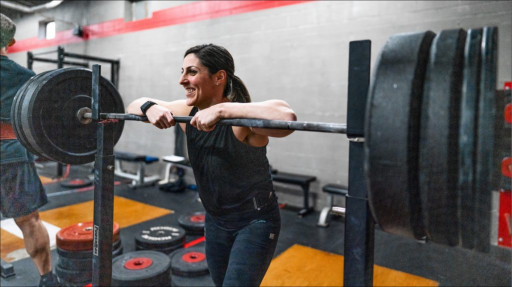
CrossFit's core mission is to develop broad fitness capacity. This mission is often misunderstood, particularly regarding the relationship between health and elite performance. Senior Content Writer for CrossFit, Stephane Rochet, argues elite fitness isn't exclusive to Games competitors but represents the natural outcome of consistent, intense training focused on health across all time and movement domains. This conversation challenges the false dichotomy between health and high performance, suggesting that pursuing anything less than elite fitness essentially means settling for mediocrity.
Find a gym near you:
View the CrossFit map

Sunday 250706
Rest Day
Why We Plateau and How to Overcome It
Join CrossFit coaches Eric O'Connor and Pat Barber as they break down the real reasons athletes hit plateaus and the proven strategies to push past them. From intensity adjustments and nutrition fixes to managing expectations as you age, these 20-year CrossFit veterans share hard-earned wisdom on when plateaus are premature versus inevitable, and how to reframe your relationship with CrossFit for lifelong progress.
Find a gym near you:
View the CrossFit map

Saturday 250524
Complete as many rounds and reps as possible in 12 minutes of:
200/250-meter row
25-foot handstand walk
10 dumbbell box step-overs
25-foot handstand walk
♀ 20-lb dumbbells and a 20-inch box
♂ 35-lb dumbbells and a 24-inch box
Stimulus and Strategy:
Today’s workout is meant to be lower volume while keeping the intensity high in preparation for those doing a Hero workout or Murph on Monday. Use options that allow you to complete about 4 rounds. Athletes who want to push the pace could certainly complete around 6 rounds. Work hard today and have fun.
Scaling:
Reduce the load of the dumbbells. Reduce the distance of the handstand walk.
To reduce the complexity of the handstand walk, perform shoulder taps in the pike position or perform bear crawls. For the dumbbell step-overs, reduce the height of the box.
In case of injury or limitation, perform a 500/700-meter Echo bike or a 200-meter run. For the dumbbell step-overs, perform this movement with no weight and reduce the height of the box.
Intermediate option:
Complete as many rounds and reps as possible in 12 minutes of:
200/250-meter row
20 shoulder taps in the pike position
10 dumbbell box step-overs
20 shoulder taps in the pike position
♀ 15-lb dumbbells and a 20-inch box
♂ 25-lb dumbbells and a 24-inch box
Beginner option:
Complete as many rounds and reps as possible in 12 minutes of:
200/250-meter row
25-foot bear crawl
10 box step-overs
25-foot bear crawl
♀ 12-inch box
♂ 20-inch box
Coaching cues:
During the handstand walk, think about pushing your hands into the floor and touching your toes to the ceiling.
Resources:
Rowing
The Handstand Walk
Dumbbell Box Step-Over
Box Step-Over
The Bear Crawl
Find a gym near you:
View the CrossFit map

Thursday 250508
Rest Day
Implementing Sprinting in CrossFit
CrossFit's comprehensive approach to fitness includes sprinting — a skill many of us have neglected for years. Implement this progressive three-phase plan to safely rediscover or improve your sprinting abilities while minimizing injury risk. Following this progression and incorporating regular speed work into your training will unlock incredible benefits that only high-intensity sprinting can provide.
Find a gym near you:
View the CrossFit map

Sunday 250420
Rest Day
When to Take Your Foot Off the Gas in CrossFit
CrossFit is built on the power of intensity — but there are moments when chasing the clock isn’t the answer. Whether you're returning from injury, learning a new skill, refining technique, or developing a specific capacity like stamina, easing off the gas can actually accelerate your long-term progress. In this article, Stephane Rochet (CF-L3) explores the critical times when dialing back intensity isn’t a step backward — it’s the smartest move you can make.
Find a gym near you:
View the CrossFit map

Saturday 250419
For time:
40 pull-ups
40 burpees
20 power snatches
Rest 3 minutes
For time:
30 pull-ups
30 burpees
15 power snatches
Rest 2 minutes
For time:
20 pull-ups
20 burpees
10 power snatches
♀ 75 lb
♂ 115 lb
Post total time to comments.
Stimulus and Strategy:
Today’s workout is three intervals with descending rep schemes. The rest in between each interval should allow you to keep intensity high throughout the entire effort. Aim for big to unbroken sets of reps on both the pull-ups and burpees. The loading of the barbell should be light to moderate and allow you to perform some touch-and-go reps.
Scaling:
Reduce the loading of the barbell. Reduce the reps of any of the movements.
To reduce the complexity of pull-ups, perform jumping pull-ups or ring rows. For the burpees, perform up-downs. For the power snatches, perform hang power snatches or dumbbell snatches.
In case of injury or limitation, perform single-arm ring rows or dumbbell rows for the pull-ups. For the power snatches, perform power cleans if there is an overhead limitation.
Intermediate option:
For time:
20 pull-ups
40 burpees
20 power snatches
Rest 3 minutes
For time:
15 pull-ups
30 burpees
15 power snatches
Rest 2 minutes
For time:
10 pull-ups
20 burpees
10 power snatches
♀ 65 lb
♂ 95 lb
Beginner option:
For time:
20 ring rows
20 burpees
20 hang power snatches
Rest 3 minutes
For time:
15 ring rows
15 burpees
15 hang power snatches
Rest 2 minutes
For time:
10 ring rows
10 burpees
10 hang power snatches
♀ 35 lb
♂ 45 lb
Coaching cues:
On the power snatch, keep the arms long as you lift the barbell off the floor. Imagine trying to flex your triceps all the way through your second pull. Then, pull your body underneath the barbell.
Resources:
The Kipping Pull-Up
The Burpee
The Power Snatch
The Ring Row
The Hang Power Snatch
Find a gym near you:
View the CrossFit map

Thursday 250410
Rest Day
Featured Article
Efficient Training: The 80/20 Rule of Fitness and How CrossFit Maximizes Results with Minimal Time
The Pareto Principle, or the 80/20 rule, suggests that 80% of results come from 20% of efforts. CrossFit embodies this principle by focusing on high-intensity, functional movements, constant variance, and mixed-modality workouts to deliver maximum fitness gains efficiently. Unlike traditional training that prioritizes volume, CrossFit optimizes intensity to drive adaptation, ensuring long-term progress without excessive time investment. With proper nutrition as its foundation, CrossFit’s methodology enables athletes to achieve elite fitness levels in less time, leaving them more opportunities to enjoy life outside the gym.
Find a gym near you:
View the CrossFit map

Sunday 250406
Rest Day
Featured Article
The CrossFit Physique: When Performance Builds a Better Body
CrossFit’s mission is to forge elite fitness, but an undeniable byproduct is its athletes' strong, capable physiques. Unlike traditional bodybuilding, which often prioritizes aesthetics over function, CrossFit’s constantly varied, high-intensity training produces bodies that are powerful, resilient, and beautiful. Rooted in the training philosophies of early strongmen and Olympic weightlifters, CrossFit builds muscle, strength, and endurance through functional movements, lifting heavy, and pushing intensity. When paired with a whole-foods-based diet, this approach delivers the ultimate combination — unmatched fitness and an athletic physique. In short, train like an athlete, and you’ll look like one, too.
Find a gym near you:
View the CrossFit map

Saturday 250405
Every 5 minutes for 5 sets:
400-meter run
25 Russian kettlebell swings
♀ 53 lb
♂ 70 lb
Post times to comments.
Stimulus and Strategy:
Today’s workout contains five sprint-type efforts. The goal is to complete the run as quickly as possible, get your hands on the kettlebell, and go unbroken on your swings. You should have at least 2 minutes of rest between sets, which will allow you to recover and hit each set with intensity. Athletes who are capable of swinging the heavy kettlebell, but not for the total volume of the workout, should consider reducing the reps of the swings in each round and using the heavier bell. Push the pace on the runs, but only as much as allows you to get back to the kettlebell and immediately begin swinging.
Scaling:
Reduce the distance of the run. Reduce the loading and/or reps of the kettlebell.
To reduce the complexity of the kettlebell swings, consider reducing the range of motion or performing kettlebell sumo deadlifts.
In case of an injury or limitation, consider performing 900/1,250 meters on the Echo bike, or 400/500 meters on the rower or ski erg instead of the run. For the kettlebell swings, consider single-arm kettlebell swings or unloaded good mornings.
Intermediate option:
Every 5 minutes for 5 sets:
400-meter run
15 Russian kettlebell swings
♀ 53 lb
♂ 70 lb
Beginner option:
Every 5 minutes for 5 sets:
200-meter run
10 Russian kettlebell swings
♀ 18 lb
♂ 26 lb
Coaching cues:
To ensure maximum contribution of the lower body during the kettlebell swings, focus on driving your heels into the ground, then squeezing your thighs and your glutes.
Resources:
Pose Running Drills | Pose Alignment
The Russian Kettlebell Swing With Jeff Martone
Find a gym near you:
View the CrossFit map

Thursday 250320
Rest Day
Featured Article
The Power of CrossFit for the Aging Athlete: Strength, Longevity, and Community
Aging doesn’t mean slowing down — especially in the CrossFit world. Despite societal misconceptions, aging adults often see the most significant fitness gains, improving strength, mobility, and overall well-being. CrossFit’s emphasis on functional movements, weight-bearing exercises, and high-intensity training helps counteract age-related muscle loss, osteoporosis, and cardiovascular decline. Beyond physical benefits, it fosters mental resilience, social connections, and a strong sense of community — crucial for maintaining motivation and independence. With scalable workouts tailored to individual needs, CrossFit empowers aging adults to stay active, confident, and engaged, proving that fitness is for every age.
Find a gym near you:
View the CrossFit map

Monday 250317
21-15-9 reps for time of:
Toes-to-bars
Burpee box jump-overs
♀ 24-inch box
♂ 30-inch box
Post time to comments.
Stimulus and Strategy:
Today’s workout is a classic couplet and rep scheme. The descending reps allow you to keep intensity high and keep pushing through this effort. Choose options that allow you to move more and rest less. Advanced athletes may be able to perform all their sets of toes-to-bars unbroken; however, as long as you can complete each set in 3 sets or less, challenge yourself to go as prescribed and use today as more of a skill day.
Scaling:
Reduce the height of the box to maintain the jumping stimulus, even if that means reducing the height to 4 inches. If there is an injury or limitation, utilize the step-up or another alternative.
To reduce the complexity of the toes-to-bars, limit the height of your toes or knees. If you have toes-to-bars but the volume in today’s workout is beyond your capacity, reduce the reps to 15-12-9 or 12-9-6.
In case of an injury or limitation, consider performing up-downs in place of the burpees and step-ups in place of the box jump-overs. For the toes-to-bars, consider V-ups, sit-ups, or plank holds.
Intermediate option:
21-15-9 reps for time of:
Toes-to-bars
Burpee box jump-overs
♀ 20-inch box
♂ 24-inch box
Beginner option:
15-12-9 reps for time of:
Hanging knee raises
Burpee box step-overs
♀ 12-inch box
♂ 20-inch box
Coaching cues:
On the burpee box jump-over, consider stepping up out of the burpee. Oftentimes, this allows you to get closer to the box prior to the jump over.
Resources:
The Kipping Toes-to-Bar
Burpee Box Jump-Over
Find a gym near you:
View the CrossFit map

Saturday 250315
For time:
18 bench presses
1 rope climb to 15 feet
15 bench presses
2 rope climbs
12 bench presses
3 rope climbs
9 bench presses
4 rope climbs
6 bench presses
5 rope climbs
3 bench presses
6 rope climbs
♀ 125 lb
♂ 185 lb
Post time to the comments.
Stimulus and Strategy:
Today’s workout is an ascending ladder of rope climbs and a descending ladder of bench presses. Expect this to be more of a moderate-duration effort and a bit of a “pump” session. Since both movements can be more upper-body dominant, focus on your foot hook while climbing the rope and avoid pushing to failure on either movement. This will help take some demand off the upper body and reduce fatigue. If you completed the Open workout yesterday and feel fatigued, reduce the intensity today by slowing down or choosing less-demanding scaling options.
Scaling:
Reduce the loading of the bench presses. If you are able to perform a rope climb, but the later sets contain too many reps, consider reducing the reps to 1/2/2/2/2/2.
To reduce the complexity of the bench presses, consider performing dumbbell bench presses or floor presses. For the rope climbs, reduce the height of the climb, perform pull-to-stands, or consider pull-ups or ring rows.
In case of an injury or limitation, consider performing single-arm dumbbell bench presses or floor presses. If necessary, perform push-ups to eliminate the loading. For the rope climbs, consider pull-to-stands, ring rows, or dumbbell bent-over rows.
Intermediate option:
For time:
18 bench presses
2 rope climbs to 12 feet
15 bench presses
2 rope climbs
12 bench presses
2 rope climbs
9 bench presses
2 rope climbs
6 bench presses
2 rope climbs
3 bench presses
2 rope climbs
♀ 95 lb
♂ 135 lb
Beginner option:
For time:
15 bench presses
2 pull-to-stands
12 bench presses
2 pull-to-stands
9 bench presses
2 pull-to-stands
6 bench presses
2 pull-to-stands
3 bench presses
2 pull-to-stands
♀ 35 lb
♂ 45 lb
Coaching cues:
To press from a stronger position on the bench press, focus on keeping your elbows closer to your body, both on the way down and up. This position will help you recruit more muscles to help you push through today’s reps.
Resources:
The Bench Press
The Rope Climb (Wrapping)
The Rope Climb (Basket)
Find a gym near you:
View the CrossFit map

Sunday 250119
Rest Day
Featured Article
‘I’m Not Alone’: Scott Hanley Continues to Inspire Parkinson’s Community
Diagnosed with Parkinson’s in 2018, Scott Hanley refused to accept a grim prognosis. In 2020, he began working out, discovering that fitness and strength training eased his symptoms. Joining CrossFit Belfast in 2021, Hanley embraced high-intensity workouts and skill-building, remarkably reducing his symptoms. Inspired by his transformation, others, like Ian Haldane, followed his lead, finding relief and improved quality of life through CrossFit. Backed by science linking intense exercise to neuroprotection and neuroplasticity, Hanley’s story highlights the power of fitness, community, and determination in living well with Parkinson’s while inspiring others to keep fighting.
Find a gym near you:
View the CrossFit map

Thursday 250116
Rest Day
Featured Article
Chris Masterjohn’s “How to Lose Fat Without Losing Muscle” emphasizes the importance of prioritizing fat loss while preserving lean mass during weight loss. He advises against excessive calorie restriction, recommending instead a focus on full-body resistance training, high-intensity intervals, and adequate protein intake to support muscle retention and overall health. Slow, consistent weight loss—up to 2 pounds per week—is optimal, with exercise playing a critical role in minimizing lean mass loss. Masterjohn’s findings align closely with CrossFit principles, underscoring the effectiveness of functional fitness and whole-food diets in achieving sustainable, healthy results.
Find a gym near you:
View the CrossFit map

Thursday 241219
Rest Day
Featured Article
CrossFit: The Fountain of Youth
CrossFit challenges the narrative that aging leads to inevitable physical decline, offering a lifelong approach to fitness that improves work capacity and health markers at every stage of life. By focusing on mechanics, consistency, and intensity, CrossFit helps delay age-related limitations, promoting strength, endurance, mobility, and independence. Aging well is a matter of active, intentional choices and continuous training.
Find a gym near you:
View the CrossFit map

Sunday 241215
Rest Day
Featured Article
What Is Metabolic Conditioning?
Metabolic conditioning (met-con) is a cornerstone of CrossFit, designed to optimize your body’s ability to store, deliver, and use energy efficiently across varying intensities and durations. By targeting all three energy systems, met-cons boost energy efficiency, enhance fitness, support heart and lung health, promote fat loss while preserving muscle, and prepare you for real-world physical demands. Best of all, CrossFit-style met-cons build exceptional endurance without the need for traditional endurance training.
Find a gym near you:
View the CrossFit map

Thursday 241212
Rest Day
Featured Article
Hitting the Stimulus in Every CrossFit WOD
Intensity and variance are essential to CrossFit programming, driving results and fostering broad fitness. Preserving the intended stimulus of each workout ensures we optimize both elements. Factors like how a workout feels, loading, timing, volume, and movement patterns play a crucial role. The math method helps scale workouts to maintain intensity, guiding athletes to hit the desired time or rep targets. Whether tackling Fran, Cindy, or Amanda, scaling appropriately ensures athletes achieve the intended stimulus, maximizing fitness and results over the long term.
Find a gym near you:
View the CrossFit map

Sunday 241201
Rest Day
Featured Article
Contrary to misconceptions, older athletes can increase strength, improve physical capacity, and benefit from training with intensity, which helps reduce injury risks and maintain muscle mass. Complex movements like gymnastics and weightlifting are crucial for improving coordination, agility, and balance, especially as neurological skills become harder to develop with age. While recovery may take longer for older athletes, proper lifestyle choices like good nutrition, sleep, and stress management allow older athletes to train hard and recover effectively, making CrossFit scalable and transformative for all ages.

Saturday 241130
3 rounds for time of:
10 hang power cleans
1-minute hang from the pull-up bar
10 push jerks
1-minute handstand hold
♀ 105 lb
♂ 155 lb
Post time to comments.
Scaling:
Today’s workout is a combination of lifting and static holds. You will also notice the pull-up bar hang is after the hang power cleans (pulling and grip intensive). Then the handstand hold is after the push jerks (pressing intensive). Because of this design, a moderately loaded barbell will begin to feel significantly heavier and the holds will test your stamina with the related movement functions. Complete the handstand holds against a wall. Scale the loading and duration of the holds so a single round takes no more than 5 minutes to complete.
Intermediate option:
3 rounds for time of:
10 hang power cleans
1-minute hang from the pull-up bar
10 push jerks
1-minute handstand hold
♀ 75 lb
♂ 115 lb
Beginner option:
3 rounds for time of:
10 hang power cleans
30-second hang from the pull-up bar
10 push jerks
30-second plank hold
♀ 35 lb
♂ 45 lb
Coaching cues:
During the handstand hold, resist gravity by pressing your body away from the floor. As you press into the floor, squeeze your glutes, tuck your ribs down toward your hips, and bring your ears in line with your biceps with your chin neutral.
Resources:
The Hang Power Clean
The Push Jerk
The Handstand Hold
Handstand Hold Progression
The Plank Hold
Plank Variations
Find a gym near you:
View the CrossFit map

Saturday 241109
21-15-9 reps for time of:
Power snatches
Strict handstand push-ups
♀ 95 lb
♂ 135 lb
Post time to comments.
Scaling:
Today’s workout is another weightlifting and gymnastics couplet. It is actually a play on Wednesday’s workout. On Wednesday, we had movement interference with the pull of the deadlift and the pull of the strict pull-up. It was also very grippy.
Today, you will find movement interference with the pressing in the overhead position of the snatch and the pressing of the strict handstand push-up. The power snatch loading should be moderate and allow you to perform a few touch-and-go reps, as well as a few singles here and there. For the strict handstand push-ups, we recommend you be able to perform consistent sets of 5 reps unbroken if you are going to tackle the prescribed number of reps.
Movement interference is not something programmed regularly as it tends to slow us down and decrease intensity. However, movement interference does a great job of building muscular stamina and endurance.
Intermediate option:
For time:
21-15-9 reps
Power snatches
12-9-6 reps
Strict handstand push-ups
♀ 65 lb
♂ 95 lb
Beginner option:
15-12-9 reps for time of:
Power snatches
Dumbbell shoulder presses
♀ 35-lb barbell and 15-lb dumbbells
♂ 45-lb barbell and 20-lb dumbbells
Coaching cues:
Just because a movement is strict does not mean it has to be slow. As soon as your head touches the ground on the strict handstand push-ups, squeeze everything tight, push your hands into the ground, and push your head through your arms to finish the rep.
Resources:
The Power Snatch
The Strict Handstand Push-Up
The Dumbbell Shoulder Press
HSPU and You: Master the Movement
Find a gym near you:
View the CrossFit map

Thursday 241031
Rest Day
Featured Article
Aging Gracefully Redefined
Conventional beliefs about aging often depict it as an inevitable decline into frailty, with losses in muscle, bone density, strength, and coordination, alongside an increase in illnesses. However, CrossFit has demonstrated that aging does not need to equate to deterioration. Through constantly varied functional movements performed at high intensity and paired with sound nutrition, older athletes can improve their fitness at any age, preserving independence, balance, and strength while mitigating risks like falls and chronic diseases.
Find a gym near you:
View the CrossFit map

Thursday 241024
Rest Day
Featured Article
CrossFit is Health: Using CrossFit to Rehab an Injury
CrossFit takes a holistic approach to injury rehabilitation, focusing on maintaining overall fitness while allowing the injured area to heal. Rather than sidelining the athlete, workouts are modified to exclude the injured part, ensuring fitness improves through varied, high-intensity exercises. This method not only enhances physical healing but also helps the athlete address weaknesses, turning the injury into an opportunity for growth. Once the injured area is ready, it is gradually reintegrated into workouts, resulting in a fitter, healthier athlete than before the injury. CrossFit’s approach promotes faster healing, reduces atrophy, and keeps athletes mentally engaged throughout recovery.
Find a gym near you:
View the CrossFit map

Thursday 241017
Rest Day
Featured Article
CrossFit for the Sport-Specific Athlete
Most strength and conditioning programs are not highly sport-specific. Most programs across sports focus on general physical preparation (GPP) by building foundational athletic skills like strength, power, mobility, and endurance. While coaches teach sport-specific skills, athletes often neglect GPP, which can significantly enhance their sports performance. CrossFit, with its emphasis on functional movements, variety, and intensity, excels in developing GPP through exercises like squats, deadlifts, and Olympic lifts. By improving general athleticism, CrossFit allows athletes to train more efficiently and enhance their specific sports skills while fostering team spirit and mental toughness.
Find a gym near you:
View the CrossFit map

Sunday 241013
Rest Day
Featured Article
Prescribing CrossFit
A comprehensive approach to health, where physicians prescribe medications and actively promote diet and exercise, particularly through CrossFit, is essential. Dr. Shveta Raju and Dr. Dinesh Raju, both CrossFit-certified physicians, highlight how their training in the CrossFit methodology helps them guide patients toward better health by incorporating weight training, high-intensity circuits, and functional movements into their lives. They contrast CrossFit's unique, varied, and scalable training with other fitness programs, stressing its effectiveness in improving physical and mental health. As advocates of CrossFit, they aim to extend this model to more patients, fostering both individual and community health improvements.
Find a gym near you:
View the CrossFit map

Sunday 241006
Rest Day
Featured Article
Am I Even Doing CrossFit?
Scaling workouts in CrossFit doesn't mean you're not truly doing CrossFit. Scaling is integral to CrossFit, allowing athletes of all levels to participate while progressing safely and effectively. CrossFit's focus on functional movements, varied workouts, and intensity is very different than other exercise programs, and it's also the reason CrossFit helps people get results they've never gotten.
Find a gym near you:
View the CrossFit map
Loading...