Your goal in CrossFit Kids isn’t to build high-performing young athletes — at least not right now. It’s to develop human beings who move well, feel confident, and actually want to stay active for the rest of their lives. That requires a shift in how you think about what you’re doing in that hour. You’re not chasing results. You’re building a process. And for kids, that process lives inside three things: play, confidence, and movement.
Play isn’t a break from learning. It is learning.
In his book “Homo Ludens,” Johan Huizinga argued that play isn’t marginal to human development — it’s foundational to it. That holds up in your gym every single day. Play isn’t how you keep kids busy while you figure out what to do next. It’s the most effective teaching tool you have.
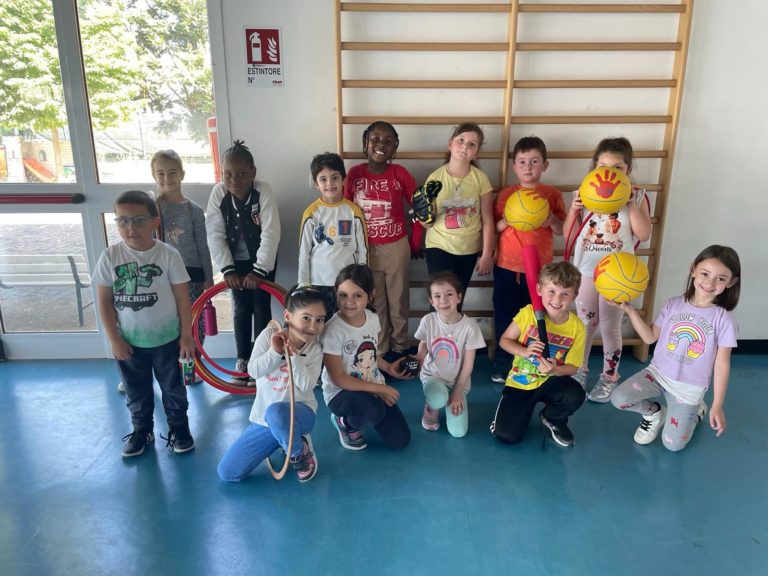
The children of the Selci Primary School,
When a kid is playing, they’re exploring movement naturally. They’re experimenting without fear of messing up. They’re learning without feeling like they’re being evaluated. Jerome Bruner made the same point differently: learning sticks when it’s active, contextualized, and meaningful. A WOD built around a game doesn’t just get kids more engaged; it helps them actually retain the motor skills you’re teaching.
The practical takeaway: don’t tack a game onto the end of class. Build the whole thing as a game.
Confidence is what makes learning possible.
Without it, kids don’t take risks. And without risk, there’s no learning.
Maria Montessori talked about the “prepared environment” — a space where kids feel free to explore without judgment. In your class, that means mistakes are expected (not just tolerated), feedback is positive and specific, and you’re not setting kids up to compare themselves to each other. When a child feels safe, they’ll try the hard movement, lean into the challenge, and start building real autonomy.
Flip that, and you get avoidance, lost motivation, and kids who quietly stop showing up. Your job isn’t only to teach movement. It’s to protect the emotional environment that makes movement learning possible.
Movement: competence before intensity.
Kids don’t need to train harder. They need to move better and more often.
Running, jumping, climbing, throwing — those are your actual fundamentals. CrossFit Kids works best when you’re prioritizing variety and coordination, developing broad movement patterns, and avoiding early specialization. When the game is well-designed, intensity takes care of itself.
How to Actually Structure the Class
1. Welcome and warm-up (5-10 minutes)
Get them connected and get them moving. Tag, relays, running with variability (skipping, shuffling, jumping) — the goal is immediate fun while gradually warming up the body. They should be laughing before you’ve said anything technical.
2. Skill/learning (10-15 minutes)
This is where you develop a specific motor skill, but your job here is translation. Less explanation, more imagery:
- Squat → “Sit on an invisible chair.”
- Deadlift → “Pick up a treasure from the ground.”
Bruner called this kind of active, narrative learning the most effective kind. Give them an experience, not a lecture.
3. WOD as a narrative experience (10-15 minutes)
The Workout of the Day is the heart of class, but with kids, it has to become a story they’re living, not a workout they’re completing. Think missions, teams, simple, clear objectives. The point isn’t performance — it’s engagement, collaboration, and intrinsic motivation. When the format is right, kids are training hard without ever feeling like it’s a chore.
Some examples:
- A “treasure hunt” built around bear crawls, jumps, and throws
- Time-based circuits instead of rep-based tasks
The stimulus matters, but the game format is what makes it land.
4. Final game (optional but recommended) (5-10 minutes)
End on a high. Team games, cooperative challenges — something that reinforces relationships and sends kids out the door with a good feeling about what just happened.
5. Closing and feedback (2-5 minutes)
Ask: “What was the most fun part?” Reinforce the positive behaviors you saw. Stay away from anything performance-focused here.
Common Mistakes To Avoid
- Running CrossFit Kids like a scaled-down adult class
- Over-coaching the technique and under-delivering the experience
- Using games as filler instead of as your primary teaching method
- Giving the most recognition to the fastest or strongest kids
You’re not the protagonist. They are.
The best CrossFit Kids coaches aren’t dominant figures laying down rules. They’re observers. They’re watching each kid, reading what that child needs, and adapting on the fly to spark curiosity and keep participation alive. Your encouragement builds their confidence. Your environment builds their safety. Step back and let them take up space.
The Bottom Line
Kids learn through play. Not despite it — through it. When you build your class around that truth, you’re not just running a good session. You’re giving kids a meaningful experience they’ll carry with them.
If they leave smiling, you nailed it. If they come back next week, that’s real coaching.
Want to learn more about building the ideal CrossFit Kids program?
Join us for the CrossFit Owners and Coaches Conference this July in San Jose, California, and be sure to attend “They’ll Beg to Come Back: Building CrossFit Programs Kids and Teenagers Actually Want” with Aimee Lyons.
If you want to learn even more about coaching kids and teens, join us for our next in-person CrossFit Kids Certificate Course at CrossFit Roots in Boulder, CO, September 12 – 13, 2026. Learn more and grab your spot today.
 Leonardo Renzi (CF-L2) is a primary school teacher, a children’s soccer coach, and a CrossFit trainer who holds a degree in sports science and a master’s degree in sports management. His mission is to show that CrossFit is for everyone, not just advanced athletes, but also for sedentary individuals and those recovering from injuries. He also wrote, “