In the world of athletic training, one of the most central — and often underestimated — concepts is fatigue. Not simply the feeling of tiredness after an intense effort, fatigue is a complex physiological response to workload that can involve muscular, neurological, and psychological components. In other words, it is a warning signal from the body indicating the need for recovery.
Understanding fatigue is essential for correctly interpreting phenomena such as overreaching and overtraining — two conditions linked to excessive training, yet very different in nature, duration, and impact on performance. In this article, we will examine these two states, highlighting their causes, distinctive symptoms, and strategies for prevention or effective management. But first, it’s crucial to understand where it all begins: with fatigue itself.
Fatigue
Fatigue represents one of the most evident and complex responses of the body to training. In sports contexts, it manifests as a drop in performance, caused by the athlete’s inability to maintain the intensity, duration, or pace required by the activity. This objective decline is almost always accompanied by a subjective perception of increased effort — what once felt manageable suddenly becomes difficult, if not impossible, to sustain.
This dual nature of fatigue — both objective and subjective — is a key factor in training planning, especially in physically demanding disciplines such as CrossFit.. In these settings, recognizing the signs of fatigue is not optional but an essential requirement for developing effective and sustainable training programs.
Fatigue can be mainly classified into two major categories: peripheral fatigue and central fatigue.
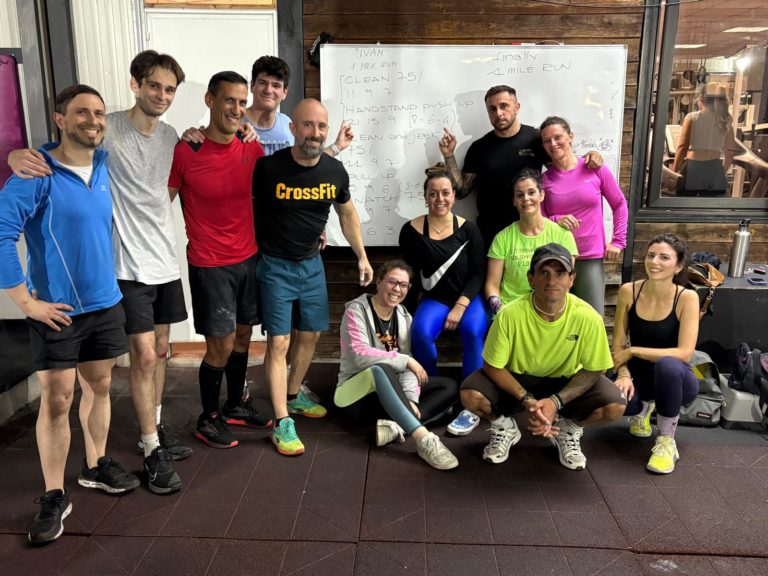
Coach Leonardo Renzi with one of his classes.
Peripheral Fatigue
Peripheral fatigue is directly related to the muscular system and is significantly influenced by the efficiency of energy systems, as well as the functioning of the cardiovascular and cardiorespiratory systems. It is a condition that can arise from a combination of factors that impair the muscle’s ability to generate and sustain the required effort.
One of the first elements involved is the decline in energy production. In the alactic anaerobic system (aka phosphacreatine system), this occurs when there is a depletion of ATP and creatine phosphate (CP), which are essential for maintaining rapid and intense muscle contractions. Without these energy reserves, the muscle loses its ability to contract effectively.
The aerobic system can also experience a similar decline, particularly during prolonged efforts, primarily due to the depletion of muscle and liver glycogen stores. This leads to a gradual slowdown in energy production and, in more extreme cases, may result in hypoglycemia — a sharp drop in blood glucose levels.
In addition to reduced energy availability, peripheral fatigue is worsened by the accumulation of metabolic byproducts from intense muscular activity, such as lactate, hydrogen ions (H⁺), and other metabolites. These compounds — often incorrectly labeled as “waste products” — negatively affect muscle contraction, reducing its efficiency.
It is important to note that lactate is not merely a waste product; the body can reuse it by converting it into glycogen, transforming it into carbon dioxide or even certain amino acids, or eliminating it through sweat and urine.
Central Fatigue
Central fatigue is a type of exhaustion that affects the central nervous system (CNS) and occurs when the effectiveness of the neural impulse traveling from the brain, through the spinal cord, to the muscles is diminished. In other words, the signal responsible for triggering muscle contraction loses strength or quality, limiting muscle activation, even if the peripheral structures (muscles, tendons, joints) are still functioning properly.
This condition is particularly noticeable in high-intensity, technically demanding sports like CrossFit, where neuromuscular fatigue can impair the execution of complex movements. Common examples include failed or stalled attempts in exercises such as handstand push-ups, muscle-ups, or barbell lifts, which require not only physical strength but also precise motor control.
Unlike peripheral fatigue, central fatigue can be partially manageable and reversible. In many cases, improvements in the athlete’s motivation or emotional state can help reactivate the nervous system. External stimuli like support from a coach, encouragement from other gym members, mental focus strategies, or developing psychological traits such as resilience can contribute to restoring neural activation and maintaining performance under stress.
Overreaching and Overtraining
The term overreaching refers to an excessive training load in terms of frequency, volume, and/or intensity, applied acutely. In the short term, this leads to a progressive increase in the athlete’s perceived fatigue. However, it is a temporary and reversible condition that can be resolved with a few days of rest or through active recovery strategies.
In some cases, overreaching is intentionally induced (functional overreaching) with the goal of triggering a positive adaptation. After a phase of reduced training load (deloading or tapering), this state can result in improved performance or a peak in physical condition.
Overtraining, on the other hand, refers to a chronic overload, also caused by excessive intensity, volume, and frequency, but sustained over a longer period. In this case, fatigue becomes more intense and persistent, potentially leading to injuries, physiological dysfunctions, and even illness. Often, overtraining represents the negative evolution of an unmanaged overreaching phase.
Overtraining could take weeks or months to recover from and may require an extended break and a complete reset of the training program, making it far more difficult to address.
Both conditions, if neglected, can lead to stagnation or even regression in athletic performance.
To avoid falling into these states, it is crucial to recognize signs of fatigue early. In the next section, we will explore the main subjective and objective indicators that help monitor the athlete’s stress levels and allow timely intervention before overload becomes harmful.
*Heart-Rate Variability (HRV)
Heart-rate variability is a measure of the variance in time (measured in milliseconds) between heartbeats. This variability is a response to the competing signals sent to the heart by two branches of the autonomic nervous system: the sympathetic branch (fight or flight) and the parasympathetic branch (rest and digest). If the sympathetic nervous system is the dominant signal, the variation between heartbeats tends to be lower. If the parasympathetic nervous system is dominating, the variation between beats tends to be higher. Research has shown a relationship between low HRV and increased risk of depression, anxiety, and cardiovascular disease. Those with higher HRV may have greater cardiovascular fitness and be more resistant to stress.
The best way to determine HRV is with an electrocardiogram conducted at a medical office. In recent years, various apps, heart-rate monitors, straps, bands, and rings have been introduced to measure HRV. The accuracy of these devices is still being examined. While HRV values are highly individual, younger people tend to have higher HRV than older individuals. With no definition for what a “normal” HRV is, we cannot plot HRV values for sickness, wellness, or fitness. Instead of aiming for specific HRV values, the overall trend is most important. Take your baseline measurement and try to structure your lifestyle to increase it.
Without relying on any device, you can use your resting heart rate in a similar fashion to HRV to gain insight into how your nervous system is functioning. By taking your resting heart rate when you wake each morning and paying attention to significant jumps of 5-10 BPM, you will gain insight into when your sympathetic nervous system is overriding your parasympathetic nervous system. At this point, you can take various actions to bring your resting heart rate back down to your normal average.
Here are a few actions you can take to decrease your resting heart rate and improve your HRV values:
- Allow sufficient recovery from training.
- Stay properly hydrated.
- Avoid alcohol.
- Eat a healthy diet like the one we describe in this training guide.
- Get quality sleep.
*This section was taken directly from the Nutrition I Training Guide, developed by CrossFit, LLC.
Desire to Train
One of the first signs of a possible overload state is a noticeable drop in motivation to train. Even the most dedicated athletes can experience resistance toward training when fatigue becomes excessive. However, it’s important to assess this feeling over several consecutive days and across different types of training sessions, rather than drawing conclusions from a single bad day.
Mood Changes
Mood changes are another potential warning sign. When the body accumulates fatigue over an extended period, the athlete may become more irritable, anxious, or lose interest in activities they usually enjoy. In more extreme cases, exaggerated or hard-to-control emotional reactions may occur. When combined with other symptoms, these mood shifts strengthen the likelihood of an overtraining condition.
Loss of Appetite
Loss of appetite, especially in athletes following restrictive diets, is a serious red flag. If fatigue is accompanied by a lack of interest in food, it may indicate that the body is entering a state of advanced metabolic stress.
Sleep Disorders
Sleep disturbances are common in states of excessive fatigue. Difficulty falling asleep, early awakenings, or restless nights with non-restorative sleep are warning signs that may indicate impaired recovery.
Frequent Illnesses
Recurring illnesses can signal a weakened immune system, often caused by excessive training loads and insufficient recovery. While getting sick can happen regardless of physical condition, the occurrence of illness alongside other warning signs may point to genuine overload.
Injuries and Persistent Pain
Injuries and ongoing discomfort — such as muscle strains, tightness, or inflammation — are more likely when the body is chronically fatigued. In such conditions, the body is less capable of handling physical stress and more prone to injuries.
Grip Strength
Grip strength, often underestimated, can be a clear indicator of accumulated fatigue. When fatigue levels are high and persistent, the ability to maintain a strong grip tends to decline noticeably. This metric is particularly useful because it is easy to assess. Simply hanging from a bar is enough to feel an immediate sense of weakness, without the need for complex or technical exercises.
For those seeking a more objective and precise measurement, tools such as a hand dynamometer can be used to assess grip strength scientifically. This test is reliable and minimally influenced by external factors, making it an excellent indicator of recovery status and the athlete’s neuromuscular condition.
Actual Performance Effectiveness (as a Final Indicator)
A decline in performance can occur even under normal conditions. However, if it happens alongside other signs of fatigue — such as sleep disturbances, mood instability, loss of appetite, poor recovery, or weakened grip strength — it should be taken seriously as a potential indicator of overreaching or, in more severe cases, overtraining. When actual performance consistently falls below expected potential, it may indicate that the body is no longer able to handle the workload effectively.
Odds are that having several markers trending in a negative direction from baseline, consistently, indicates that an over-reaching state is occurring. Properly monitoring and interpreting all these signals allows for the development of smarter and more sustainable training programs. Understanding these indicators enables a preventive approach, using effective strategies such as tapering — a controlled reduction in training load — or active recovery. In this way, it becomes possible to maximize performance while keeping the athlete healthy, avoiding overload, and supporting the continuity of their athletic development.