Holiday meals, family traditions, and an endless supply of baked goods can test even the most disciplined eater. Here’s how to enjoy the season without letting your elephant run the show.
The holiday season is upon us, and with it comes a familiar collection of traditions. Family gatherings, office parties, elaborate meals, homemade baking, and the annual appearance of foods that only exist between November and January.
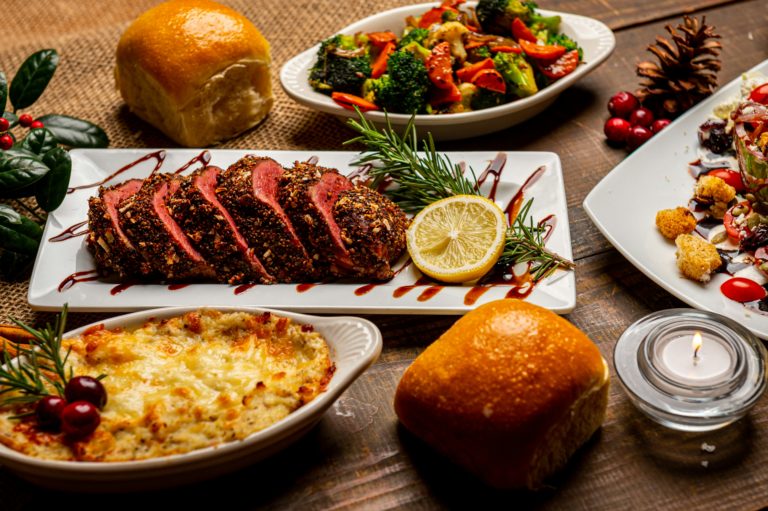
For many people, this is a wonderful time of year. For others, especially those working to improve their health or lose excess body fat, it can feel like navigating a nutritional minefield.
A bowl of chocolates sits at reception. Someone brings shortbread to work. Your neighbor drops off a tin of homemade cookies. Every social invitation seems to involve food, and declining Grandma’s famous stuffing is interpreted as a personal affront.
Research suggests that a disproportionate amount of annual weight gain occurs during relatively short periods of indulgence, particularly the holiday season between American Thanksgiving and the New Year. In a landmark study published in the New England Journal of Medicine, researchers found that American adults gained an average of approximately 0.8 pounds (0.37 kg) during the winter holiday period. That might sound insignificant, but the troubling finding was that participants failed to lose most of that weight during the following year. A pound here, another pound or two there on an indulgent vacation, and suddenly a decade has passed, and you’re carrying an extra 15 or 20 pounds. The annual accumulation of body fat has less to do with what happens during an ordinary Tuesday in March and more to do with a handful of weeks each year when our habits go right out the window.
In the first two parts of this series, we explored the biological mechanisms that regulate appetite and the environmental influences that shape our eating behaviors. We learned that hunger can be driven by habit, physical sensations, metabolic signals, and the brain’s reward circuitry. We also introduced the elephant, the rider, and the path as a framework for understanding behavior.
The rider represents our conscious decisions. The elephant represents our powerful instincts, emotions, and automatic behaviors. The path represents the environment in which those decisions take place.
During the holidays, the path becomes a veritable obstacle course of temptation, and the elephant wears a Santa hat and drinks cocktails.
Fortunately, we can prepare.

Know Yourself: Are You an Abstainer or a Moderator?
Before making a holiday eating plan, ask yourself: When you encounter a food you find especially enticing, is it easier to have a little or none at all?
Author Gretchen Rubin popularized the distinction between abstainers and moderators in her writing about habits and behavior change.
Moderators generally find that occasional indulgences help them maintain a healthy relationship with food. They can enjoy a cookie, feel satisfied, and move on with their day. Telling them they can never eat another cookie may create unnecessary frustration or make the forbidden food even more appealing.
Abstainers have a different experience. For these individuals, having one cookie means they’re probably having 12. “Just one bite” kicks off an exhausting internal negotiation about whether to have another. Preoccupation with thoughts of cookies dominates the rest of the day, rationalizing why another would be acceptable, and eventually returning to the kitchen for several more.
For an abstainer, deciding in advance that cookies are simply off the menu can eliminate the entire struggle and bring a sense of internal peace.
Rubin describes her own experience with moderation as an ongoing mental debate about whether an indulgence is justified. Eliminating the food was just easier. This distinction becomes especially important when we consider the addiction-like eating behaviors discussed in Part 1.
Some individuals experience intense cravings for ultra-processed foods, consume far more than intended, make repeated unsuccessful attempts to cut back, and continue eating those foods despite serious negative consequences. These are recognizable features of problematic, compulsive behavior. Researchers have developed instruments such as the Yale Food Addiction Scale to investigate these experiences, although food addiction remains a debated scientific concept rather than a formally recognized standalone diagnosis.
For someone struggling with these patterns, advice (or pressure) to simply “enjoy everything in moderation” is spectacularly unhelpful.
Imagine telling someone who has successfully stopped smoking that they should learn to enjoy just one cigarette at Christmas. Or encouraging a person recovering from alcohol dependence to have a few drinks at a wedding because being alcohol-free seems “too restrictive.”
We generally recognize that abstinence is a sensible, empowering choice for someone who has struggled to control their addiction to a particular vice. Yet in nutrition, a person who decides to permanently eliminate sugar-sweetened beverages, candy, or other foods they repeatedly overconsume may encounter considerable criticism, including from trainers, coaches, and other health professionals. They’re told that all foods can fit into a healthy diet, that strict rules are unsustainable, or that eliminating entire food categories signals disordered eating.
There is an important distinction to make here. Avoiding a certain food because consuming it reliably triggers cravings, loss of control, and distress is not evidence of an eating disorder. Neither is choosing to abstain from alcohol, cigarettes, or other substances that do not support health.
At the same time, rigid food rules can become harmful when they produce nutritional inadequacy, debilitating anxiety, social isolation, or other symptoms of an eating disorder. The reasons behind the behavior and its consequences distinguish problematic from optimal.
The abstainer/moderator distinction is a useful framework for self-understanding, and we should respect, rather than undermine, the autonomy of people who have discovered that abstinence works better for them.
If someone has struggled with their weight for years, repeatedly lost control around certain foods, and finally found peace by eliminating those foods, we should celebrate their success rather than insist they learn to eat a moderate amount of something they no longer want. They’ve found a strategy that works.
For the abstainers reading this article, your holiday plan is very simple: Continue eating the foods that support your health, politely decline the foods you’ve chosen to avoid, and enjoy the festivities. You don’t owe anyone a slice of pie.
And for the moderators, let’s talk about how to enjoy some holiday favorites without arriving at the New Year 10 steps back from your health goals.
The Holiday Game Plan
There’s nothing inherently problematic about enjoying a special meal with family and friends. Food is an important part of culture, celebration, and social connection.
But there’s a big difference between enjoying a handful of your favorite holiday meals and spending six weeks eating everything that crosses your path.
Choose the meals that matter most to you and focus on those. Skip the other indulgences that aren’t making your life richer or deepening your social bonds.
Whether it’s Thanksgiving, Christmas dinner, or another treasured meal, the strategies below are designed to help you enjoy these festivities without totally derailing your healthy habits.

1. Start the Day With a Workout
One of the best ways to prepare for a holiday gathering is to begin the day doing something good for your body. Get to your CrossFit affiliate for the morning class, meet a friend for a workout, or head outside for some physical activity. If you’re away from your gym and need inspiration for a home workout, check out this PDF of Holiday Travel Workouts.
And if you’re participating in a traditional holiday workout, perhaps something involving 12 days and a sing-along number of repetitions, you can take satisfaction in knowing you’ve already done something productive before the festivities begin.
This is not to say that exercise is transactional with food in a calories-in/calories-out mathematical way. Attempting to calculate how many burpees are required to compensate for a serving of pumpkin pie is not the way, and let’s be clear that adding more cardio does not “burn off” your indulgent choices.
Exercise increases skeletal muscle glucose uptake, improves insulin sensitivity, and supports the metabolic processes that manage incoming nutrients. Muscle contractions stimulate glucose transport through mechanisms that don’t depend entirely on insulin, and the benefits of exercise can persist beyond the workout itself. If you’re going to indulge in mashed potatoes, sweet rolls, and figgy pudding, at least prime your muscle to mop up that incoming glucose.
2. Give Protein the First Invitation
In Part 2, we explored the protein leverage hypothesis and how protein affects satiety.
Protein stimulates several physiological mechanisms involved in appetite regulation, including the release of peptide YY and GLP-1. Controlled feeding studies have demonstrated that increasing dietary protein can reduce spontaneous energy intake. Holiday meals often provide an excellent opportunity to take advantage of this.
Turkey, roast beef, ham, seafood, and other protein-rich foods are frequently the centerpiece of the celebration. Start there.
Serve yourself a generous portion of the protein-rich main dish and enjoy it before moving on to the other offerings. Eating protein first can help you approach comfortable satiety before you’ve consumed large quantities of energy-dense side dishes and desserts.
You can still enjoy Grandma’s stuffing. You’ll simply make that decision after your body’s satiety mechanisms have had a chance to catch up.
3. Don’t Eat Like a Competitive Eater
Remember sensory-specific satiety? In Part 2, we discussed an episode of “Man v. Food” in which host Adam Richman was struggling to finish an enormous ice cream challenge. He solved it by eating French fries. After consuming something hot, salty, and crunchy, he was able to return to the cold, sweet ice cream. He managed to eat more food by eating more food.
As we consume a particular flavor/texture/temperature, our desire to keep eating it gradually diminishes. A delicious savory meal becomes less appealing as we approach palate fatigue. But changing flavors and textures renews our desire to eat.
Unfortunately, holiday meals offer the perfect environment to unintentionally reproduce the competitive eater strategy. You start with turkey and stuffing, move on to pumpkin pie, return for a few more bites of the savory leftovers, then sample the Christmas cookies, and then discover one more forkful of mashed potato out of the refrigerator is weirdly appealing.
Every change in flavor/texture/temperature provides another opportunity to renew your appetite.
If your objective is to enjoy a satisfying meal without overeating, keep your eating experience in one general direction. Enjoy your savory meal. Give yourself time to recognize fullness. If you choose to have dessert, pick something you really enjoy and savor it.
Then call it a meal. There’s no need to return to the kitchen like a curious raccoon and go for round two (or three or four).
4. Take a Walk After Dinner
After a large holiday meal, the traditional plan usually involves moving from the dining room table to the living room couch, where everyone undoes their top button and spends the next several hours napping.
There is a better option: Go for a walk.
After eating, blood glucose rises as carbohydrates are digested and absorbed. The pancreas releases insulin, which helps clear glucose out of the bloodstream by facilitating glucose uptake and storage. Skeletal muscle provides an important destination for circulating glucose, and muscle contractions can increase glucose uptake through insulin-independent pathways.
A 2023 systematic review and meta-analysis examined randomized trials comparing exercise before and after meals. The researchers found that post-meal activity reduced blood glucose excursions more effectively than exercising before eating or remaining inactive. The benefit was greatest when activity began relatively soon after the meal.
You don’t need to perform a second CrossFit workout. A comfortable 10- to 20-minute walk is enough for muscle contractions to help dispose of glucose. Bring the family, walk the dog, or explore the neighborhood Christmas lights.
You’ll probably find that a little fresh air and movement feels better than collapsing into the couch and declaring that you’re never eating again.
5. Give Your Digestive System a Break the Next Day
After a large holiday meal, many people wake up the following day feeling pretty uninterested in food. If you’ve eaten enough calories for two or three days, it’s normal to not feel very hungry.
For healthy adults who tolerate fasting comfortably, the day after a large holiday meal may be a good time to extend the usual overnight fasting window. Your digestive system has just done a lot of work, and it deserves a break.
Perhaps you finish Christmas dinner at 7 p.m. and don’t feel hungry until 10 or 11 the following morning. You don’t need to eat breakfast just because the clock says it’s breakfast time. This creates a 15- or 16-hour overnight fasting window without requiring a heroic effort. The practical advantage is that you let your appetite guide your next meal rather than eating out of habit.
The holiday meal is over, and it’s perfectly normal to give your digestive system a break. Your next meal can happen when you’re comfortably hungry again.
One Meal Doesn’t Determine Your Health
Your long-term health reflects the accumulation of behaviors repeated over months, years, and decades. One meal cannot make or break your health. But six weeks of additional snacking, drinking, desserts, and oversized portions can cause real changes in the wrong direction.
The holiday season often begins with Halloween candy, continues through Thanksgiving, and moves into office parties and Christmas gatherings, all the way to New Year’s celebrations. For someone who repeatedly abandons their normal eating habits throughout this entire period, the cumulative effects are significant.
This is where the elephant, rider, and path framework comes back in. The rider can decide which holiday traditions are worth enjoying and which foods to leave alone. The elephant benefits from protein-rich meals, adequate sleep, regular exercise, and a predictable routine. You can arrange the path so nutritious foods stay convenient, supportive people stay close, and temptation doesn’t occupy every available surface in the house.
You can enjoy Christmas dinner without turning all of December into Christmas dinner.
Enjoy the Holiday, Not Just the Food
Think about your favorite holiday memories. They may involve the smell of a special meal, a favorite dessert, or a family recipe that’s been passed down through generations. But I’d wager they mostly involve quality time with special people. We treasure conversations around the table, children opening presents, playing games, walking through the snow, visiting relatives, and sharing traditions with our loved ones.
Food is part of the experience, but it doesn’t need to be the entire experience.
For someone who has struggled with compulsive eating, choosing abstinence from certain foods may make the holidays more peaceful. If you can comfortably enjoy an occasional indulgence, a little planning can help you participate without abandoning your healthy routines. Both approaches are entirely reasonable.
Spending January trying to undo everything you did in December is no way to start the year. The goal is to finish the holiday season feeling like you enjoyed yourself, maintained the habits that support your health, and strengthened your relationships with the people around you.
- Read Lean for Life, Part 1: How To Control Your Appetite and Maintain a Healthy Body Weight Forever
- Read Lean for Life, Part 2: Your Brain Has an Elephant Problem
About the Author
 Jocelyn Rylee (CF-L4) and her husband David founded CrossFit BRIO in 2008, starting in a modest 1500 sq ft space and focusing on personal training. Her dedication to excellence has also earned her a position on CrossFit LLC’s Level 1 Seminar Staff, a role that allows her to share her passion and expertise with aspiring coaches. Jocelyn holds specialties in Endurance, Gymnastics, Competition, and Weightlifting and is also a certified Strength and Conditioning Specialist through the NSCA. As a Level 2 Olympic Weightlifting Coach and a Level 3 referee, she has been deeply involved in the sport, even serving as a board member of the Saskatchewan Weightlifting Association for five years. Her achievements include being Saskatchewan’s top-ranked female Olympic Weightlifter from 2012 to 2015, during which she held provincial records in the Snatch, Clean & Jerk, and Total in her weight class. With an MS in Human Nutrition, Jocelyn loves sharing her knowledge on nutrition and performance through her blog and Instagram as “The Keto Athlete,” where she delves into the science of nutrition and its impact on athletic performance.