“Does the barbell contact my hip?”
On heavy days, this question often comes up, and my answer is immediate: Yes!
The barbell contacts the hip when the athlete reaches the finish position, allowing the bar to gain elevation and timing for the next stages of the movement. We often call this a triple extension.
In this second part of our weightlifting series, we’ll discuss the position that has the greatest potential for increasing bar height and creating weightlessness: the triple extension.
The triple extension is characterized by the aggressive and simultaneous extension of the ankle, knee, and hip joints. Its main objective is to achieve speed through the middle of the lift, and the athlete demonstrates proper core-to-extremity movement patterns by maintaining straight arms in this position. It is crucial for the athlete to achieve this position aggressively and consistently, ensuring all the force generated during the initial phases of the movement is transferred as height. In this position, the barbell also reaches its highest speed throughout the entire trajectory.
When reaching this position, we want to ensure a vertical position of the hips and shoulders, finishing behind the bar with the arms straight. The tip we like to give is “hips up, shoulders back.” The key is to combine an aggressive hip extension and a violent leg drive to generate maximum vertical displacement with minimum horizontal displacement.
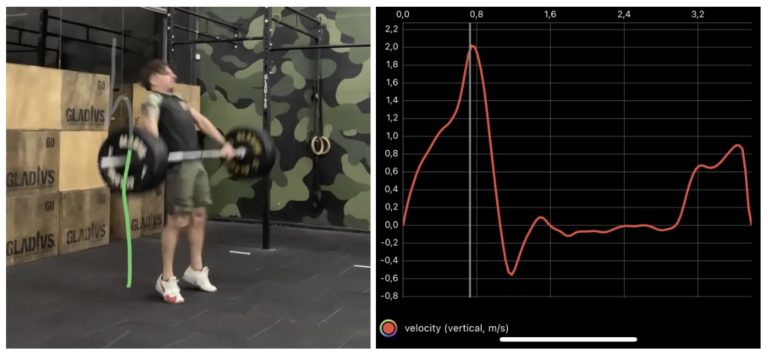
The finish position has the potential to build heavy loads and gain power transfer from the lower limb muscles to the bar. So, why do we see so many athletes lose this important position?
Here are four primary reasons and how to correct them.
Lack of Hip Extension
After the bar passes the knee, the athlete fails to fully extend their hips, losing potential and ending up using energy from their arms rather than their core. This is a common flaw, especially on days with light to moderate loads, where the athlete ends up sacrificing positions to gain speed. However, this isn’t always a good strategy. After all, we sacrifice one of the main themes of functional movement: move from core to extremity.
To correct the lack of hip extension and teach the athlete the ability to extend their hips efficiently, we like to use “down and finish,” which consists of getting into a down position (upright torso, shoulders in line or slightly over the bar, knees bent and tracking over toes, and arms relaxed) and transitioning aggressively and vertically to the final position. Doing this a few times allows the athlete to realize they need to stay “high,” meaning extending their hips, knees, and ankles. A good tactile correction suggestion is to place your hands slightly above the athlete’s shoulders and ask them to reach this contact through the final position.
Lack of Patience
Sometimes, athletes rush to finish a repetition and end up not reaching the final position. In this case, accelerating at the right time can help them achieve their goal. It helps them understand the hips and bar meet at the right moment, creating a vertical and continuous movement.
In this case, I use tempo work. This consists of having the athlete slowly transition from the knee position (hang) to the down position in 5 seconds. Upon reaching this position, we aim for aggressive hip action and a vertical transfer to the bar. This can help the athlete gain patience and know the right moment to accelerate to achieve a good final position. Patience is a characteristic present in high-level weightlifters.
Pulling Too Early
Another common flaw is pulling the arms too early. “When the arms bend, the power ends.” Remember, we want athletes to reach the final position with their arms extended and relaxed. Pulling too early can cause the bar to make contact early or late when reaching triple extension. Pulling too early can be related to grip positioning or, again, a matter of the athlete’s patience in waiting to pull after triple extension. Exercises that will teach the correct timing of using the arms are the snatch/clean shrug and snatch/clean movements from the high hang position.
Swinging the Barbell Outside the Base Area (Banging the Bar Forward)
When reaching the final position, we want to see a vertical transfer in the bar. When an athlete’s hips extend but their knees don’t, we see the bar being thrown forward from the base of their feet. This is a common mistake that results in an inefficient and costly movement.
An effective way to correct an athlete is by giving tips like, “Don’t jump forward, jump to the roof,” or “Drive through your heels.” This can help them maintain vertical movement.
Don’t forget to be patient as a coach, too. This is a position that can take time to achieve excellence; some athletes take years to reach this level, so celebrate small steps and continue coaching them to build better positions. After all, every detail counts for a good lift.
Read the Full Series
Weightlifting Series Part 1: Why 80% of Weightlifting Errors Start with the Feet
Weightlifting Series Part 2: Why the Triple Extension Makes or Breaks Heavy Lifts
Weightlifting Series Part 3: How to Fix the Most Common Strength Imbalance in CrossFit
Weightlifting Series Part 4: A Coach’s Guide to Clean and Jerk Imbalances
Weightlifting Series Part 5: Olympic Lifting Classes Inside Our Affiliates
 Alexandre Soster is a Level 3 CrossFit Trainer, co-owner of Ginge CrossFit, and a member of the Burgener Strength seminar team. With many years as a weightlifting coach and athlete, he is now a reference for other coaches and athletes who want to lift weights safely, effectively, and efficiently.