Before I ever wrote a program, I had already been shaped by one. Growing up, hard work was the standard — not the exception. My dad modeled that early, and it stuck. In the gym, those values took a specific form: technique before intensity, consistency over motivation, and a willingness to push into discomfort when it would have been easier to back off. That foundation is the lens through which I program. It always has been, and it is what led me to this definition.
Programming is the deliberate organization of movements and skills into sequences designed to systematically expand an individual’s physical and psychological tolerances over time.
My programming lives in the space between structure and suffering. Couplets, chippers, intervals, and 5-round efforts — all deliberately kept between 10 and 20 minutes — because that window is where real adaptation happens. Long enough to hurt, short enough to demand everything. Movements are chosen not just for what they train, but also for how they conflict with one another, forcing the body to shift, recover, and adapt mid-effort. The physical and mental are not separate. The goal is to challenge people in both.
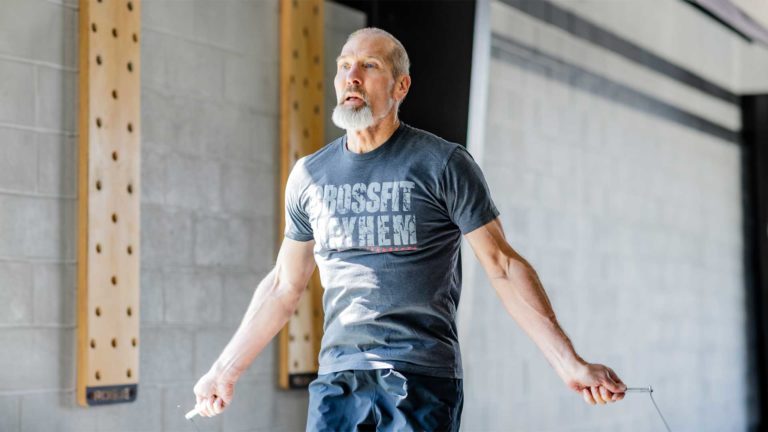
That means a good workout should make an athlete question themselves. The moment of self-doubt — the point where the body is screaming and the mind has to make a decision — is not a flaw in the programming. It is the goal. Push through or pull back. Keep moving or coast. That decision, made repeatedly over time, is what builds mental fortitude. The movements, time domain, loading, and structure of the workout are all tools to get the athlete to that moment. Getting them there is the easy part. What they do when they arrive is what defines them.
What that moment looks like, however, is different for everyone. I have been programming for nearly 20 years — for gyms, individuals, and myself — and the conclusion is always the same: there is no perfect program. What exists are programs that are right or wrong for a given goal.
- What are you training for?
- What are your strengths and weaknesses?
- Are you chasing general preparedness or a specific skill, movement, or event?
The direction is in the answers.
Answering those questions honestly almost always reveals that less is more. Most people, in most situations, can achieve their goals and live better lives by doing one workout a day and managing their work-to-rest ratio. Overuse and overtraining account for far too many burnouts and injuries. This is where programming becomes more than just workout selection; it is the deliberate management of movement function redundancy and volume accumulation over time.
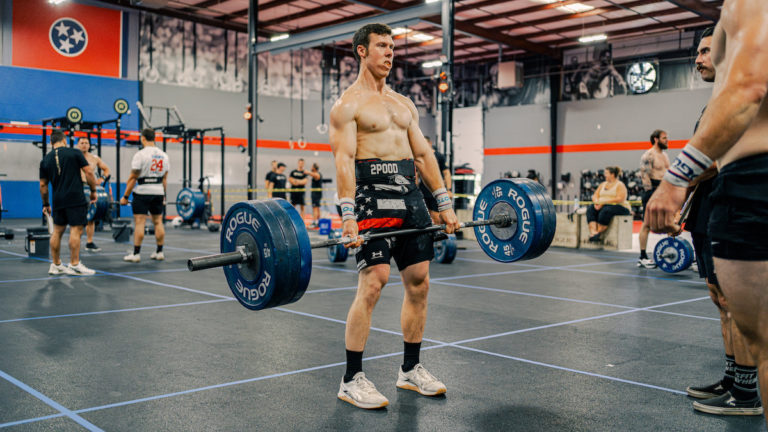
Managing that history is where the process begins. Building a workout doesn’t start with the workout. It starts with everything that came before it:
- What have the athletes done this week, last week, a month ago?
- Which movements have been repeated and which have been neglected?
- How many times have we gone overhead, squatted, pushed, pulled?
- What time domains have we been living in?
The program has a history, and that history has to be accounted for before anything new is added. From there, the goal drives everything else. The history tells you where you are. The goal tells you where you are going. The workout is just the next step between the two.
That next step begins with movement selection, which fills the gaps identified in the analysis. Every movement choice is a decision about where and when the athlete will feel the stimulus and fatigue. Combine movements with minimal interference, and the limiting factor becomes cardiorespiratory endurance — the athlete keeps moving until their engine gives out. Increase the interference and the limiting factor shifts to muscular fatigue in workouts such as the Hero WOD JT — the athlete slows down because their muscles have reached failure, not because they are out of breath. Load, volume, and distance are the remaining variables. Adjust any one of them, and the pace of the entire workout changes. Together, these choices give the programmer precise control over the stimulus, and precise control over the stimulus is what separates a purposeful workout from a random one.
A purposeful workout always has a standard. A standard exists for a reason. It defines the stimulus, sets the expectation, and gives the athlete something to chase. Scaling is not the absence of standard — it is the path toward it. The goal is always to close the gap between what the athlete can do today and what the workout demands. We scale for progress, not participation. The standard never moves. The athlete does.
Programming is a science. It requires a deep understanding of movement, stimulus, adaptation, and the athlete in front of you. But it is also an art, and like any art, the tools only take you so far. What separates a good program from a great one is the understanding behind it. Why these movements? Why this format? Why now. Nearly 20 years of programming have shaped how I approach every workout I write. The foundation, the philosophy, the process, and the standard are all expressions of that understanding.
The goal has always been the same: to build people who are harder to break. In the gym and beyond it.
About the Author
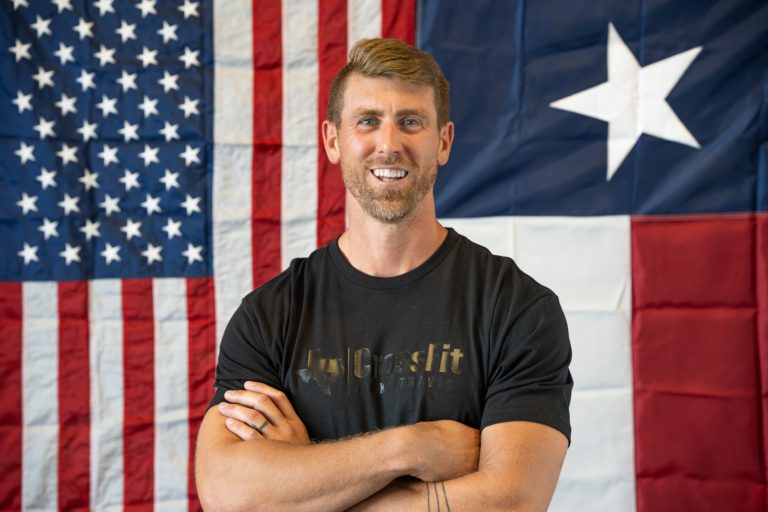 Spencer Hendel has been coaching in the CrossFit space since 2011 and is a Certified CrossFit Level 4 Coach with 14 years on Seminar Staff. On the CAP team, he leads program design and coach development. A former competitive athlete, he qualified for his first CrossFit Games in 2009 and competed for nearly a decade.