“We are what we repeatedly do.
Excellence, therefore, is not an act, but a habit.”
– Aristotle
Two Definitions Worth Getting Right
Before we go further, two definitions are worth establishing.
The first is “habit.” A habit is not simply something you do repeatedly. It is the intersection of three things: knowledge, desire, and skill. You have to know what to do and why. You have to want to do it. And you have to know how. Remove any one of those three, and what you have is not a habit; it is an intention, an obligation, or a gap in training. But when all three are present, and a behavior is repeated consistently, the habit forms almost on its own. That is the mechanism. Building real habits in yourself, and in the athletes and staff you lead, means doing the work in all three dimensions, not just telling people what to do and expecting it to stick.
The second is “effective.” Effectiveness is the ability to achieve your objectives and produce the expected result. Simple enough, until you ask the question that definition quietly leaves out: at what cost? If you hit every target but burned out your staff, ran your affiliate into the ground, or exhausted the very resources that made those results possible, were you truly effective? Effectiveness without sustainability is just a faster way to run out of road. For the purposes of what follows, we are not just talking about getting results. We are talking about getting them in a way you can repeat.
The Golden Goose Problem
Stephen R. Covey, in “The 7 Habits of Highly Effective People,” argues that true effectiveness depends on preserving the ability to keep producing results. He illustrates this with the fable of the golden goose: The golden eggs represent results, and the goose represents the capacity to produce them. Focus only on the eggs and neglect the goose, and eventually there are no eggs at all.
For CrossFit coaches, that tension is concrete. Prioritizing output over sustainability, whether that means pushing athletes too hard and too fast or neglecting your own development as a coach, erodes the very thing that makes good results possible in the first place.
Real effectiveness is the balance between the two: production and the capacity to produce. We need to generate lasting results in our athletes without depleting the source of those results. That is where good habits come in. Being effective means getting results that actually matter while protecting and strengthening the ability to keep getting them.
That balance does not happen by accident. It requires coaches to make it a daily focus, not just for their athletes’ sake, but for their own. Coaches who build the right habits become more capable over time rather than more worn down.
And the stakes are higher than they might seem. As Covey writes, “Sow a thought, reap an action; sow an action, reap a habit; sow a habit, reap a character; sow a character, reap a destiny.” Our character, in other words, is largely the sum of our habits. For coaches, those habits either drive effectiveness or undermine it. There is not much middle ground.
The Habits Worth Building
These are the habits I work on personally and professionally, and that I cultivate across my coaching community, as a way to protect the capacity to keep producing results.
Do more than is expected. Bring a proactive attitude to your work, focusing on what you can control or influence rather than wasting energy on what you cannot. Act according to your values and principles, not just your emotions or the circumstances in front of you. Stay solution-oriented. Commit fully to whatever you have agreed to do. Take responsibility for everything in your sphere and resist the impulse to blame others. Seek first to understand, then to be understood. Build synergy with the people around you. And never stop sharpening your instrument: pursue knowledge continuously, in every dimension of your coaching.
What Shifts When You Do the Work
When coaches do the consistent work of developing knowledge, skill, and desire across all three dimensions, something shifts. New levels of personal and professional effectiveness become possible. Healthy habits take root. And the capacity to generate results does not diminish over time; it compounds. That, more than any single technique or program, is what separates a highly effective coach from one who simply gets by.
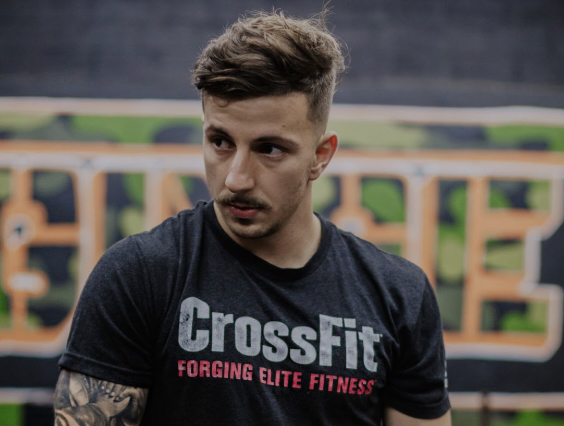 Alexandre Soster is a Certified CrossFit Level 4 CrossFit Coach, co-owner of Ginge CrossFit, and a member of the Burgener Strength seminar team. With many years as a weightlifting coach and athlete, he is now a reference for other coaches and athletes who want to lift weights safely, effectively, and efficiently.