CrossFit gyms are built around preparation — yet one of the most critical forms of readiness is often overlooked: the ability to respond to a sudden cardiac emergency.
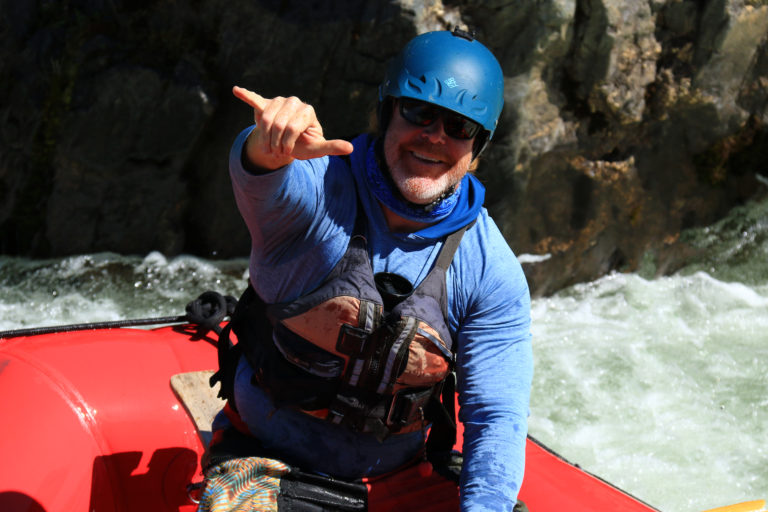
I’m Joe Ellis, and in 2023 I suffered a cardiac arrest while guiding a white-water rafting trip and was revived by an AED. I’m a high-school gym teacher and athletic coach, a CrossFit gym owner, and a lifelong outdoorsman.

Photo credit: Scott Blankenfeld
Looking back, I frequently reflect on how I survived my incident, and the answer is simple: I only survived because an AED was immediately available, and I was surrounded by people who were trained, prepared, and unafraid to help. They recognized the emergency, knew what to do, and acted without hesitation. That combination of preparation and action saved my life.
Preparation Is A Core Tenet of CrossFit — So Why Is This Being Missed?
At their core, CrossFit gyms focus on persistence and preparation. Athletes train for the unknown and unknowable, pushing themselves through difficult workouts in pursuit of greater physical and mental resilience. Coaches teach discipline, accountability, and the importance of responding under pressure. Yet one of the most important forms of preparedness is often overlooked inside the gym environment: readiness for a sudden cardiac emergency.
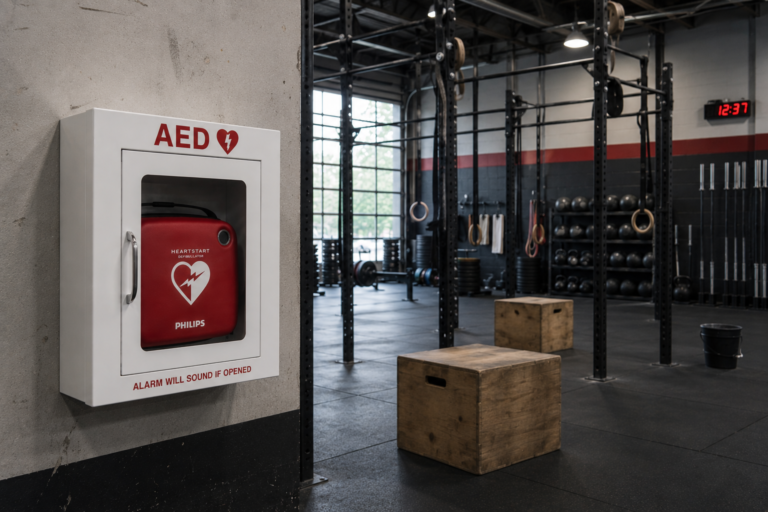
For many gym owners, purchasing an Automated External Defibrillator (AED) feels like checking a box. While having an AED in the facility is absolutely critical, true preparedness goes far beyond mounting a device on the wall. An AED only becomes life-saving equipment when it is visible, maintained, understood, and supported by people who are willing to act in an emergency.
Sudden Cardiac Arrest Doesn’t Discriminate
Sudden cardiac arrest does not discriminate. It does not choose people based on age, appearance, or fitness level. Victims can be active, healthy individuals with no warning signs prior to collapse. In a community built around physical performance and pushing
limits, it is easy to assume that cardiac emergencies happen somewhere else or to someone else. The reality is that sudden cardiac arrest can happen anywhere, at any time, and to anyone. Underlying conditions or genetic predispositions can both lead to cardiac events in otherwise healthy individuals — with risk of incidence going up during heavy exertion.
That is why preparedness matters so deeply within the fitness community. According to the American Heart Association and the Cardiac Arrest Registry to Enhance Survival (CARES Report), the numbers tell a clear story:
- ~10% – Drop in survival chance for every minute that passes without defibrillation
- 6.4 minutes – Average national EMS response time — a critical gap where bystander action makes the difference between life and death
- 12.6% – Percent of patients who suffer cardiac arrest in public who have an AED placed by a bystander
Those critical minutes between someone collapsing and the arrival of EMS are where bystanders become the most important link in the chain of survival.
Your AED Is Only as Good as Its Placement and Maintenance
An AED is one of the most effective tools available during a cardiac emergency, but only if people know where it is and feel confident using it. Too often, AEDs are hidden behind front desks, locked in offices, or mounted in locations where the general public may not even notice them. In an emergency, seconds matter. Every gym member, coach, and visitor should be able to identify the location of the AED immediately upon entering a facility. To ensure this happens, include reminders in whiteboard briefs, newsletters, and new member orientations.
Preparedness also requires maintenance. Owning an AED is not enough if the device is not ready when it is needed. Batteries and electrode pads have expiration dates, and devices require routine monthly checks to ensure they remain operational. A neglected AED can create a false sense of security if no one is actively monitoring its condition.
Don’t Leave the AED Behind When You Leave the Gym
And what about offsite activities? Taking your athletes to the local high-school track for a workout? Bring an AED — or identify an operational, accessible AED at the venue before you begin. Hosting an affiliate summer social at the pickleball courts? Bring an AED. The principle is simple: wherever your athletes are, a properly maintained, working AED should be there, too. This is exactly why having more than one AED is worth serious consideration. If your gym is running an offsite workout while remaining open for others, a single AED can’t be in two places at once. A second AED removes that conflict entirely and ensures neither group is left uncovered. Whenever an AED is taken offsite, protect it from the elements and handle it with care — and make sure it is returned promptly to its designated location so it’s ready for the next workout.
A true cardiac emergency plan doesn’t begin and end with buying the AED, but it’s an ongoing commitment to keeping it available and fully functional at all times.
Two Fears That Stop Bystanders — and Why Neither Holds Up
Many people hesitate during emergencies because they fear doing something wrong. One of the most common misconceptions surrounding AEDs is the belief that someone could accidentally shock a person who does not need it. In reality, AEDs are designed to analyze heart rhythms and will only deliver a shock if medically necessary. The device will guide rescuers safely and effectively, and it performs the work of determining whether defibrillation is appropriate.
Another common concern among bystanders is that stepping in to help during an emergency could expose them to legal consequences. What most do not realize is that Good Samaritan laws exist in all 50 states to protect individuals who attempt to provide emergency assistance in good faith. These laws were designed specifically to encourage bystander action during emergencies. In situations involving sudden cardiac arrest, immediate intervention is far more important than waiting for perfect circumstances.
Turning Preparedness Into a Community Value
CrossFit gyms have a unique opportunity to build stronger communities through emergency preparedness. Conversations about cardiac emergencies should be as routine as discussions about injury prevention, nutrition, or mobility. Gym owners can encourage coaches to become CPR and AED certified, identify members with medical or first responder backgrounds, and even host Hands-Only CPR/AED training nights for the community. These events not only educate people, but also strengthen the culture of accountability and support that already exists inside many gyms.
Preparedness creates confidence. Confidence creates action. Action saves lives.
An AED alone does not save someone. People save someone. The device is simply a tool that empowers ordinary individuals to respond during extraordinary moments. Immediate recognition, activation of emergency services, high-quality CPR, rapid access to an AED, and active bystander participation dramatically improve survival outcomes before EMS arrives.
Five Things Every CrossFit Gym Should Do Right Now
- Protect Hearts by Purchasing an AED — Choose an FDA-cleared device from a reputable vendor with solid manufacturer support and a clear warranty.
- Ensure Proper Placement — Mount it in a central, high-traffic location with unmissable signage so no one has to think twice about where it is in a crisis.
- Maintain and Inspect Regularly — Conduct a simple monthly inspection to ensure the device is ready for use and that the pads and batteries have not expired. Replace expiring components proactively so there is no downtime in readiness.
- Promote Ongoing Awareness — Highlight the AED’s location with every new member and incorporate it into other discussions around health and safety so it stays top of mind.
- Put Safety on the Schedule — Host periodic, free clinics to teach members how to recognize cardiac arrest, use the AED, and perform hands-only CPR. Loop in your local fire department or a certified first-responder member to lead them.
Preparation Is Everything
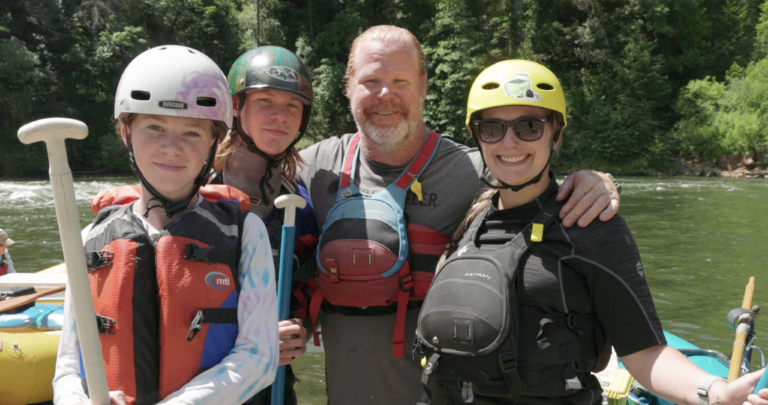
Looking back on my own experience, I understand just how important those early moments truly were. I am alive today because people around me were prepared, because an AED was accessible, and because nobody hesitated to act. That reality continues to shape the way I view emergency preparedness, especially in fitness settings.
CrossFit communities pride themselves on being strong, resilient, and supportive. Cardiac preparedness should be viewed as an extension of that culture. Making AEDs visible, maintaining them properly, educating members, and creating a clear emergency response plan are not just safety measures; they are acts of leadership and responsibility toward the people who walk through the gym doors every day.
Because when sudden cardiac arrest strikes, preparation is not optional.
It is everything.
Comments on More Than a Device: Why Every CrossFit Gym Needs a Culture of Cardiac Preparedness
1 Comments
Ask Sanctum CrossFit. They saved a member who had a heart attack while running at a 6am WOD with their AED. 💯🎉💪💪