When I stay tucked away safe and sound in my CrossFit bubble, I’m very insulated from mainstream fitness beliefs. It always comes as a shock when I enter a discussion with women unfamiliar with our methodology and hear their thoughts on fitness and strength training in particular. Often, they’ll tell me they do yoga or Pilates to stay “in shape.” Or, if they do “strength training,” it’s with machines or light dumbbells, and they do higher reps to tone and avoid getting bulky.
I’m not sure how this type of “strength training” became the accepted norm for women, but this has to change. Women, just like men, need to lift heavy stuff and build muscle and strength, not because strength training builds a “functional aesthetic” that is truly beautiful, but because muscle is the organ that determines how long you live, how well you live, and whether your 70s and 80s look like independence or decline.
Muscle Is Not Cosmetic. It’s an Endocrine Organ.
Dr. Gabrielle Lyon, founder of the Institute for Muscle-Centric Medicine, has spent her career reframing how we think about muscle. Her core argument: Most of the chronic disease patterns we treat as separate problems (metabolic dysfunction, poor immune resilience, hormonal imbalance, and frailty) actually trace back to a single underlying issue. Not too much fat. Too little muscle.
Skeletal muscle is the body’s largest endocrine organ. It doesn’t just move you around. It regulates blood sugar, stores amino acids your body draws on during illness and stress, and communicates with nearly every other system through the compounds it releases when it contracts. Lyon’s point is direct: If you want to change your health trajectory, the lever isn’t the scale. It’s how much muscle you’re carrying and how strong that muscle is.
That reframe matters most for women, who are told from adolescence to shrink rather than build.
Immune Function
Skeletal muscle acts as a reservoir of amino acids your body pulls from when you’re sick, injured, or under metabolic stress. Someone with more muscle mass has a deeper reserve to draw on during illness, surgery, or recovery. Someone with low muscle mass has less to work with, and it shows up as slower recovery and worse outcomes when the body is under attack.
Strength training isn’t just about building the reserve. The training itself also drives beneficial signaling that strengthens the immune system over time. Contracting muscle releases special signaling molecules directly into the bloodstream that activate the immune cells responsible for finding and destroying infected or abnormal cells in your body. Consistent training raises your baseline resting levels of these signaling molecules over time, so your immune cells remain more activated over the long term. Other molecules released during exercise help calibrate the immune response, not just switch it on. So muscle isn’t just where you store strength. It’s where you store resilience.
Osteoporosis
Bone responds to load. It gets denser when you ask it to bear weight it isn’t used to, and it thins when you don’t. Women face a steeper decline than men because estrogen plays a direct role in maintaining bone density, and that protection drops off around menopause. Bone loss accelerates fastest around and after menopause, which is exactly when a woman’s training history matters most.
You cannot out-supplement this. Calcium and vitamin D support the process, but they don’t replace it. The stimulus that tells bone to stay dense is mechanical load, specifically the kind that comes from lifting heavy things, not the kind that comes from walking on a treadmill or holding 3-lb dumbbells for 20 reps.
Metabolic Health
Muscle is the primary site where your body disposes of blood sugar. More muscle mass means more glucose storage capacity and better insulin sensitivity. This is a major reason strength training outperforms steady-state cardio alone for long-term metabolic health, and why EC Synkowski, a registered dietitian and one of the most respected voices in CrossFit on metabolic health, has spent years pushing women away from chronic cardio and starvation dieting, and toward building muscle as the real foundation of metabolic resilience. You don’t fix a slow metabolism by eating less and riding more; you fix it by giving your body more metabolically active tissue that burns fuel around the clock.
This is also why “the scale went up” is not automatically bad news for a woman who started strength training. If the athlete is gaining muscle as they lose fat, they are dramatically improving their health and fitness, regardless of what the scale reads.
Hormonal Health
Heavy resistance training triggers an acute hormonal response, including growth hormone and testosterone, that supports tissue repair, muscle building and maintenance, and metabolic function. For women moving through perimenopause and menopause, when estrogen’s protective effects on muscle, bone, and metabolism are declining, this becomes even more important, not less. Strength training doesn’t replace hormone therapy or medical care, but it is one of the few interventions a woman fully controls that directly supports the systems menopause disrupts.
The Ability to Keep Playing the Game of Life
This is the part that gets lost in all the clinical language. Strength isn’t just about biomarkers. It’s about whether you can get up off the floor without using your hands when you’re 75, whether you can carry your own luggage, chase a grandchild, hike a mountain, or say yes to a physical challenge instead of sitting it out because your body can’t do it anymore.
Functional independence late in life isn’t a genetic gift; it’s a direct product of the muscle and strength you build and maintain decades before you need it. Every woman who wants to stay physically capable into her 70s, 80s, and beyond needs to build that capacity now, under a barbell, not preserve it by avoiding load.
What Strength Training for Women Is Not
It is not three sets of 15 on a machine that isolates one muscle at a time. It is not curling 5-lb dumbbells until your arm feels tired. It is not yoga, and it is not Pilates. Those practices have real value for mobility, breath work, and recovery, but they are not strength training, and they will not build the muscle or bone density this article discusses.
And no, none of this will make a woman “bulky.” Building the kind of muscle mass that changes your silhouette dramatically requires a hormonal environment, caloric surplus, and training volume that doesn’t happen by accident. It takes years of dedicated, intentional work to get there. Lifting heavy a couple of times a week will make you strong, lean, and capable. It will not turn you into a bodybuilder overnight, or ever, unless that’s the specific goal you’re training for.
What Strength Training for Women Actually Looks Like
It looks like a barbell. A heavy dumbbell or kettlebell. A sandbag. A loaded implement that makes you think twice before you pick it up.
It looks like low-rep sets, one to five reps, on compound movements that recruit multiple muscle groups at once: squats, deadlifts, presses, and Olympic lifts. It’s weight that makes you genuinely unsure whether you’re going to get the rep. Weight that forces you to grind, to strain, to fight to keep your form together under load instead of moving effortlessly through a set that barely registers. It’s not a pump or a burn. It’s uncomfortable tension and pressure.
It’s the kind of set that leaves you standing there gasping for air, not because your heart rate spiked, but because your nervous system asked your body for everything at once. It’s the kind of weight on the bar that requires you to stand behind it for a second, breathe, and mentally commit before you touch it.
That discomfort or strain is the point. That’s the stimulus that builds the muscle, the bone density, the metabolic capacity, and the hormonal resilience every woman needs to live strong for decades, not just look fit for a season.
Strength training for women isn’t a workout style. It’s the foundation everything else gets built on. It’s why everyone who does CrossFit learns how to lift heavy.
About the Author
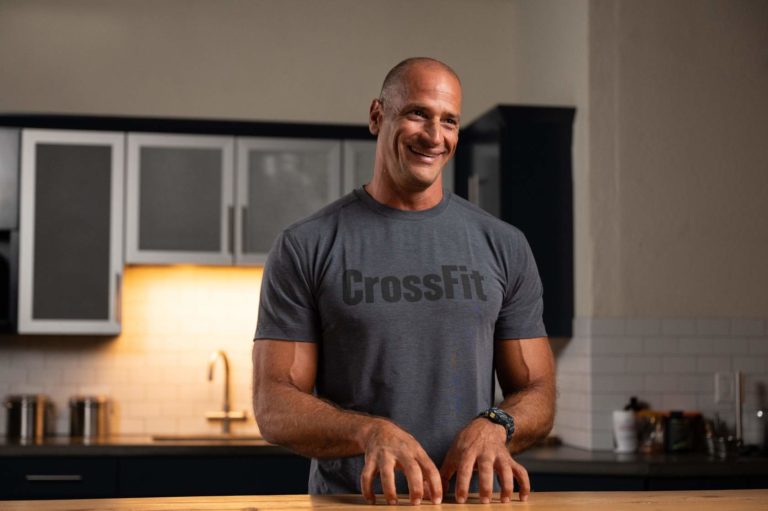 Stephane Rochet is a Senior Content Writer for CrossFit. He has worked as a Flowmaster on the CrossFit Seminar Staff and has over 15 years of experience as a collegiate/tactical strength and conditioning coach. He is a Certified CrossFit Trainer (CF-L3) and trains athletes in his garage.