I recently came across a video from a strength coach whose content I usually enjoy, in which he listed “some things about CrossFit that he didn’t love.” I was dismayed to hear him regurgitate and expand on tired, unwarranted criticisms that so many hacks have used to discredit CrossFit for their own gain. To his credit, he opened by acknowledging that positive CrossFit content gets fewer clicks than negative CrossFit content, and that his framing reflected that reality. Points for honesty. But honesty about his incentives does not make his subsequent claims accurate, and several were not.
This is a direct response — not because criticism of CrossFit is unwelcome, but because criticism built on misrepresentation deserves a clear reply.
What He Got Right
To be fair, his opening comments were supportive of CrossFit. He acknowledged that before CrossFit, mainstream fitness meant bodybuilding, machines, isolation exercises, and a hard separation between lifting and cardio. CrossFit changed that. It brought Olympic lifting, gymnastics, mixed-modality training, performance tracking, and the concept of measurable fitness to the general population. Methods previously available only to elite athletes became accessible to everyday people. That is an accurate summary of CrossFit’s significant contribution to the fitness industry, and it deserves to be mentioned.
But then things went sideways.
Does CrossFit Disrespect Endurance Athletes?
The claim: CrossFit disrespects endurance athletes.
The reality: CrossFit uses endurance specialists as an example, which is not the same as disrespecting them. The feats accomplished by elite endurance athletes are mind-boggling. However, this level of specialization in one area does not match our definition of fitness.
When CrossFit was emerging, the prevailing cultural narrative was that marathon runners and triathletes represented the pinnacle of human fitness. CrossFit offered a different definition: work capacity across broad time and modal domains. Under that definition, a specialist in any single domain, whether endurance, powerlifting, or anything else, inevitably has identifiable gaps in their overall fitness.
Imagine an athlete who runs a 2:30 marathon. Now picture what their deadlift looks like. On the flip side, imagine an athlete who deadlifts 800 lb, and picture what they look like running just a mile. Neither scenario is pretty, and that kind of deficiency, caused by specializing in one area, is unacceptable to a CrossFit athlete. We aim to be really good at everything, not just one thing; our specialty is not specializing.
None of this is meant as a criticism of athletes who choose to become world-class in one area. It is a statement about the cost of specialization. And when CrossFit’s actual definition of fitness is explained clearly, most endurance athletes agree with it. That has always been the point, and it has never been a personal attack on anyone who runs marathons, powerlifts, or specializes in anything else. It’s just that our goals are very different. CrossFit is about making people fit throughout their entire lives; specializing in one sport is not.
Does Work Capacity Equal Athleticism?
The claim: CrossFit says work capacity defines athleticism.
This one produced an audible laugh because it demonstrates that the critic has not read the foundational CrossFit literature. CrossFit defines fitness as work capacity across broad time and modal domains. The word athleticism does not appear in that definition. Others have imported the concept of athleticism into CrossFit conversations because CrossFit is an excellent general physical preparation program for athletes, but CrossFit has never claimed that work capacity and athleticism are synonymous. CrossFit provides the underlying general physical preparation that allows athletes to practice their sport more and better, resulting in greater skill. But CrossFit will not teach anyone how to dominate on the football field or basketball court.
Stating something false as a definitive fact is not a critique; it is a mistake, and it is the kind of mistake that would not survive 10 minutes of reading the actual source material.
Does CrossFit Condemn Isolation Exercises?
The claim: CrossFit condemns isolation exercises.
CrossFit has always compared isolation exercises to compound functional movements and found functional movements more efficient for developing broad fitness qualities. That is a defensible position supported by physics, physiology, and over two decades of results. It is also not the same as saying isolation exercises are evil or should never be performed.
The context matters here. When CrossFit emerged, the dominant training paradigm was built almost entirely on isolation movements and machines. Educating people on why compound movements are more effective for developing fitness required direct comparison. If you have limited training time and want the most efficient path to improved fitness, a back squat delivers more than a leg extension and a leg curl combined. That is not ideology. That is basic exercise science.
In rehabilitation contexts, isolation movements have genuine value. CrossFit has never denied that. Yet once compound movements can be incorporated into the rehab process, they should replace isolation movements to bring the athlete back to, and even past, their preinjury fitness level. The argument is about efficiency, priority, and results, not moral judgment.
Is CrossFit Too Reliant on Mixed-Modality Training?
The claim: CrossFit leans too heavily on mixed-modality programming.
Guilty as charged, and proud of it.
Mixed-modality training is not a design flaw. It is the core mechanism by which CrossFit produces broad, general, and inclusive fitness. Anyone who has trained running and lifting separately, gotten reasonably good at both in isolation, and then combined them in a single workout knows exactly what happens. The demand is nothing like what either movement produces alone. The body is forced to adapt in ways that segmented training simply cannot replicate.
CrossFit also includes dedicated strength days, endurance days, and skill practice days. The program is not exclusively mixed-modality. But the mixing is intentional, validated by results, and mirrors the demands of real life more honestly than any segmented training approach ever could.
One more thing worth saying: listen to any fitness guru, and it seems the science is catching up. Rhonda Patrick, Gabrielle Lyon, Thomas DeLauer, and Andrew Huberman consistently cite research on longevity, cognitive health, and physical resilience that points toward complex movement, heavy loading, and intensity as the variables that move the needle. CrossFit identified and systematized those variables 25 years ago. The criticism has not aged well.
What’s Next in Part 2
In Part 2, we take on the remaining criticisms: the Olympic lifts under fatigue, CrossFit’s community and culture, and perhaps the most frustrating mischaracterization of all: what CrossFit actually means when it uses the word “intensity.” That one deserves its own answer.
About the Author
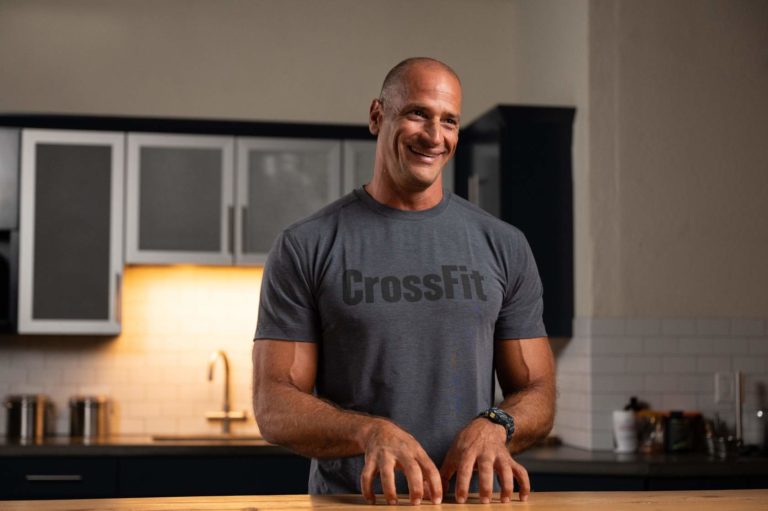 Stephane Rochet is a Senior Content Writer for CrossFit. He has worked as a Flowmaster on the CrossFit Seminar Staff and has over 15 years of experience as a collegiate/tactical strength and conditioning coach. He is a Certified CrossFit Trainer (CF-L3) and trains athletes in his garage.