There’s a reason the whiteboard matters as much as the barbell.
Decades of social science point to a simple, very human truth: We become like the people we spend time with. Our habits, our standards, even our appetites drift toward the average of our social circle, often without us noticing. Researchers who study behavior change call this social contagion. Coaches who have spent time on a CrossFit floor just see this as part of our magic.
The Research Behind the Whiteboard
The clearest demonstration of this comes from a long-running study of a Massachusetts town, where researchers tracked health behaviors across a dense social network for more than three decades. The findings were striking: A person’s odds of becoming obese rose sharply if a close friend did, even when that friend lived far away. The same pattern held for smoking, drinking, and quitting smoking. Habits spread through social ties like a kind of behavioral flu, most powerfully among people who considered each other close, not just proximate.
The mechanism isn’t mysterious. Humans are constantly and unconsciously calibrating what “normal” looks like based on the people around them. What’s a normal portion size, a normal amount of exercise, a normal way to talk about your body, a normal Tuesday night — all of it gets quietly reset by the room you’re standing in. Change the room, and the norms shift with it.
Why This Matters More in Fitness Than Almost Anywhere Else
Most environments where people try to build healthy habits are built for isolation, not contagion. A treadmill facing a wall. A solo run before anyone else is awake. A meal-prep container eaten alone at a desk. These aren’t wrong, but they’re also not leveraging the single most reliable lever behavioral science has identified for lasting change: the people around you.
CrossFit’s structure runs in the opposite direction. Group classes. Shared workouts. A community that watches each other’s last reps and cheers accordingly. Whether that was designed with the friendship-network research in mind or arrived at simply as a response to shared suffering experienced in pursuit of the noble goal of elite fitness doesn’t really matter.
The outcome is the same: The box environment does a meaningful share of the work that we often task our willpower to do alone, and it shows up in the numbers, too, with high-intensity functional training programs built around a sense of community reporting exceptionally high adherence. No one does this better than CrossFit.
From Behavior to Identity
The deeper shift isn’t just behavioral; it’s identity-level. Motivation research distinguishes between doing something because you feel you should (an external reason) and doing something because it’s simply part of who you are (an integrated reason). The second kind of motivation is far more durable, and it doesn’t need to be renewed every morning with discipline, because it isn’t experienced as effort; it’s experienced as identity.
Community accelerates that shift. When someone spends enough time surrounded by people who train, who talk about mobility and sleep and protein targets as normal conversation, and who show up at 6 a.m. without bemoaning the effort to get out of bed, the identity of “a fit person” or “athlete” stops being an aspiration and starts being a description. This is not a conscious decision one just makes. It happens the way most identity shifts happen: unconsciously, through repeated exposure to a new normal.
The Coaching Implication
Understanding the formation of identity and its impact on behavior has a practical use for anyone building or running a fitness program. If community is a genuine mechanism of change, then protecting and cultivating it deserves the same intentionality as programming a workout. That means:
- Naming it. Members rarely credit the community for their own transformation; they credit “finally getting serious.” Coaches can help people see the actual mechanism, because understanding why something works helps people value it. New members should be made aware that a great deal of their success stems from “just showing up.”
- Fostering interaction, not just filling the hour. A gym full of people doing the same workout in silence isn’t the same as a room where people know each other’s names, goals, and setbacks. The research is specific: it’s close ties, not mere proximity, that drive the effect.
- Being deliberate about what’s important and living this every day. New members are, in a real sense, absorbing the norms of whoever is already there. A gym’s culture isn’t a slogan on the wall; it’s the aggregate behavior of its most consistent members, and it gets transmitted whether anyone’s paying attention to it or not.
The Bigger Picture
People don’t usually change their lives through a single act of willpower. They change because they changed their environment, and the new setting, in turn, changed them. That’s not a soft, feel-good side note to fitness. It’s one of the most well-supported findings in behavioral science, and it happens to be built into the architecture of a CrossFit class by default.
The barbell builds capacity. The community builds identity. Both are doing the work.
This Is Personal
I’ve experienced the power of CrossFit’s community. When I was hired to work as a Seminar Staff trainer, I was immediately surrounded by a community of exceptionally bright trainers and athletes whose goal was to learn as much as possible about fitness and share it with the world. The culture of this team demanded excellence and walking the walk. Very quickly, I found myself doing workouts I never considered (and getting results I never thought possible), weighing and measuring my Paleo foods and coaching movement more precisely than I ever had. I had been looking for a community that would help my identity of “coach” and “fitness enthusiast” flourish. I found this with CrossFit, but to a much higher level than I could have ever imagined.
Over the next few installments, I’d like to pass on some of the wisdom and lessons I received from the amazing original CrossFit trainers I had the great fortune of working with. In sharing these nuggets, I’m hoping for two things:
- They help you travel a fitness journey you enjoy and are proud of.
- They remind you of the special people you’ve encountered who have changed your life in some way. We’d love to hear about these incredible individuals and how they motivated you. Let us know who they are in the comments below.
About the Author
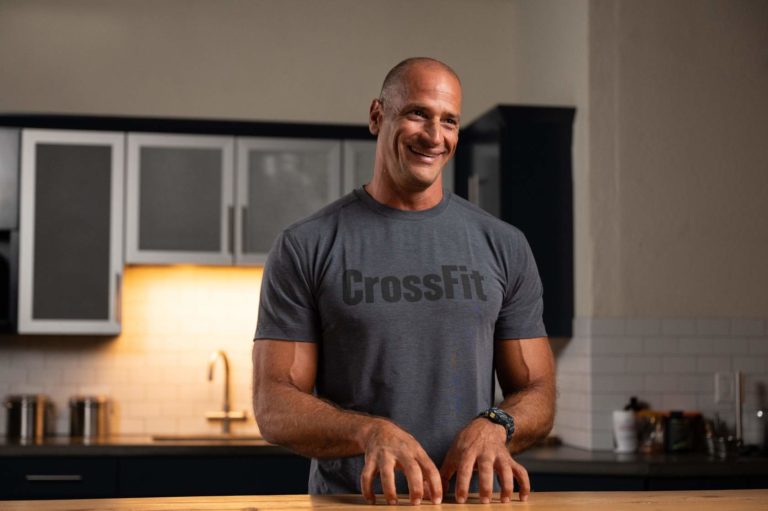 Stephane Rochet is a Senior Content Writer for CrossFit. He has worked as a Flowmaster on the CrossFit Seminar Staff and has over 15 years of experience as a collegiate/tactical strength and conditioning coach. He is a Certified CrossFit Trainer (CF-L3) and trains athletes in his garage.