You can’t build significant strength, muscle, and high levels of endurance at the same time. At least, that was my mindset after I finished college and earned a highly regarded credential in the strength and conditioning industry. Then I found CrossFit, and it dismantled much of what I had learned in school and through my certifications. Some older research supports the idea of a compromise, but walk into any CrossFit affiliate, and you will see plenty of evidence to the contrary. Newer research also shows that both qualities can be trained to a relatively high level.
Full disclosure: CrossFit is not designed to maximize only your strength and hypertrophy, nor is it designed to maximize only your cardiorespiratory endurance and stamina. We work to enhance all physical qualities. This means you will not see the results a specialist competitive athlete sees in their domain. We know that excessive capacity in one domain comes at the expense of others. Some see this as a compromise. We see it as fitness, and the results across the spectrum of physical skills have been staggering.
If you aren’t on board with CrossFit yet, you may have doubts about getting the results you want. If you’ve been doing CrossFit for a while, you have seen the results but may still have questions. This article tackles some of the most common concerns.
Won’t Running Ruin My Strength and Muscle Gains?
Not at sensible doses. Two or three runs a week will not shrink your legs. In fact, better conditioning may indirectly help you build strength by improving recovery between sets and increasing your tolerance for more work.
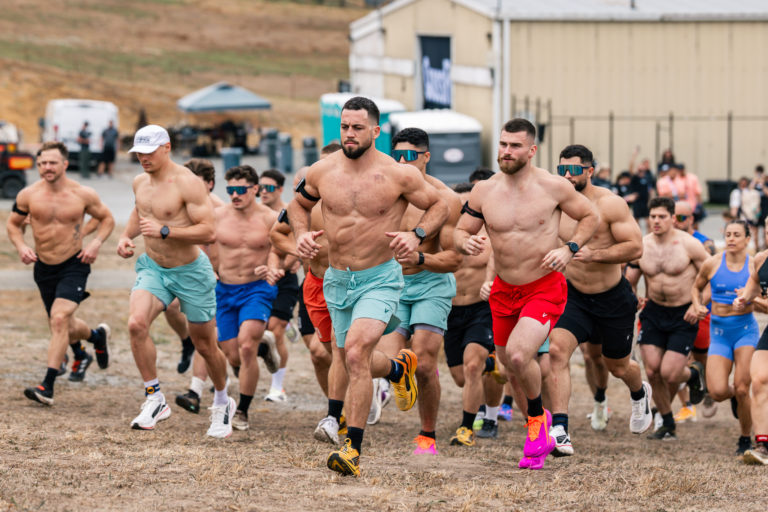
Running may carry slightly more interference risk than cycling or rowing, likely because its impact and eccentric stress on the legs make it harder to recover from for some people. Problems with strength and hypertrophy tend to appear when mileage climbs high, say 25 or more miles a week, while caloric intake stays flat. Some “hybrid athletes” run considerable mileage and still build strength, but keep in mind that the time they devote to training, nutrition, and recovery tends to be far greater than what most people can manage.
If strength and size matter most to you, mix in the bike or rower and favor intervals over long, slow miles without abandoning running entirely. That is close to how we already use running: short repeats of 200 to 800 meters alongside rowing and bike sprints rather than high weekly mileage.
Conversely, strength training with reasonable volume has been shown to improve performance in endurance athletes, and it has become more common among them. Anecdotally, endurance athletes have told me many times that after starting CrossFit, their bike climbs feel easier and they recover from runs faster, all while significantly cutting their total training time.
How Much Does Nutrition Really Matter?
Everyone has heard the slogan “abs are made in the kitchen.” That focus on the kitchen applies to performance and other body composition goals, as well. People ask about fancy training regimens and protocols, but there’s an underlying element not everyone likes to discuss: What are you eating? Whether your goal is to build strength, add cross-sectional area (bigger muscles), or improve endurance, nutrition will play an integral part in your success.

On a recent staff call, a friend and colleague asked how to improve their already very competent VO2 max. They have been doing CrossFit for a long time, which builds this capacity well. Sure, they could add training, but my honest response was to ask whether they were weighing and measuring their food. I believe they would see results faster from that than from additional training. Recently, someone asked me about developing strength, and my answer was the same: Dial in what you eat.
The CrossFit Nutrition Course outlines a simple starting point: Eat real food with a balance of macronutrients three to five times per day within a 12-hour eating window. To take things to the next level, start weighing and measuring your food. Consider establishing a baseline of:
- Protein: 0.8 to 1 gram per pound of body weight
- Carbohydrate: protein grams x 1.33
- Fat: (protein grams x 4) ÷ 9
Once you’ve eaten real food and tracked your intake consistently 80% to 90% of the time for a couple of months, adjust based on your goals.
Can Bodyweight Exercises Really Build Muscle?
Dude, gymnasts are jacked, and they rarely lift weights. Your muscles respond to tension, volume, and effort, not to whether the resistance comes from a barbell, a dumbbell, or your body weight. Studies comparing push-ups with the bench press have even found similar chest and triceps growth.
The real differences are practical. Weights make progress easy to measure and load: Add 5 lb, and you know you got stronger and may be adding muscle. With bodyweight exercises, you can track progress by increasing your max reps or adding load. You can also raise the demand on your muscles in bodyweight-based CrossFit conditioning workouts by completing more rounds in a set time or doing the same work faster. This isn’t unique to CrossFit. I first read about and implemented a similar concept in the mid-2000s after digging into Charles Staley’s Escalating Density Training (EDT) method.
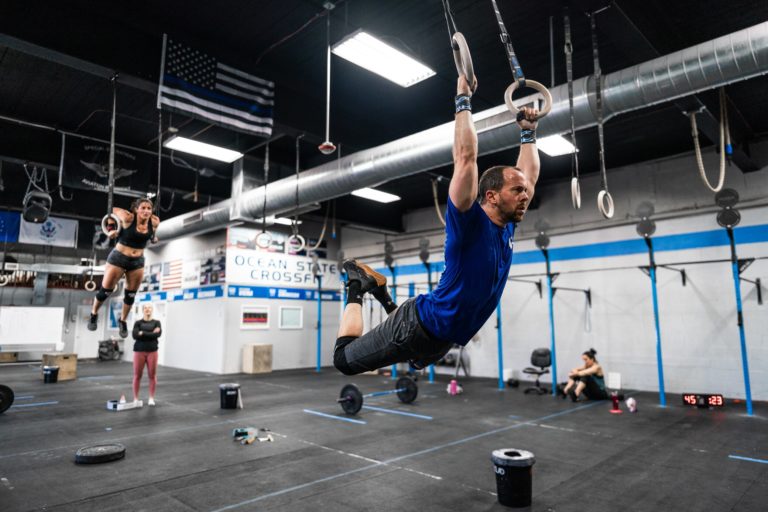
Gymnastics offers another benefit beyond strength and muscle gains: Athletes develop body control and joint resilience with almost no equipment. Once they master the basics, they can progress by learning harder skills and performing difficult variations of the basics (ring push-ups vs. traditional push-ups), leaving room to progress for many years. The lower body tends to be harder to overload without adding weight, but you can do it with greater intensity (e.g., more reps in a set time frame), tempo control, and challenging unilateral movements (e.g., single-leg squats).
The best answer for most people is to do both weightlifting and gymnastics. That is exactly what we do. Barbell squats, deadlifts, and presses sit alongside pull-ups, dips, handstand work, muscle-ups, and single-leg squats, with coaches scaling each movement to your level so you progress on both fronts.
Do I Need a Training Split to Build Muscle?
Traditional body-part splits are common for hypertrophy in many gyms, and conventional guidelines are broad: If hypertrophy is your main goal, aim for roughly 10 to 20 hard sets per muscle per week, taken close to failure. That said, some people have built significant muscle with much less volume (e.g., Mike Mentzer’s high-intensity training), and others have done fine accumulating significantly more volume without reaching failure on many sets (e.g., CrossFit athletes).
What has become more widely accepted is that training frequency matters. Gone are the days when training a muscle once a week was considered the best option. With traditional training methods and similar volume, hitting a muscle group twice a week has been shown to beat once a week for muscle growth. CrossFit’s full-body sessions, three to five days a week with strategically programmed variance, spread overall volume out nicely and provide a potent stimulus for strength and hypertrophy. If maximum size is a priority, add one or two accessory sessions and eat to support that goal. Don’t overcomplicate it: Work hard, be consistent, and keep volume in check.
How Should I Choose a Program?
If you want to be strong, fit, and capable rather than excellent at one narrow thing, CrossFit is the most efficient way to get there. Regardless of which program you choose, consider the following:
- Combine strength and conditioning. There are many ways to do this in a training plan. We put concurrent-training research into practice in a fun, mixed-modal way, with a daily resource (CrossFit.com) providing structured programming that takes out the guesswork.
- Get a coach. A coach watches your technique and scales loads and movements to your level. Coaches provide this guidance at every CrossFit affiliate.
- Respect your schedule. Look for an option that fits your available time. At an affiliate, one class of an hour covers a warm-up, skill work, and some degree of strength and conditioning.
- Build in accountability. Train in a group or with a coach to stay accountable. This makes skipping much harder, and consistency drives results more than any program detail.
- Measure your progress. Set goals or use benchmarks to track progress. Retesting benchmark workouts and lifts gives clear proof that you’re improving.
About the Author
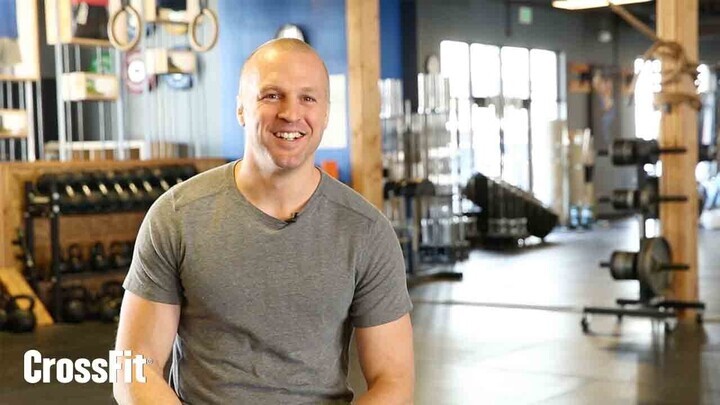 Eric O’Connor is a Content Developer and Seminar Staff Flowmaster for CrossFit’s Education Department and the co-creator of the former CrossFit Competitor’s Course. He has led over 400 seminars and has over a decade of experience coaching at a CrossFit affiliate. He is a Certified CrossFit Coach (CF-L4), a former Division 1 collegiate wrestler, and a former CrossFit Games athlete.