Allan Iverson didn’t mean to become a coaching metaphor, but here we are. “We’re talking about practice” has been shorthand for misplaced priorities for two decades — the idea that practice is what you do when you’re not doing the real thing.
In CrossFit, that attitude has a cost.
If you’d prefer to watch and listen to this conversation, you can do that here.
What Practice Actually Is
Practice isn’t a rest day. It’s not going through the motions. It’s not a warm-up you weren’t paying attention to. Deliberate practice means slowing down, removing the clock, and focusing on the mechanics of a movement — how it feels, where it breaks down, and what improves when you fix it.
Rich Froning, by many accounts the greatest CrossFit athlete of all time, is known for practicing his skills more than almost anyone. A famous example: He couldn’t climb a rope, so he worked at it until he became one of the best rope climbers in the sport. Another: He was filmed doing air squats in his warm-up, deliberately and thoughtfully. When someone asked if that was a regular thing, his answer was simple. He does air squats every day because he can always improve them.
That mindset is worth sitting with. If the best in the sport is approaching the most basic movement in CrossFit as something still worth refining, there’s probably something in your movement worth the same attention.
Why Skill Is the Missing Piece
CrossFit recognizes 10 general physical skills. They split into two categories. The first — strength, endurance, stamina, flexibility — are organic adaptations. They develop through training. The second — coordination, agility, balance, accuracy — are neurological. They develop through practice.
Here’s what that means in real terms: most people haven’t come close to realizing their actual strength potential, not because they lack the physical capacity, but because their technique isn’t there yet. You can have the contractile potential to snatch a heavier weight than you’ve ever lifted and still not lift it, because the skill hasn’t caught up to the strength.
One focused practice session with PVC pipe, breaking down the first pull of the snatch, working through positions without any weight on the bar — that kind of session added 25 lb to a snatch without any additional strength work. That’s not a fluke. That’s skill unlocking capacity that was already there.
You’re Not Losing Ground
Here’s the mental block most people run into: If I didn’t lift heavy or push for time, did I actually do anything today?
Yes. A significant amount, actually.
Coordination, accuracy, and balance are components of fitness just as real as strength and endurance. Working on a muscle-up transition, drilling a handstand, spending time on the bottom of a squat — all of it is developing fitness. It just doesn’t feel like it because there’s no time on the clock and no score to post.
And when you come back to the workouts, it shows. Movement that used to cost you extra seconds becomes efficient. Skills that require all your attention become automatic. Weight that felt impossible starts to move. The practice day didn’t slow you down — it removed a ceiling you didn’t know you were bumping against.
How To Add It Without Blowing Up Your Programming
A full dedicated practice day works if your schedule supports it. But it doesn’t have to be all-or-nothing. After a shorter, lower-skill workout, a 15-minute practice window — structured or open — gives athletes something valuable without replacing intensity. Eight weeks of twice-weekly 10-to-15-minute skill progressions add up to four hours of focused practice that wouldn’t have happened otherwise. The improvements across that window are real and measurable.
And here’s the thing: practice brings something back into training that can quietly disappear the longer you’ve been at it. Play. No time clock, no weight requirement, no score to hit. Just you and a movement, working on it together. When you’re in the middle of a hard workout, that’s combat mode, and that’s great. But adding some play to your week makes the hard stuff better, too.
Give yourself permission to practice. The results are waiting on the other side.
About the Author
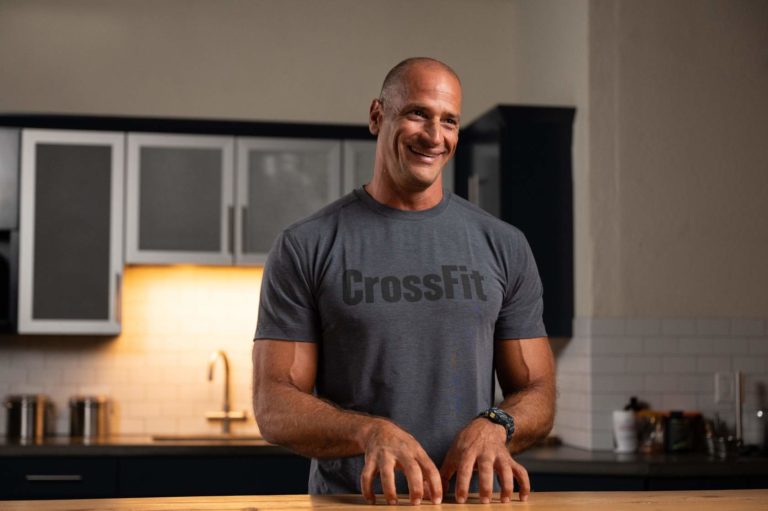 Stephane Rochet is a Senior Content Writer for CrossFit. He has worked as a Flowmaster on the CrossFit Seminar Staff and has over 15 years of experience as a collegiate/tactical strength and conditioning coach. He is a Certified CrossFit Trainer (CF-L3) and trains athletes in his garage.