In 2002, the seminal CrossFit Journal article “What Is Fitness?” condensed our prescription for world-class fitness into 100 words. The nutrition portion, elegant in its simplicity, required only 14 words: “Eat meat and vegetables, nuts and seeds, some fruit, little starch, and no sugar.”
More than two decades later, the last two words hold as much power over our future health as ever.
Humans have always encountered sugar in food. What we have not always had is the ability to extract sugar from plants, refine and concentrate it, dissolve it into drinks, grind starches into powders, add sweeteners to nearly every category of packaged food, and make all of it available, dirt cheap, in unlimited quantities, everywhere, every day of the year, every minute of the day. Our capacity to manufacture and consume sugar has increased astronomically, while the metabolic machinery that handles it has remained largely unchanged since our hunter-gatherer past.
So, how much added sugar is “too much,” and what are the dangers when we cross that line? To answer that, it helps to first understand what happens to sugar and carbohydrates after we eat them.
All Dietary Carbohydrates End Up as Sugar
“Carbohydrate” describes a large family of molecules. A potato contains mostly starch. Milk contains lactose. Table sugar is sucrose. Fruit contains varying combinations of glucose, fructose, and sucrose. Bread, rice, oats, beans, candy, carrots, and apples all contain carbohydrates in different forms.

Before the body can absorb dietary carbohydrates, digestion breaks them down into their smallest units. Enzymes ending in “-ase,” such as lactase, sucrase, and amylase, act like scissors, cleaving the bonds that hold individual sugars together. Ultimately, the carbs we eat arrive at the intestinal wall as one of three simple sugars, all ending in “-ose” — glucose, fructose, and galactose.
There are no “good” and “bad” carbs. In and of themselves, none of these molecules are poisonous or toxic. A more useful distinction is how much carbohydrate a food delivers and how fast those sugars become available for absorption. As with water or oxygen (fine in normal doses but problematic in high amounts), the dose makes the poison.
Thirty grams of carbohydrate inside intact berries presents a different digestive challenge than 30 grams of refined sugar dissolved in a drink. In whole plant foods, carbohydrate is contained within a physical structure made of cells, water, and fiber. We have to chew the food, break open those cells, digest the carbohydrate, and absorb the resulting sugars. Fiber can slow digestion in some circumstances and impede the interaction between digestive enzymes and carbohydrates. All of this can reduce how much sugar reaches the bloodstream and how quickly it gets there.
Processing progressively removes those obstacles. Grinding grain into flour increases the surface area available to digestive enzymes. Pulverizing a blender full of fruit into a smoothie removes the need to chew and increases how quickly we can suck back a tremendous dose. Juicing destroys much of the fruit’s physical structure and removes a substantial amount of fiber. Refined sugar dissolved in a beverage requires almost no digestive work.
The carbohydrate dose therefore tells only part of the story. The speed at which that dose becomes available matters more.
We Are Living Through an Extraordinary Sugar Experiment
For most of human history, obtaining a large quantity of concentrated sugar required vastly more effort than tapping a debit card at a convenience store.
Before agriculture and industrial food processing, sugar came primarily from whole plant foods, and availability varied enormously by location and season. Honey offered a rare source of highly concentrated sugar, assuming you could locate a hive and were willing to fight bees to get it.
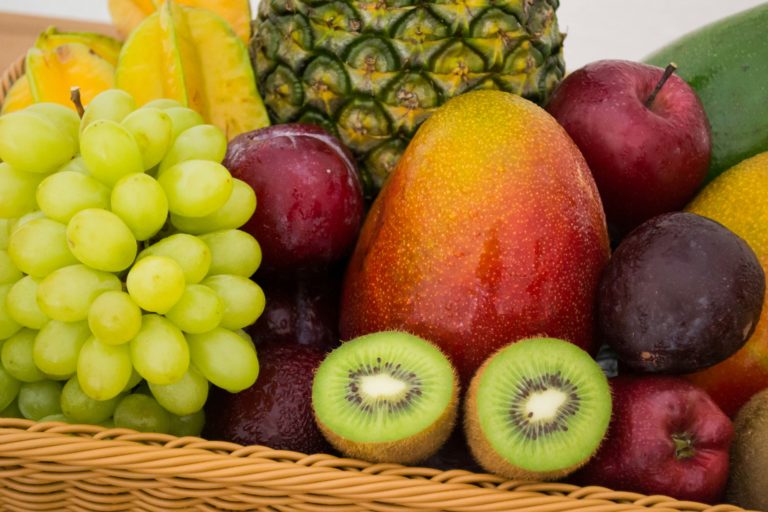
Fruit deserves some context here as well. Humans have spent thousands of years selectively breeding plants for desirable characteristics such as larger size, reduced bitterness, fewer seeds, and sweeter taste. Most modern varieties bear little resemblance to their wild ancestors.
Then came the ability to refine sugar itself.
Sugar went from a scarce luxury to an inexpensive commodity, and consumption rose accordingly. By the 19th century, falling prices and industrial production were already transforming sugar from something relatively unusual into an everyday food. The 20th century added another dramatic shift: Sugar no longer had to look like sugar. It could be incorporated into soft drinks, breakfast cereals, condiments, sauces, breads, yogurt, coffee, and thousands of other products.
Today, a person can consume more concentrated sugar before lunch than many ancient humans consumed in a year. Without getting lost in the weeds arguing about the precise carbohydrate composition of the ancestral human diet, we can all agree the scale and speed of modern sugar exposure are an extreme historical anomaly.
There Is No Dietary Requirement for Carbohydrate
You may be surprised to learn the human body has no physiological requirement to eat carbs.
In nutrition, “essential” means something specific: The body requires this molecule but cannot make it, so we must get it from the diet. Protein provides essential amino acids. Dietary fat provides essential fatty acids. Without them, we develop deficiency diseases that eventually lead to death. Interestingly, there are no “essential carbohydrates.” The term doesn’t exist in nutrition.
But hold on, you might be thinking: Don’t we need glucose to live? Doesn’t the brain require it? You’re right! Certain tissues do require glucose to function. But needing glucose to live is not the same as needing to eat glucose to live. The body, as a wonderfully complex organism, can manufacture all the glucose it needs through a process in the liver called gluconeogenesis.
This is not to say carbs are bad; it’s only to point out that eating them is optional. Carbohydrate-containing foods can certainly have a place in a healthy diet. Vegetables, nuts, seeds, some fruit, and appropriately chosen starches can all provide useful nutrients and fuel. Carbohydrate intake can also be adjusted considerably depending on activity level, metabolic health, and performance demands. You’ll determine what’s right for you through self-experimentation.
Knowing that all carbs are optional, however, gives us a useful perspective on added sugar. There is no physiological requirement for it. None. The minimum amount of added sugar required for life is zero.
How Much Added Sugar Is Too Much?
If the lower limit is zero, what’s the maximum we can consume before problems arise? Public health organizations typically answer this question by setting an upper limit. The World Health Organization recommends keeping free sugars below 10% of total energy intake and suggests reducing intake below 5% for additional health benefits. On a 2,000-calorie diet, 5% is roughly 25 grams, or about six teaspoons, per day.
CrossFit’s recommendation has always been more aggressive: no added sugar.
That recommendation does not depend on the idea that a teaspoon of sugar is acutely poisonous. As with many substances, the physiological consequences depend heavily on dose, frequency, and route of exposure. Humans can metabolize glucose and fructose in considerable amounts. The problem is that the modern food environment allows us to deliver enormous amounts of both, very quickly and very frequently.
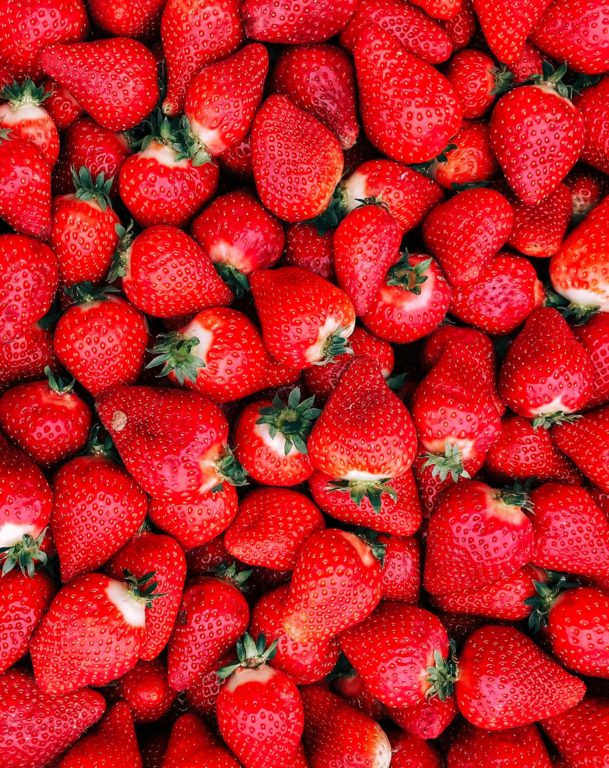
A 591-milliliter (20-ounce) bottle of Coca-Cola, for example, contains roughly 65 grams of sugar, or about 16 teaspoons. Someone can drink it in a few minutes without feeling particularly full. Getting the same amount of sugar from intact strawberries would require eating roughly 2 kilograms (4.4 pounds) of berries. The comparison is useful because sugar molecules aren’t the only difference. Strawberries contain a tremendous amount of water and physical bulk, and their sugars remain packaged within fibrous plant tissue that must be mechanically and chemically dismantled before absorption. Chewing would force us to eat them more slowly, and digestion would slow absorption.
Modern food processing allows us to bypass many of the physical constraints that historically limited how much sugar a human could consume at one time. That becomes particularly important when we look at what happens after those sugars enter the body.
Where Does Sugar Go in the Body?
Table sugar, or sucrose, consists of one molecule of glucose bound to one molecule of fructose. High-fructose corn syrup contains free glucose and fructose in similar proportions. Although the body can ultimately use both for energy, it handles glucose and fructose differently after absorption.
Glucose enters the bloodstream, where it circulates to cells and tissues throughout the body. The body can use it for energy now or store it for later. Like cars on a highway, glucose needs to go somewhere, and it causes loads of problems if it lingers on the highway without reaching a destination. Insulin, a hormone the pancreas secretes in response to rising blood sugar, helps move glucose into cells, where it can be burned for energy or stored for later.
Fructose follows a different path. The intestines clear some of it, and the rest heads straight to the liver, where much of it is converted to fat through a process called de novo lipogenesis (“making new fat”). With sufficiently high exposure, particularly when large amounts are consumed rapidly in sweetened beverages, this can contribute to liver fat accumulation, elevated triglycerides, and impaired insulin sensitivity. Ongoing assaults on the liver can lead to inflammation and scar tissue accumulation, called fibrosis. As the disease advances, scarring can become extensive enough to permanently distort the liver, a condition called cirrhosis. At that point, the liver loses its ability to perform many essential functions, leading to liver failure, the need for a transplant, or death. In the U.S., the two leading causes of liver transplants are alcohol and sugar.
Controlled feeding studies show why the distinction between glucose and fructose matters. In one 10-week study, overweight and obese adults consumed beverages sweetened with either glucose or fructose that provided 25% of their daily energy requirements. Both groups gained similar amounts of weight, but the metabolic consequences differed. The fructose group developed more visceral fat (dangerous fat packed around the abdominal organs), increased liver fat production, worse blood lipids, and reduced insulin sensitivity.
That finding is difficult to explain if we treat sugar purely as a calorie problem. The amount consumed matters, of course, but so do the type and the metabolic destination for processing.
In Part 2, we follow that path over years and decades: to cancer risk, to our kids’ livers, to the bloodstream, and into the connective tissue athletes depend on.
Put It Into Practice
Knowing what sugar does to your body is the first step. Knowing what to eat instead, and how to make it stick, is the next. Join us for Applied Nutrition, a one-day, in-person course where you’ll learn how to build meals around meat and vegetables, nuts and seeds, some fruit, little starch, and no sugar, then leave with a personal nutrition plan you can start the next day. [Find an Applied Nutrition course near you.]
Prefer to learn on your own schedule? Take Nutrition I online and get the fundamentals of CrossFit’s nutrition prescription from anywhere. [Enroll in Nutrition I.]
About the Author
 Jocelyn Rylee (CF-L4) and her husband David founded CrossFit BRIO in 2008, starting in a modest 1500 sq ft space and focusing on personal training. Her dedication to excellence has also earned her a position on CrossFit LLC’s Level 1 Seminar Staff, a role that allows her to share her passion and expertise with aspiring coaches. Jocelyn holds specialties in Endurance, Gymnastics, Competition, and Weightlifting and is also a certified Strength and Conditioning Specialist through the NSCA. As a Level 2 Olympic Weightlifting Coach and a Level 3 referee, she has been deeply involved in the sport, even serving as a board member of the Saskatchewan Weightlifting Association for five years. Her achievements include being Saskatchewan’s top-ranked female Olympic Weightlifter from 2012 to 2015, during which she held provincial records in the Snatch, Clean & Jerk, and Total in her weight class. With an MS in Human Nutrition, Jocelyn loves sharing her knowledge on nutrition and performance through her blog and Instagram as “The Keto Athlete,” where she delves into the science of nutrition and its impact on athletic performance.