Open Instagram or YouTube and search for mobility work. You will find thousands of exercises, dozens of routines, and no shortage of coaches telling you exactly which band, roller, or protocol will fix your hips, shoulders, or ankles. None of that is necessarily wrong. But for most people, it creates a problem: the perfect mobility practice becomes the enemy of any mobility practice at all.
Here is the honest truth: You do not need two hours on the floor. You need consistent, purposeful movement woven into the life you are already living.
If you’d rather watch or listen to this conversation, you can do that here.
Flexibility vs. Mobility: A Useful Distinction
Before getting into the how, it helps to be clear on the what. Flexibility and mobility are related, but they are not the same thing.
Flexibility is passive. It is whether your body can reach the end range of motion around a joint. Mobility is active. It is how well you move through the full range of motion in a functional pattern. You want both, and the good news is that they enhance each other. Build one, and you tend to build the other.
Where 90 Percent of Your Mobility Work Already Lives
CrossFit’s insistence on full range of motion in every movement is not just a technical standard; it is a mobility practice. Every squat taken to full depth, every press locked out overhead, every pull taken through complete extension is an opportunity to develop range of motion under load and with intent.
If you cannot sit comfortably in the bottom of an overhead squat with a PVC pipe locked out overhead, you have just identified your most valuable mobility drill: the overhead squat. The same logic applies to every movement in the program. Where you cannot hit the full range, that is where you need to practice. And the most effective way to practice it is by working the movement itself.
This is not a workaround. It is the method. Athletes who have spent years convinced that their hips would never open up often find that consistent, coached squatting does more for their range of motion than any dedicated stretching session ever did. The movement is the mobility work. Watch this interview with the Barbell Physion, Zach Long, DPT, to learn more about this philosophy and how to implement it.
Make It Part of Your Day
The second piece is simpler than most people expect. Stop waiting for a dedicated hour and start sprinkling movement into the pockets of time you already have.
A few minutes of calisthenics or yoga flow after a meal. A short walk when the weather allows, or a few laps around the house when it does not. A 30-second hang from a bar at the park on your way by. An air squat or two when you stand up from your desk. None of these requires a plan, equipment, or a blocked-off calendar slot. They just require the awareness that sitting for long, unbroken stretches is one of the primary reasons mobility suffers in the first place.
The goal is not 10,000 steps or any other arbitrary number. The goal is simply to move more than you are moving now. If your daily step count barely clears 5,000, the first intervention is not a new stretching protocol. It is getting out of the chair. Fact: If you don’t use it, you will lose it.
Build a Routine Around Your Weak Points
Once movement is a consistent part of your day, targeted work becomes much more valuable. The key is focus. Pick the one or two areas where you most need improvement and spend five minutes on those, not 45 minutes cycling through every joint in your body.
If you want structure, use it. Guided mobility apps, written plans, or a follow-along routine with a clear focus area can make that dedicated time go by quickly and productively. A well-designed 10-minute session targeting hips and hamstrings is far more useful than an unfocused hour of vague stretching.
A practical habit that works for many people: Spend time on the floor in the evening instead of on the couch. It does not have to be formal. Move through different positions, foam roll if you want, shift your weight around. Simply being on the floor for 10 to 30 minutes while watching television builds range of motion and body awareness over time without requiring any additional time investment.
The Warm-Up Is Mobility Work Too
One more thing worth saying: your training warm-up is not separate from your mobility practice. It is part of it.
Five minutes on the bike and five minutes of static stretching both contribute significantly to your mobility. A goblet squat or a PVC overhead squat in your warm-up addresses the ankles, knees, hips, thoracic spine, shoulders, and midline simultaneously. If you are pressed for time and want a single movement that doubles as a full-body warm-up and a mobility drill, the squat is it. Pause at the bottom, fight for an upright torso, push the knees out, and earn the position. Do that consistently, and your mobility will reflect it.
The Short Version
Getting more mobile does not require a dramatic overhaul of your schedule. It requires two things to be done consistently. First, fight for full range of motion in every movement you train. Second, move more throughout your day, even if that just means standing up more often, walking a little further, and spending less time parked on a couch.
The athletes who move best over the long term are not the ones who found the perfect mobility protocol. They are the ones who never stopped moving in the first place.
About the Author
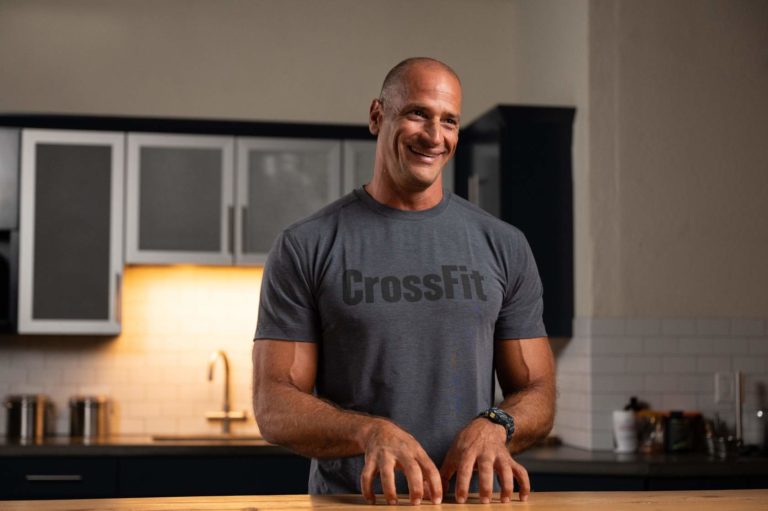 Stephane Rochet is a Senior Content Writer for CrossFit. He has worked as a Flowmaster on the CrossFit Seminar Staff and has over 15 years of experience as a collegiate/tactical strength and conditioning coach. He is a Certified CrossFit Trainer (CF-L3) and trains athletes in his garage.