Watch the Games. But Don’t Copy Everything You See.
Every summer, the CrossFit Games pit the fittest athletes on the planet against each other and asks them to prove their capacity. The events are grueling, the performances are extraordinary, and for anyone serious about their own training, it is genuinely compelling viewing. Watching athletes move through a snatch ladder while fatigued, or seeing them manage a complex chipper with surgical precision, teaches us things that are hard to glean from the printed page.
But the Games are also a sponsorship and prize money competition. And any event that offers the potential for fame and fortune, by its nature, encourages behaviors optimized for winning now rather than building lifelong fitness and health. Knowing the difference between what to absorb and what to set aside is one of the most valuable things a CrossFit athlete can take away from watching the sport at its highest level.
What the Games Can Teach You
Technique holds under load and fatigue
This is perhaps the single most instructive thing to watch at the Games. When an elite athlete is 80 percent through a heavy barbell cycling workout, their mechanics do not fall apart. The bar path stays efficient. The start and finish positions are strong. Core-to-extremity principles are preserved. Positions that lesser athletes abandon when things get hard are the positions Games athletes fight hardest to maintain precisely when things get hard.
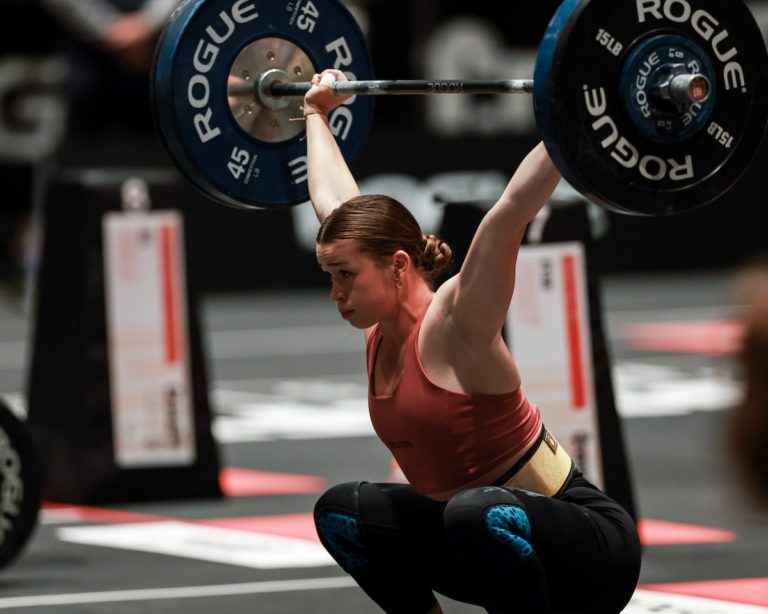
That is not a genetic gift. It is a trained skill. And it is the same skill CrossFit asks every athlete to develop, regardless of level. Watching the Games reinforces what mechanics at intensity, or threshold training, actually looks like, and raises the standard for what we should be demanding of ourselves when our own workouts get uncomfortable.
This is what genuine intensity looks like
Along with mechanics, intensity is the other piece of the threshold training equation. Intensity is CrossFit’s most powerful and most misunderstood variable. Watching Games athletes work gives you a calibration point that is hard to find anywhere else. These athletes are not simply moving fast. They are working at their true threshold, that precise edge where output is maximized without mechanics degrading unacceptably.
It takes hours of practice and dozens of workouts for us average athletes to begin to understand our real threshold. Watching the Games is a useful mirror. If our hardest effort doesn’t resemble the sustained, deliberate, controlled aggression we see on that floor, there is probably more in the tank for us to access. Pushing to the edge of technique and mechanics is a skill we can all hone over time.
How to manage work and rest strategically
Elite athletes do not just go until they have to stop and then go again. They make deliberate decisions about when to push, when to rest, and how long that rest needs to be to allow the next push to be productive.
Watch a Games athlete approach a long chipper and you will see pacing decisions being made in real time: sets broken earlier than necessary to avoid a longer forced rest later, transitions used to recover without losing time, breathing controlled and deliberate between movements.
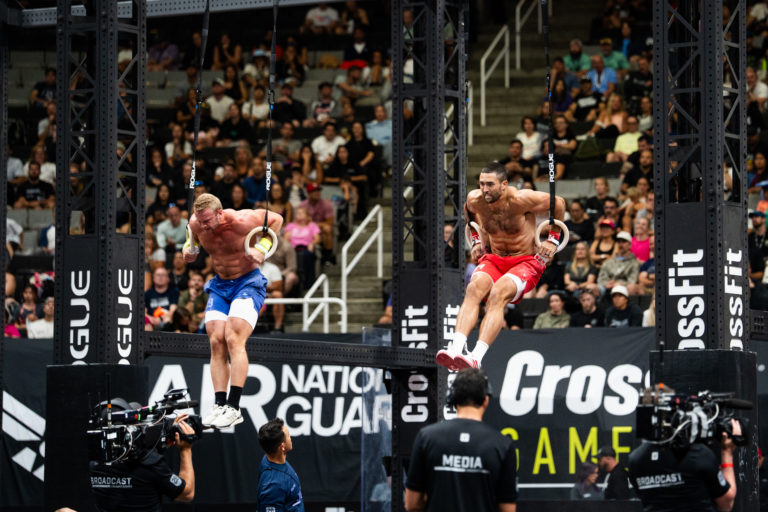
These are tactics to help maximize power output, or intensity. At the Games, the athletes who get the most work done in the shortest amount of time win the event. In the gym, when we increase the work we accomplish per unit of time, we have objective proof we are getting fitter. We’re winning the fitness battle and reaping the benefits.
Managing rest and work decisions is a highly learnable skill, and the Games floor is one of the best places to observe this. We can apply the lessons we learn to our own training. Experimenting with strategic rest rather than grinding to failure and recovering by accident is a great way to increase power output.
Nutrition as a performance tool
For Games athletes, nutrition is a priority. Athletes arrive fueled, stay fueled across multiple events in a single day, and recover between efforts with the same intentionality they bring to their training. Watching how seriously elite competitors treat food as performance infrastructure is a useful reminder that our own nutrition deserves the same respect, because the stakes are not only a Saturday morning class, but overall health, longevity, and quality of life.
The specifics of what a Games athlete consumes across a multi-day competition are not necessarily what a recreational CrossFit athlete needs on a Tuesday. But the underlying principle, that food quality and amount affect output in ways that are real and measurable, absolutely transfers.
Mental toughness and competitive self-knowledge
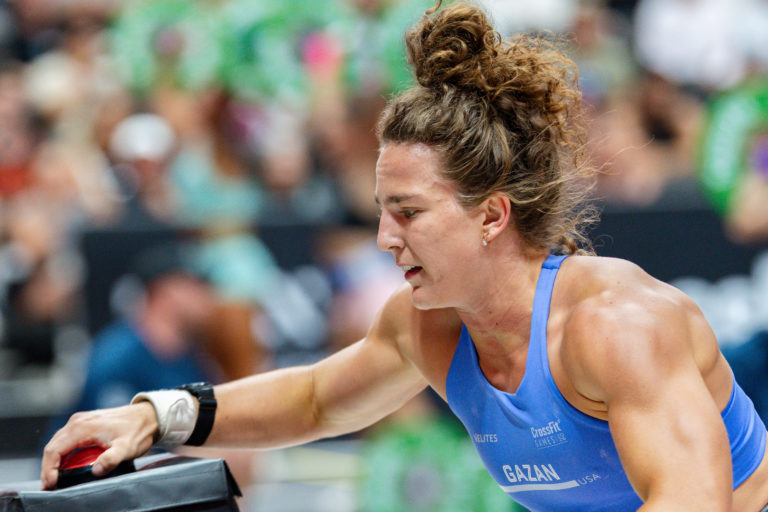
Games athletes know themselves. They know when they are in a dark place and can stay there productively. They know when a split-second decision needs to be made about load, pacing, or strategy, and they make it without hesitation. They have also failed publicly, recalibrated, and come back. Watching that process play out at the highest level of the sport is genuinely instructive for any athlete trying to develop a more resilient relationship with hard training and competing with themselves and others. In CrossFit, we fail and we fail often.
What the Games Cannot Teach You
Competition-specific range-of-motion standards
This one requires careful attention. The Games are a judged competition, and judged competitions inevitably produce movement styles optimized for the standard being judged. For example, a Games-standard air squat, assessed at high speed under competitive pressure, may not reflect the full range-of-motion movement that produces the most fitness benefit for an everyday athlete.
We should watch every movement with a critical eye. When we see ranges of motion that look abbreviated or, alternatively, overdone, it’s important to understand we may be watching a competition adaptation rather than a model to replicate. In the gym, we are focused on building fitness as opposed to performing the most efficient reps that pass a judge’s critical eye. Fitness and competition goals do not always share identical standards.
Competition-day nutrition practices
As mentioned above, Games athletes take their nutrition seriously. However, athletes competing across multiple events per day over several days have specific fueling needs that bear little resemblance to what a recreational CrossFit athlete needs before a 60-minute class. Aggressive carbohydrate loading, highly specific intra-workout nutrition, and recovery protocols designed for back-to-back competition efforts are not templates we need to copy.
We are wise to borrow the principle that nutrition is serious and worth attending to, but we do not need to borrow the specific protocol wholesale. The context is entirely different, and applying competition nutrition to a regular training schedule can create habits around food quantity and composition that do not serve our actual goals. Our recommendation has always been to “keep intake to levels that will support exercise but not body fat.”
Technique degradation in the chase for a win
This is the most important cautionary note of all. At the Games, while the technique of the elite athletes is, for the most part, beyond reproach, there are times when an athlete’s mechanics deteriorate in order to stay competitive in a specific event by striving to complete a lift or stay at a speed that surpasses their capacity. Knees caving on a heavy squat. A low back rounding on a deadlift. “Short-stepping” a heavy jerk.
These are competitive decisions made by experienced athletes with deeply ingrained movement patterns who understand exactly what they are trading and why. For an everyday CrossFit athlete, these types of lapses in technique are never necessary. For our long-term fitness approach, we steadfastly follow the charter of mechanics first, always. Intensity follows technique. Speed follows proper positions. Degrading technique to chase a PR is poor training and a PR achieved with compromised technique doesn’t really count. What we see a Games athlete do in the final minute of a grueling event is not an example of how to train. It is a competitive survival decision, and it should be understood as such.
Volume and training load
Games athletes train at volumes that are incompatible with full-time employment, family life, and the recovery resources available to most people. The training weeks that produce a Games podium finish would break the vast majority of recreational athletes, not make them fitter. Watching elite performance and extrapolating training volume from it is a reliable path to overtraining and injury.
The Games show us what the ceiling looks like. They do not tell us how to build our own floor.
The competitive mindset applied to every training session
Games athletes compete for a living. Every event matters. The scoreboard is real, and there are real consequences to underperforming. Bringing that mindset to every training session, chasing the whiteboard, prioritizing time or reps over mechanics, or making every class a competition, is not what the Games are modeling for us.
The Games are the test. Training is where fitness is built. Watching elite athletes compete should inspire the quality of our preparation, not convince us that every session needs to be treated like a final event.
Watch Closely. Think Critically.
The CrossFit Games represent the fullest expression of what this program produces when applied with world-class consistency and commitment over many years. There is real knowledge available in every event, every heat, and from every athlete on that floor.
Watch the mechanics. Study the pacing. Notice the composure. Observe how seriously the best in the world take the fundamentals that CrossFit has always insisted on: moving well, pushing hard, and building fitness that is broad, general, and inclusive so they can handle the unknown and unknowable circumstances the Games team throws at them.
Just remember that competition reveals what athletes are capable of. It does not always show the path that got them there. That path looks a lot like showing up consistently, moving correctly, and doing the unglamorous work of the program without shortcuts.
That part does not make the highlight reel. But it is where fitness lives for all of us.
About the Author
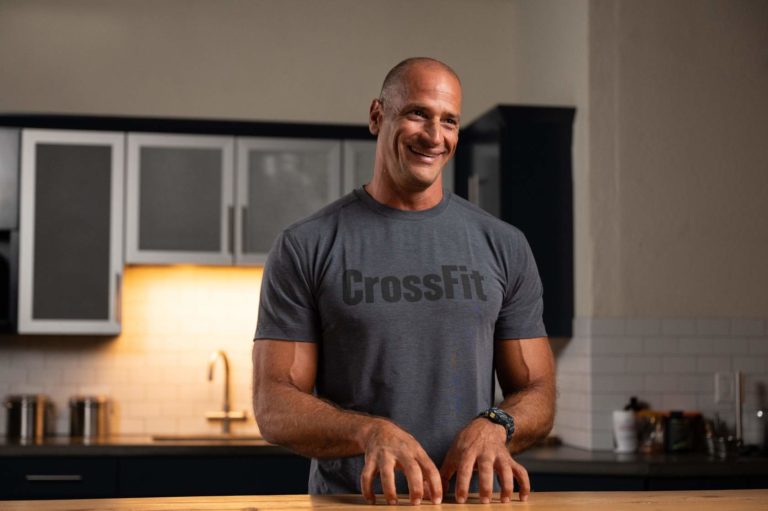 Stephane Rochet is a Senior Content Writer for CrossFit. He has worked as a Flowmaster on the CrossFit Seminar Staff and has over 15 years of experience as a collegiate/tactical strength and conditioning coach. He is a Certified CrossFit Trainer (CF-L3) and trains athletes in his garage.