On the last Tuesday of June 2007, we took call for the first time as medical interns at Massachusetts General Hospital. For nearly 30 straight hours, we evaluated new patients and cared for very sick ones already on our floor. That shift was the culmination of years of formal education.
It took us much longer to see what that education had left out.
What Medical School Leaves Out
Most physicians in the U.S. spend at least 11 years after high school before they earn the right to practice medicine independently. In that time, we learn to care for patients with common conditions, uncommon mysteries, and some of the most life-threatening illnesses. What we don’t learn is prevention, or how to teach patients to stay healthy. In our own training, nutrition, behavior change, and movement received less than one full day combined.
The CrossFit community already knows the basic prescription for a healthy life: Eat meat and vegetables, nuts and seeds, some fruit, little starch, and no sugar, and train constantly varied functional movements at high intensity. Most medical students and residents never encounter any part of that prescription, unless they happen to have a mentor who does CrossFit or find their own way into a CrossFit affiliate.
Medical education is making progress. According to the Association of American Medical Colleges, the share of medical schools requiring nutrition content beyond basic science rose from 38% in 2014 to 94% in 2024. That figure measures what’s in the curriculum. It doesn’t tell us how confidently or effectively new physicians help patients change the way they eat and move.
Why Advice Isn’t Enough
Our push to improve medical education grew out of a pattern we saw again and again in our clinic. We would ask patients to work on diet and exercise, then return in three months so we could re-evaluate their health and blood markers. Too often, their weight had gone up, and their blood pressure hadn’t come down. Without specific guidance, patients couldn’t identify which lifestyle changes would work, let alone put them into practice.
Prescribing a pill twice daily with food was simple. Teaching nutrition and exercise and helping patients build new habits took more time, more skill, and more support. We had used CrossFit to change our own lives, and we wanted to bring that experience to our patients.
Knowing that exercise matters is only the beginning. The real gap is turning advice into daily habits. Patients need help choosing an appropriate starting point and making it part of their lives. For patients and families, the aim is practical: help getting started, activities scaled to their abilities, and support when progress gets hard. A goal might be climbing stairs more comfortably, carrying groceries, or keeping up with grandchildren. Goals like these give health advice a personal purpose. We want every patient to leave with a manageable next step and a team that helps them keep going.
Rick shows what that looks like in practice. He was referred to Dr. Shveta Raju for weight management. He needed to lose 70 pounds to qualify for hip surgery, and he didn’t want to take weight-loss medication. At his first visit, we connected him with our head coach for CrossFit training and enrolled him in nutrition coaching. Rick was remarkably consistent: He trained every week, built new habits, and added activity between sessions. He reached his goal and had his surgery earlier this year.
A Rotation Built on the Methodology
To share what we’ve learned, we’ve launched several initiatives that teach medical students what a healthy life looks like, let them experience CrossFit firsthand, and help them start conversations with patients about lifestyle. Nurse practitioner students and final-year business school students have also taken part.
Fourth-year students from the Medical College of Georgia complete a required final-year internal medicine rotation at our clinic. Working with Shveta, they learn how to ask patients about the details of their daily lives, including their current fitness and nutrition habits. They observe group medical visits that introduce patients to the CrossFit methodology, and they can join the CrossFit classes held right inside the clinic.
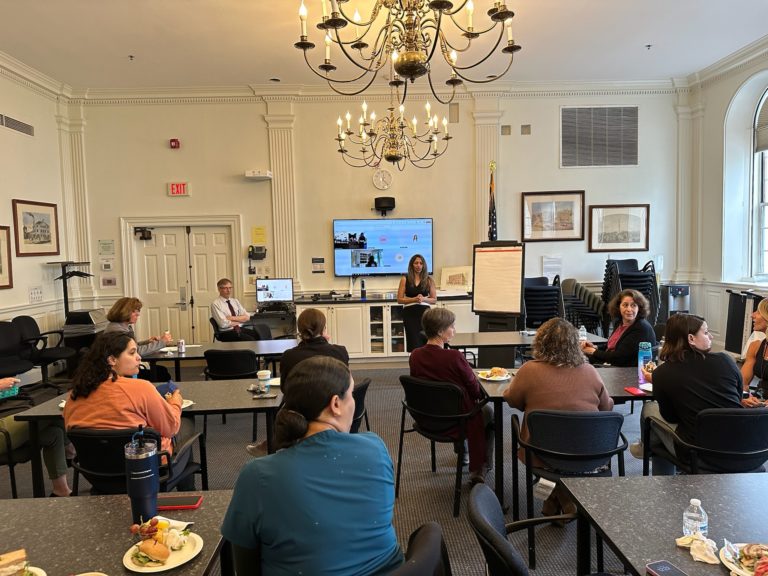
Lunchtime seminar at Massachusetts General Hospital Primary Care Clinic
The rotation curriculum includes key readings such as “What Is Fitness?” by CrossFit and the CrossFit Level 1 Training Guide. Within our multidisciplinary teams, students work every day alongside CrossFit trainers who are cross-trained as medical assistants. Nurse practitioner students from Emory University who rotate through our clinic get the same experience.
What Students Take With Them
Lydia Piendel, a medical student who worked with us this past summer, saw the difference right away.
“Working with Dr. Raju and her team at their primary care clinic was an amazing experience because I saw real patients making sustainable and healthy changes,” she said. “Over just a few weeks, I saw patients come multiple times for their medical and fitness appointments, showing commitment and improvement. The best part was that it was all happening right in the clinic.”
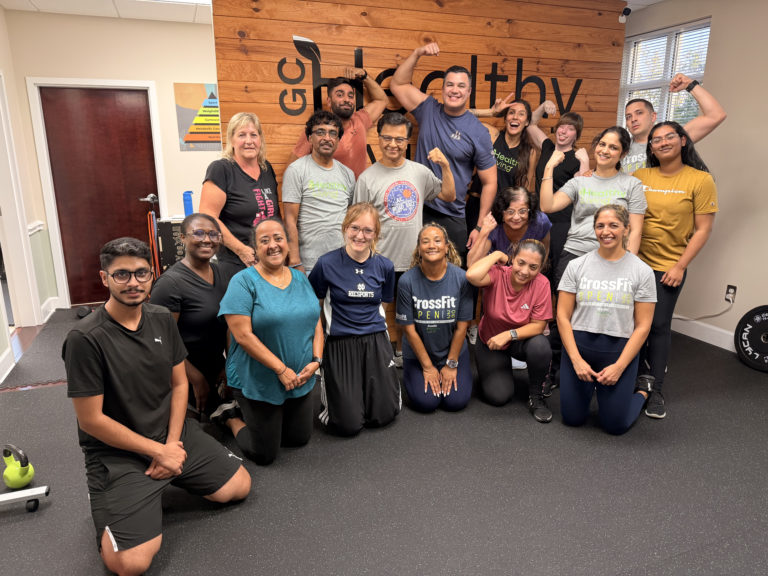
Pictured are five medical assistants, five patient care representatives, two doctors, a physician assistant, a physical therapist, a medical student, and three patients.
She was struck by how rarely patients get more than a slogan. “How often do healthcare providers tell patients, ‘Eat right and exercise,’ yet rarely explain it in detail, or better yet, show it to them?” Piendel said. “A significant part of primary care is the promotion of healthy and active living, but Dr. Raju’s team actually shows patients how that can be done.”
The clinic’s fitness space, she said, gives patients a place to feel comfortable, ask questions without judgment, and learn exercises from a professional. “Seeing how the lifestyle interventions Dr. Raju prescribed were incorporated through CrossFit exercises showed me how a clinic can serve as an accountability partner for patients,” she said.
Piendel’s favorite part was joining the clinic staff for group workouts. “That truly was an exceptional and memorable part of my medical education,” she said. “From the perspective of a medical student who plans to go into primary care, I absolutely plan to incorporate this model into my future practice. I would encourage all healthcare professionals to practice what they preach, to sign up for CrossFit and get healthy, because when you are engaged in that lifestyle yourself, it’s much easier to teach patients, get excited about it, and change lives.”
Bryan Lee, a nurse practitioner student who spent six months with us, described a similar shift. “I am grateful for my experience rotating through Gwinnett Clinic and having had the chance to observe the real benefits of offering a CrossFit-based exercise program to our patients,” he said. “It not only led to improved health outcomes, but also an improved outlook on life and sense of well-being in our patients. Going forward, I look to replicate this model that I learned through the Gwinnett Clinic Healthy Living program to provide optimal care to my patients in the future.”
Learning by Doing
Clinicians are often surprised by how challenging a short workout can feel. Compared with the longer routines they’ve tried, it makes CrossFit look far more realistic for a hectic schedule. The experience also opens a conversation about what an unfamiliar workout asks of a beginner and how good coaching scales it to different abilities.
We want future clinicians to understand appropriate effort, recognize when patients need more guidance, and make recommendations they can explain clearly. What they learn in the gym should lead to better conversations in the exam room.
Educating Coaches, Too
Education at our clinic runs in both directions. Our affiliate team is also committed to teaching CrossFit coaches about metabolic health and chronic disease. In summer 2026, we launched an internship program that brought a college student who holds a CrossFit Level 1 Trainer credential into the clinic for two months. The intern gained in-depth exposure to primary care, lifestyle medicine, lifestyle assessments, and the skills of a medical assistant.
Beyond our own walls, we’ve led educational seminars at other medical clinics, at medical schools including Harvard and Georgetown, and at professional schools such as Emory University’s Goizueta Business School. These sessions include a ruck or Tabata workout, presentations on the CrossFit methodology and nutrition science, and practical guidelines to help students start making changes in their own lives. We’ve also presented at other CrossFit affiliates on CrossFit for health. Most recently, the CrossFit Medical Society selected Shveta as a mentor for medical students interested in CrossFit.
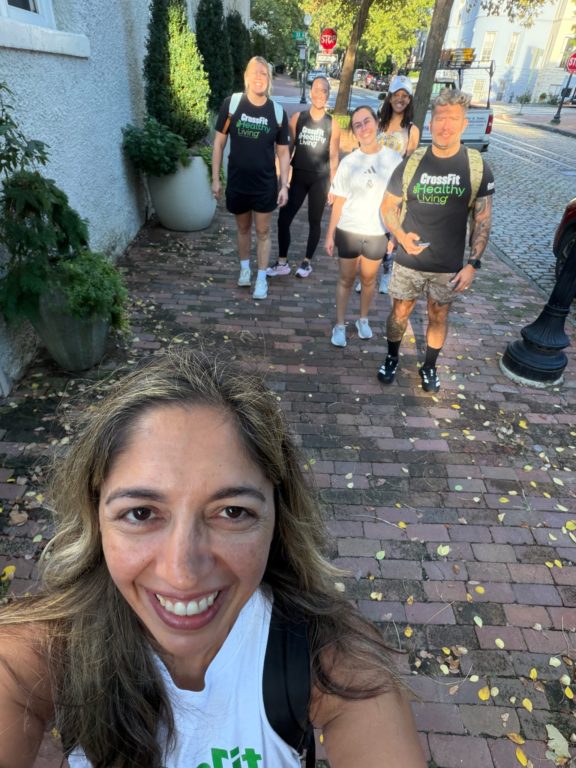
Ruck with students in Georgetown Medical School.
What It Will Take to Make This Standard
Education is at the core of our mission at CrossFit GC Healthy Living. For our model to become standard, practical lifestyle education needs a defined place in medical training, with time for supervised patient conversations and collaboration with qualified coaches and nutrition professionals.
Schools should assess whether learners can help a patient build a realistic plan and appropriately evaluate plans developed by coaches. Clinics need referral relationships, time for follow-up, and ways to make support affordable. Programs should measure changes in counseling skills, patient participation, and health outcomes. Those steps would make the model repeatable and build the evidence for its value.
For clinicians, this approach offers tools for conversations that would otherwise end with general advice. A team can carry a plan well beyond a brief office visit, and clinicians can apply what they learn to their own lives. Treating acute and chronic disease will always be vital. Helping patients build habits that last deserves a place in daily practice, too.
On our first 30-hour shift, we learned how to treat disease. It took CrossFit to teach us how to help patients build health. The next generation of physicians shouldn’t have to wait as long.
About the AuthorS
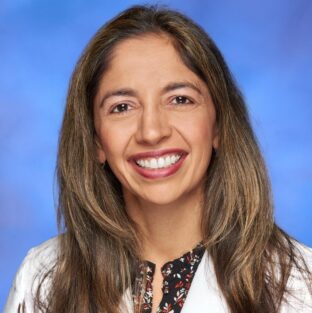 Dr. Shveta Raju is a board-certified primary care internist and a CrossFit athlete since 2018. After watching family members develop metabolic disease as they aged, she found a path to prevention at Mad Mare CrossFit. Raju is a Certified CrossFit Trainer (CF-L3). Her training gives her the confidence to advise patients on physical activity, and she centers her practice on lifestyle choices, including CrossFit, that shape health and aging. She earned her M.D. and M.B.A. at Emory University, completed her residency at Massachusetts General Hospital through Harvard Medical School, and teaches fourth-year medical students at the Medical College of Georgia.
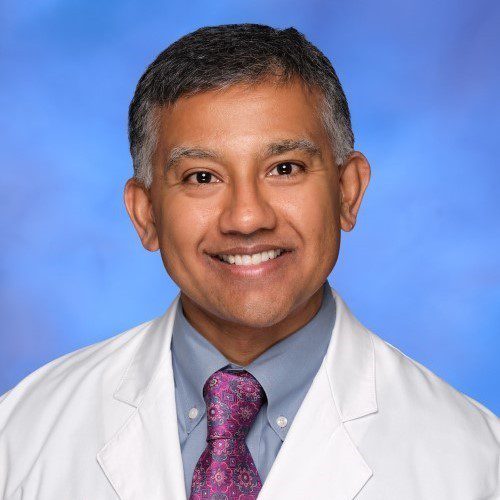 Dr. Dinesh Raju is a neurologist at Gwinnett Clinic in Gwinnett County, Georgia, and a Certified CrossFit Trainer (CF-L3). He graduated with highest honors in neuroscience and behavioral biology from Emory College, then earned an M.D. and a Ph.D. in neuroscience at Emory on full scholarship through the National Institutes of Health’s Medical Scientist Training Program. He completed his neurology residency at Brigham and Women’s Hospital and Massachusetts General Hospital through Harvard Medical School, followed by a sleep medicine fellowship at Duke University. He also holds subspecialty certification in headache medicine. Raju treats headaches and migraines, sleep disorders, epilepsy, and neuromuscular disease, and he performs EEGs, sleep studies, and EMG and nerve conduction testing.
Comments on Beyond ‘Eat Right and Exercise’: Bringing the CrossFit Methodology Into Medical Education
0 Comments