Josh Everett is warming up, and he’s doing it inches from the front row.
Nobody told us what was about to happen. One moment, we were settling into our seats, and the next, a man was moving a weight that most of us would never touch in our lives — 352 lb, from the floor to overhead, close enough that we could hear it.
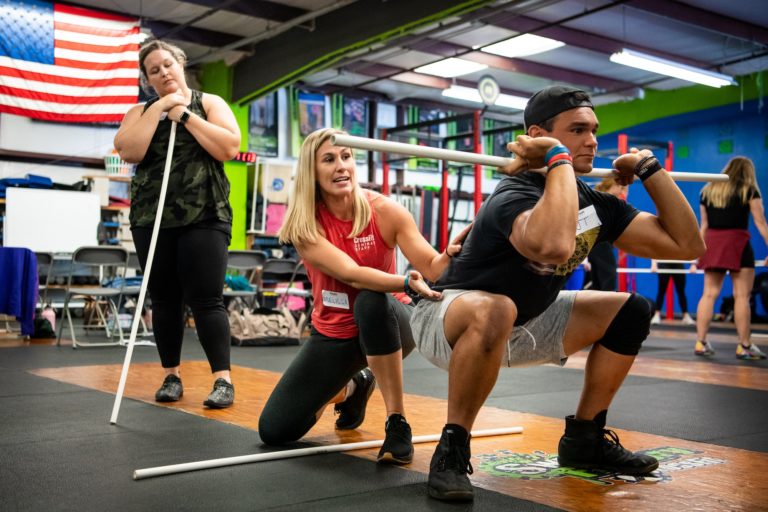
That’s the thing about the CrossFit Level 1 Certificate Course. It has always had a way of putting you right in the middle of something you weren’t quite prepared for, and that’s exactly what I experienced when I took my Level 1 in 2004.
For over two decades, the Level 1 Course has been the gold standard for fitness education. In the early days, it was a three-day course with a curriculum that shifted week to week. One weekend might bring a ring training session with Tyler Haas. The next, an Olympic lifting clinic with Mike Burgener or a dumbbell session with Michael Rutherford — whoever was available, whoever showed up.
These sessions revolved around mainstay lectures like “What Is CrossFit” and “What Is Fitness,” and the rest of the time was filled with workouts: Fat Helen, Grace, Cindy, Tabata squats, and Fran. Three or four workouts a day was not unusual, and nobody complained. Rather, people became more invested with each new workout they tried.
The course is now two days, and the curriculum is tightly structured, but the spirit hasn’t changed, nor has the standard. What has changed is the precision with which that standard is delivered every single weekend, at gyms across the world, with rotating staff and different participants, in different cities, over and over again, without slipping. That’s the harder trick.
It starts before anyone walks through the door.
Saturday morning, an hour before participants arrive, the Seminar Staff trainers gather. The head trainer, or Flowmaster, walks the room through every evolution of the day. They confirm assignments and expectations and drill down on every detail; not just what each trainer is responsible for, but how to go beyond it, how to find the participant who’s nervous and doesn’t know anyone, and how to remember the person who mentioned a birthday on their intake form to ensure they don’t feel like a number.
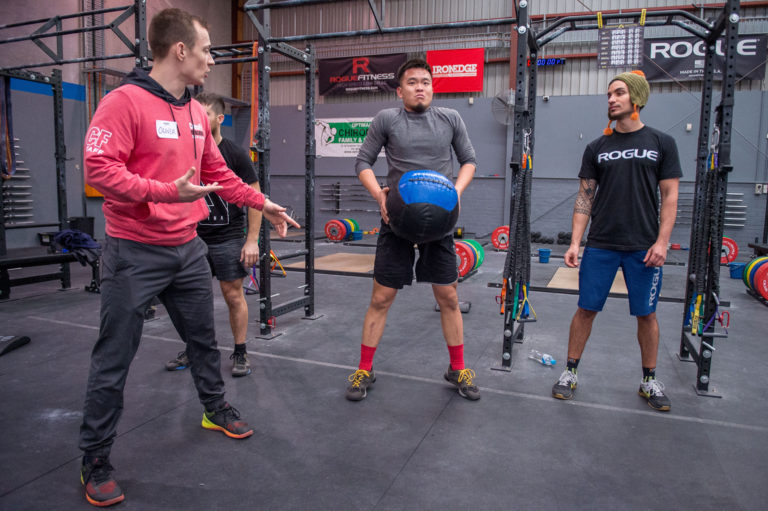
Before any of this happens, participants are asked to fill out a form to share their goals, fears, and hopes with their trainers, and the trainers have already read those forms. They know your goals, current fitness level, and why you’re there. This is their homework and also a cheat sheet for human connection, so they can walk up to you at 8 a.m. and already know something real about you.
By the time registration opens, the gym is prepped, the staff is posted, and anything a trainer learns in those early conversations — an injury, a concern, a quiet hope — gets passed through quick huddles to everyone else on staff. You won’t see any trainers on their phones or piddling around waiting for the day to begin. The day has already begun.
What happens when the doors open, when 30 or 40 people who’ve never met each other walk into a room, is that something shifts and everyone can feel it. I’ll dive into that piece next time.
About the Author
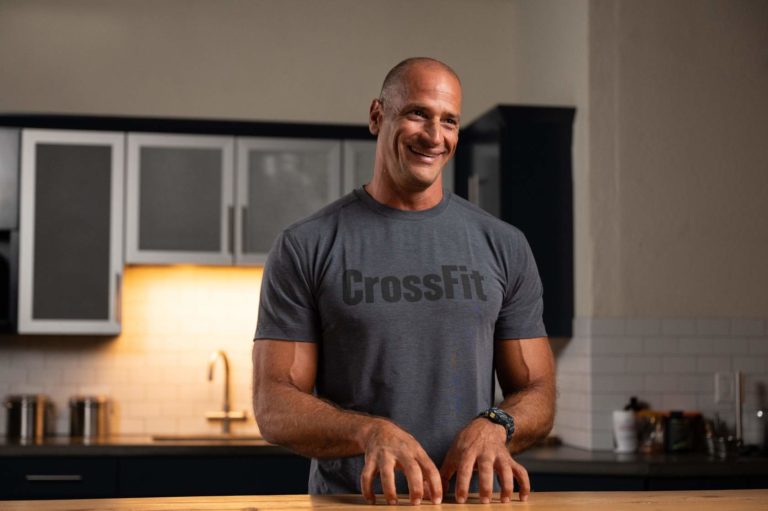 Stephane Rochet is a Senior Content Writer for CrossFit. He has worked as a Flowmaster on the CrossFit Seminar Staff and has over 15 years of experience as a collegiate/tactical strength and conditioning coach. He is a Certified CrossFit Trainer (CF-L3) and trains athletes in his garage.