When back pain strikes it can be scary — debilitating even. Whether you simply slept wrong or you suffered an acute injury, persistent back pain is disruptive to one’s life to say the least.
Dr. Sean Rockett, an orthopedic surgeon, shares causes and considerations when it comes to back pain, and points out some things to be aware of to give yourself the best chance of avoiding chronic back pain throughout life.
The good news — avoiding and treating back pain involves staying active and focusing on strength and stability, all of which can be achieved in a CrossFit gym.
What Are the Different Parts of Your Back?
The back is made up of many moving parts and it helps to have some knowledge of how it functions to understand what can happen if these parts stop working well. The bones or vertebrae stack up like the floors of a tall building. The facet joints are in the back of the vertebrae and they line up like the shingles of a house, one on top of the other. The discs are the cushions between the vertebrae and they act like shock absorbers. There are muscles and ligaments that attach around the bones to provide stability and movement. And most importantly, the nerve roots which come from the spinal cord, exit through little openings or foramina between the bones.
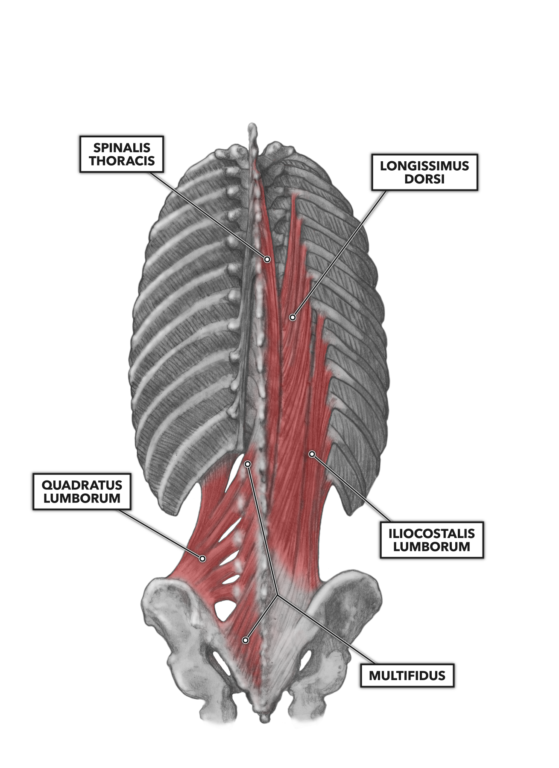
Lumbar musculature
What Can Cause Back Pain?
More than 90% of humans will have an episode of low back pain at some point. Walking upright has given humans certain conditions associated with being vertical. The pain can either be a minor soreness or a sign of something worse to come.
The most common cause of low-back pain (LBP) is muscular in nature. There are a multitude of muscles in the lumbar spine and glutes that can be strained or incur small tears during day-to-day chores like lifting things off the ground or shoveling, or during exercise ot sports. This can set off spasms, pain, tightness, and stiffness.
There are certain conditions that are typical based on a person’s age and activity level. In younger people — ages 15-25 — sprains or strains of the ligaments and muscles are common. These can present as spasms and tightness in the low back. When back pain persists in this age group despite modifying activities, we consider stress fractures.
As we get older, herniated discs can appear, classically from around ages 25-45. This occurs when one of the ligaments fails and the disc pushes on the nerve or chemically causes an inflammatory reaction. This can produce leg pain, numbness, or weakness.
Arthritis can then start to creep in around age 50. As this develops, the spaces between vertebrae can start to narrow and spurs can put pressure on the nerves with a condition called spinal stenosis. This can occur when soft tissues, discs, or bones put pressure on the nerve roots causing weakness, numbness, or pain down the legs.
CrossFit and Back Pain
There are certain exercises specific to CrossFit that can exacerbate back pain if they are not performed with sound mechanics. When performing push-ups or burpees, for example, don’t lose your midline and hyperextend in the low back. Hyperextension occurs when there is a significant or exaggerated bend backward from a neutral spine position with a lack of abdominal engagement. The facets in the back can feel that stress. When this movement fault occurs, I recommend the athlete focuses on a flat back and lifting the hips and back simultaneously to prevent excessive stress in the lumbar spine.
“Athletes who have a hard time correcting hyperextension may benefit from practicing hollow holds on the floor to learn basic mechanics of how to engage the abdominals,” says Eric O’Connor, CF-L4.
When pressing overhead, it’s important not to hyperextend at the finish of the movement. Maintaining a tight abdomen and gluteus squeeze can prevent hyperextension.
While performing deadlifts, focus on setting up with your shoulders over or slightly in front of the barbell while maintaining a neutral spine.
Qualified CrossFit coaches in one of our 13,000 gyms around the world can help you correct these common faults and protect your back.