Scaling isn’t just something you do for beginners; it’s something every coach, including the most experienced ones, does for themselves every single day. Eric O’Connor and Stephane Rochet sat down to walk through a full week of CrossFit programming and demonstrate exactly how they approach scaling when they’re the athletes, not the coaches.
The week they chose was from Aug. 1-7, 2008, and includes the following:
- 30 muscle-ups for time
- Rowing, thrusters, and pull-ups
- Griff
- 5×5 back squat
- Dumbbell squat snatch chipper
- Karen
Here are a few key aspects of scaling they noted during their review. If you’d rather watch/listen to their conversation, you can do that here.
Preserve the movement before you change the load. When Rochet looked at the muscle-up workout, he knew it would be rough given the current state of his shoulder injury, but scrapping the movement entirely wasn’t on the table. Instead, he mapped out a plan to start with basic transitions, move to a bar if ready, and work for 30-40 minutes without counting reps or watching the clock. He said it’s really important to preserve the movement for as long as you can because the more movements you put in the “I don’t do that anymore pile,” the more of an issue it will be down the road. Keep working on the skills and preserve as much as you can for as long as you can.
Think about the whole week, not just that day’s workout. Regarding 30 muscle-ups for time, before you substitute pull-ups for muscle-ups, look at what’s programmed the day before and after, if possible. In this case, pull-ups already appeared in the surrounding workouts, so defaulting to that substitution would’ve created unnecessary redundancy. Knowing what’s coming changes what you should do today. Not all gyms let you see the workouts ahead of time, but since they know them, they can help you choose the scale that’s best for you.
Stimulus over prescription. On the rowing, thruster, and pull-up workout, the goal was three hard sprint efforts with two minutes of rest between rounds. That intent should survive the scaling decision. If someone can’t move fast enough at the prescribed weight to actually sprint, the scaling isn’t optional; it’s the whole point. Additionally, the jumping pull-up is a consistently underused option, but it preserves speed far better than banded variations and might be a great scale for this workout.
Tempo is a tool, not a compromise. On the back squat day, Rochet talked about using a five-second eccentric and a pause at the bottom — not as a reduction in the workout, but as a way to build strength, protect the joints, and master positions at the same time. A set of 5 at an empty bar with that kind of control can humble anyone.
Be honest with yourself. The hardest part of scaling isn’t choosing the modification, it’s being truthful about why you’re choosing it. You want to ask yourself: Am I avoiding this because it’s genuinely not smart today or because it’s hard? This question separates good training decisions from convenient ones.
The bottom line: Scaling is a skill. It requires understanding the stimulus, knowing your body, looking at the bigger picture for the week, and holding yourself accountable to get as close as possible to the workout’s intent — even when the prescription has to change.
About the Author
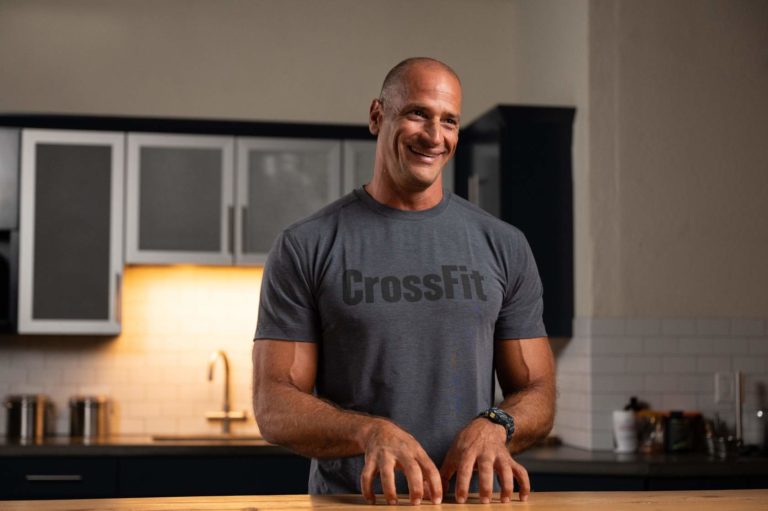 Stephane Rochet is a Senior Content Writer for CrossFit. He has worked as a Flowmaster on the CrossFit Seminar Staff and has over 15 years of experience as a collegiate/tactical strength and conditioning coach. He is a Certified CrossFit Trainer (CF-L3) and trains athletes in his garage.