The Real Reason CrossFit Demands Full Range of Motion
If you’ve been doing CrossFit for any length of time, you’ve had a coach make you redo a rep. Maybe your hip didn’t break parallel on that squat, or you didn’t fully extend at the top of a thruster. It’s easy to think these range-of-motion standards are just about competition rules or making workouts “count.”
But here’s the truth: the range-of-motion demands in CrossFit existed long before any fitness competition was ever organized. There’s competition range of motion, and there’s life range of motion, and 99% of us should be far more interested in the latter.
If you’d rather watch and listen to this conversation, you can do that here.
You can also find our other information on common movement themes here:
- Midline Stabilization
- Core to Extremity
- Posterior Chain Engagement
- Active Shoulders
- Balance About the Frontal Plane (Coming soon)
- Effective Stance and Grip (Coming soon)
- Sound Hip Function (Coming soon)
What Full Range of Motion Really Means
When we talk about a full range of motion, we mean training and moving your joints through their natural anatomical end ranges. This isn’t arbitrary. It’s not about making workouts harder. It’s about preparing your body for the full spectrum of positions life might demand of you.
Think about it: the gym is a controlled environment. When you’re doing air squats, you know exactly what’s coming. But life doesn’t work that way. Life doesn’t care about your comfort zones or preferred ranges. You might slip getting off a boat onto a dock. You might fall down stairs. You might need to catch yourself in an awkward position. Having put your joints through full ranges of motion and having developed strength in those ranges could be the difference between walking away fine and getting injured.
The Best Mobility Work You’ll Never Do
Here’s something that might surprise you: if you’re doing CrossFit movements through a full range of motion, you’re already doing the best mobility work possible. People often ask what they should do for mobility training. The answer is simple: move through the full range of motion when you’re in the gym.
That’s it. That’s the best mobility work you can do, and you’re getting it in the context of actual movement patterns.
This doesn’t mean you never need targeted mobility work. If you have significant limitations preventing you from accessing these ranges, then yes, you might need to piece it together with additional drills. But for most people, the path to better mobility is straightforward: squat all the way down, press the bar all the way overhead, and work in those end ranges.
We’ve seen this play out countless times. Athletes who couldn’t squat below parallel could suddenly, after months of working full-range squats, without ever doing a single dedicated mobility drill. Their ankles got more mobile. Their hips opened up. They stopped feeling as beat up. And it happened because they consistently worked in those challenging positions.
Working the Ranges vs. Just Touching Them
Here’s the key: you have to actually work in these positions, not just touch them briefly. Take the bottom of a squat. You need to spend time down there. Pull yourself into that position, push your knees out, lift your chest, and feel what it’s like to be there. Some of this work can be passive, but a lot of it needs to be active.
Just bouncing up and down in a squat, barely touching your current end range, won’t improve your mobility. But if you’re dedicated and spend real time in those uncomfortable positions where you’re at your limit, you’ll see significant gains in your range of motion.
The beauty of this approach? If you just show up to the gym a few times a week and move with intention, you’re getting mobility training without having to carve out extra time for boring, time-consuming mobility drills that most people hate and that lose their effects quickly anyway.
Full Muscular Development
There’s another crucial benefit to working through the full range of motion that has nothing to do with flexibility: complete muscular development.
When you squat below parallel, you recruit an entirely different set of muscles than when you stay above parallel. Your glutes and hamstrings engage far more deeply. You develop strength in musculature that barely activates in partial ranges.
This matters for performance, yes. But it also matters for joint health and balanced development. When you move through full ranges of motion, you develop the musculature around the joint in the way we were designed to move. This creates stability, strength, and resilience throughout the entire range, not just in the comfortable middle portions.
New Range Is Weak Range
There’s a saying in CrossFit that should stick with you: new range is weak range.
Any range of motion you haven’t worked is vulnerable. It lacks capacity. It’s weak. If you always squat to parallel or just below, but life suddenly demands that your butt goes all the way down to your ankles, that’s where you’re most likely to get injured, feel pain, or be unable to handle the situation.
This is especially important as we age. Range of motion naturally decreases with time, so you need to fight to hang onto it, just like everything else worth preserving.
The Longevity Component
Let’s talk about what might be the most important reason to train the full range of motion: your ability to live independently decades from now.
If you train full-range-of-motion squats today, you’re investing in yourself 30 years down the road. Recently, an 85-year-old woman was able to get her hips almost down to her ankles and stand back up. That ability directly correlates to her capacity to live independently, to get off the ground if she falls, and to handle the physical demands of daily life.
We never know what positions life will put us in, especially as we age. But if you’ve consistently trained through full ranges of motion and you’ve developed strength in those positions, you’re far better equipped to handle whatever comes.
As we get older, we naturally begin to limit our range of motion. Fight to keep it. The discomfort you feel working through the full range of motion today is a small price to pay for the long-term payoff.
The CrossFit Culture of Range of Motion
In the CrossFit community, range of motion is a point of pride. Walk into any affiliate, and people understand it, value it, and will call out a less-than-ideal range of motion when they see it. This cultural emphasis matters.
Compare this to traditional strength training environments, where you might see someone squatting 700 lb to barely parallel, or not even that deep. Yes, some athletes can handle enormous loads through a full range of motion. But when we’re talking about real athleticism, about handling the demands of life, about moving well, whether you’re a competitive athlete or a regular person trying to stay healthy, full range of motion is the great equalizer.
It connects the entire spectrum from elite sport performance to everyday independence.
Don’t Sacrifice Range for Ego
Here’s the hard truth: the first thing to go when you don’t check your ego at the door is range of motion.
Want to add more weight to the bar? Decrease your range of motion a little. Want a better time on the workout? Cut your squats by a few inches. It’s the easiest way to game the system.
But you’re only cheating yourself.
How do you know if a weight is too heavy? Here’s a simple test: does your warm-up set look different from your working set? If your range of motion changes as the weight increases, the weight is too heavy.
Range of motion should not be weight-dependent. It should not be speed-dependent. Yes, it takes longer to sit all the way down and stand all the way up. But you shouldn’t shave time off your workout by barely meeting depth standards. You should be obsessed with proper range of motion and with moving the way your body was designed to move.
This isn’t about being hypermobile. When you’re doing functional movements, there are clear end ranges: top and bottom, fully extended, or fully flexed. Just be able to move through those ranges while preserving all the points of performance: proper midline position, good mechanics, everything intact.
When you can do that, you’re starting to master the movement.
Go all the way down. Stand all the way up. Move the way you were designed to move. Your 85-year-old self will thank you.
About the Author
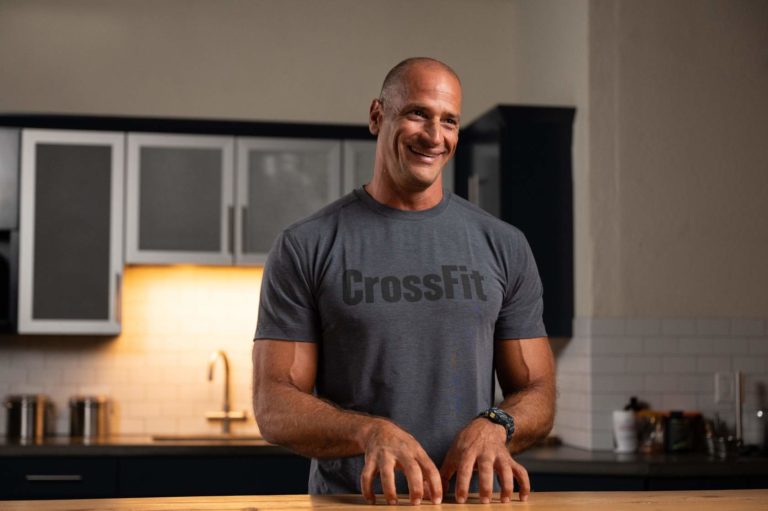 Stephane Rochet is a Senior Content Writer for CrossFit. He has worked as a Flowmaster on the CrossFit Seminar Staff and has over 15 years of experience as a collegiate/tactical strength and conditioning coach. He is a Certified CrossFit Trainer (CF-L3) and trains athletes in his garage.