You’ve probably heard the saying: “The front side is for show, the back side is for go.” If you’ve been doing CrossFit for any length of time, you’ve likely experienced the truth of this firsthand: that burning sensation in your hamstrings after Romanian deadlifts, the deep glute soreness following a heavy day of squats, or the lower-back engagement during deadlifts.
But what exactly is the posterior chain, and why should you care about developing it?
If you’d rather watch and listen to this conversation, you can do that here.
What Is the Posterior Chain?
Simply put, the posterior chain is the entire backside of your body, from your neck down to your ankles. But when we talk about it in the context of CrossFit performance, we’re primarily focusing on three key muscle groups:
- Erector muscles(your lower back)
- Glutes
- Hamstrings
These muscles work together as your body’s performance engine, powering your running, jumping, lifting, and virtually every athletic movement you do.
Performance and Injury Prevention
Here’s the reality: naturally gifted athletes typically have well-developed posterior chains. They instinctively know how to use their glutes, hamstrings, and erectors. But if that’s not you, the good news is you can develop these muscles and learn to use them effectively, leading to significant performance improvements.
Beyond performance, there’s a crucial safety element. We live in a front-facing society; we see our quads, chest, and abs in the mirror, so we naturally tend to develop these muscles more. This creates an imbalance that can increase your risk of injury. Developing your posterior chain helps prevent ACL tears, hamstring strains, and even those nagging back problems that can derail your training.
The Back Health Paradox
If you’re relatively new to strength training and have a history of back issues, you might be surprised to find that movements like deadlifts and squats actually make your back feel better, not worse. This seems counterintuitive, right?
The truth is, a lot of back pain doesn’t come from overusing or lifting too heavy; it comes from not being strong enough in those areas. When you properly develop your erectors, glutes, and hamstrings, you’re creating a support system that stabilizes your spine and helps it handle the forces of daily life and training.
A note for those new to these movements: You might feel some soreness in your lower back, hamstrings, or glutes when you start training these patterns. This is normal and actually indicates you’re getting stronger. Your erectors are working to hold that strong midline position, while your glutes and hamstrings are the prime movers creating the actual movement.
Wiring Your Brain to Your Backside
Most people are overdeveloped in their quads. When you ask someone to squat for the first time, their natural tendency is to push forward into their knees rather than sit back. Why? Because their brain says, “This is where my strength and balance come from.” They feel like they’ll fall backward if they sit back into their posterior chain.
This is why you need to “wire your brain to your ass.” You need to learn how to use that posterior chain musculature in your movement patterns. Squatting, jumping, running — all of these movements become more powerful and safer when you engage your posterior chain properly.
What To Watch For in Your Training
Foot Pressure
Pay attention to where you feel pressure in your feet during movements. You should maintain full foot contact with the ground, though you might be slightly biased toward your heels, especially at the bottom of squats and deadlifts. Think of a tripod: big toe, little toe, and heel all pressing into the ground.
For movements like cleans, snatches, and jerks, stay full-foot as long as possible during the drive. Your heels will eventually come up, but not until after you’ve achieved full hip and knee extension. If your heels lift too early, you’ll likely jump forward or press the bar forward, which is a sign you need to stay more connected to the ground through your posterior chain.
Knee Tracking
Your knees should track in line with your toes. If you watch yourself squat and notice your knees caving inward, you’re losing tension in your posterior chain. That slight outward pressure on your knees is part of creating the tension that equals strength.
The CrossFit Advantage
The good news? If you’re following a well-coached CrossFit program, you’re probably already getting the posterior chain development you need. Between squats, deadlifts, Olympic lifts, lunges, Romanian deadlifts, and glute-ham developer work, CrossFit naturally incorporates comprehensive posterior chain training.
The key is doing these movements with proper technique and consistency. When you focus on foot pressure, knee tracking, and engaging your glutes and hamstrings rather than just pushing through your quads, these adaptations happen almost automatically.
The Bottom Line
Your posterior chain is your performance engine and injury prevention system rolled into one. It powers your PRs and protects your joints. By understanding how to engage these muscles and make them a consistent part of your training, you’re setting yourself up for better performance, fewer injuries, and a stronger, more resilient body.
So next time you deadlift or squat, remember: you’re not just building strength; you’re developing your body’s powerhouse.
About the Author
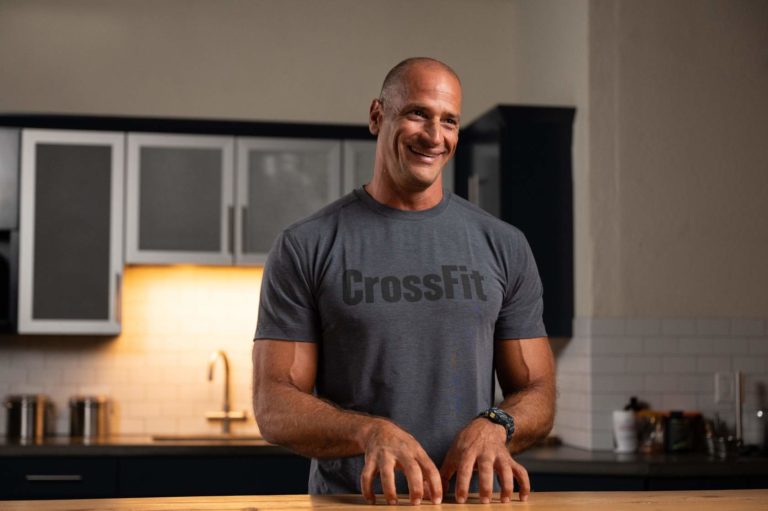 Stephane Rochet is a Senior Content Writer for CrossFit. He has worked as a Flowmaster on the CrossFit Seminar Staff and has over 15 years of experience as a collegiate/tactical strength and conditioning coach. He is a Certified CrossFit Trainer (CF-L3) and enjoys training athletes in his garage gym.