Some things are worth coming back to.
CrossFit’s foundational articles — the ones that defined what we do, why we do it, and what we’re actually building — were written years ago. But the principles inside them don’t age. They clarify. Every time you return to them, you’re a little different, your training is a little different, and something that didn’t fully land before suddenly does.
Over the next few weeks, we’re republishing four of those foundational works, reimagined for a new audience and a new moment. Whether you’ve been doing CrossFit for a decade or discovered it last month, these ideas deserve your full attention. Read them slowly. Argue with them. Talk about them with your coach and your training partners. The fundamentals don’t change, but your relationship to them does — and that’s the whole point.
Tell us in the comments: what hits different this time around?
The hardest person to explain CrossFit to isn’t a stranger. It’s someone who already thinks they know what it is and has decided it’s not for them. They’ve heard the stories. They have a gym routine. They’re not sure what the fuss is about.
This one’s for them. We took the seminal “Foundations” article, CrossFit’s original statement of purpose, and turned it into the conversation we wish every skeptic could have before they walk through the door. If someone in your life has been asking questions, send them this first.
“I’ve heard CrossFit is intense. Is it really for regular people?”
Every single person who walks through the door thinks they’re the exception and that they’re too out of shape, too old, too new to exercise. And every single one of them is wrong. CrossFit is built on the idea that the same fundamental movements that make an Olympic athlete great are the same ones that keep a 70-year-old living independently. The squat that a sprinter uses off the starting blocks is the same squat your grandmother needs to get up from a chair. We scale the weight, we scale the intensity, but we don’t change the movement. You’re not doing a different program than the elite athlete. You’re doing the same program at the right level for you, right now.
“But I already work out. I run, I lift, I do spin class. What’s wrong with what I’m doing?”
Nothing’s wrong with it. But ask yourself: what are you actually training? Most gym programs are built around one thing — run far, lift heavy, pedal hard. You get good at that thing. The problem is that fitness has 10 components, not one. If your program only develops three or four of them, you have gaps. And gaps show up at the worst times when you least expect to need something your body can’t deliver.
“Ten skills sounds like a lot. Can regular everyday athletes actually develop all of them?”
Yes. That’s kind of the whole point. The goal isn’t perfection in all 10; it’s competence across all 10. You don’t need to be the world’s strongest person or the fastest runner. You need to be capable enough that life doesn’t surprise your body. Most people are wildly fit in one narrow lane and surprisingly limited in every other. CrossFit closes that gap.
“I’ve always done machines at the gym. Leg press, cable rows, that kind of thing. What’s the problem with that?”
Here’s the honest answer: those movements don’t really exist outside the gym. A leg extension machine trains your quadriceps in a pattern your body never actually uses in real life. When you pick something up off the ground, your whole body works together — hips, back, legs, core. When you push something overhead, it’s not just your shoulder doing the work. Real movement is compound. It’s multiple joints and multiple muscle groups working in sequence. That’s what CrossFit trains. And those compound movements trigger a hormonal response that isolation machines simply can’t produce. You don’t just get stronger faster. You get better faster.
“The hormonal response thing — is that just marketing?”
It’s exercise science. The research on the neuroendocrine response to compound, high-intensity movement is well established. Heavy squats, deadlifts, and Olympic lifts change your body at a systemic level in a way that a bicep curl or a leg press never will. The curl makes your bicep work. The clean makes your entire nervous system work. Those are different things.
“This sounds great for performance. But I just want to be healthy. Is CrossFit still relevant to me?”
More than you might think. Fitness and health aren’t separate things; they’re the same thing, measured at different levels. Every marker your doctor tracks, such as blood pressure, cholesterol, bone density, body composition, exists on a continuum from pathological to normal to exceptional. CrossFit moves you toward exceptional. That’s not a side effect of the training. That’s the point of it.
“What about injuries? I’ve heard so many people say they’ve got injured doing CrossFit.”
Any training can cause injury if it’s done poorly. What protects you is good coaching, proper mechanics, and not letting your ego get in the way. CrossFit emphasizes mechanics first, then consistency, then intensity — in that order. You earn the right to go heavier or faster by moving well first. That’s not a rule we make up. That’s how durable fitness gets built.
“So, what does an actual CrossFit program look like day-to-day?”
There’s a hierarchy that drives everything. Nutrition is the foundation, and it’s where your body gets the raw material to adapt and recover. On top of that is metabolic conditioning, which trains your cardiovascular engine for short, medium, and long efforts. Then gymnastics or body control: pull-ups, push-ups, handstands, movements that develop coordination, balance, and bodyweight strength. Then, weightlifting builds power and the ability to move load efficiently. And finally, sport, which is where you put it all together under pressure. Each layer depends on the one below it.
“And the variety — a different workout every day? Doesn’t that make it hard to track progress?”
Actually, the opposite happens because we measure everything every day. Times, loads, and reps all go on the board. And here’s the thing about variety: if you always train the same movements at the same intensity in the same range, your body adapts to exactly that stimulus and nothing more. The breadth of your fitness exactly matches the breadth of your training. CrossFit deliberately pushes the edges with varied movements, loads, and time domains, so your fitness has no ceiling. Progress isn’t harder to see. It’s easier, because you’re testing yourself across a much wider range of demands.
“OK, but why would I choose CrossFit over just doing what I’ve been doing?”
Because what you’re doing is building fitness for the gym. CrossFit builds fitness for your life. The kind that means you’re still strong and capable at 60, that you can do whatever comes up on a random Saturday, like hike, move furniture, play with your kids, and handle an emergency without your body being the limiting factor. That’s not an abstract goal. That’s the whole point of being fit in the first place.
Come try a class. One class. Then decide.
About the Author
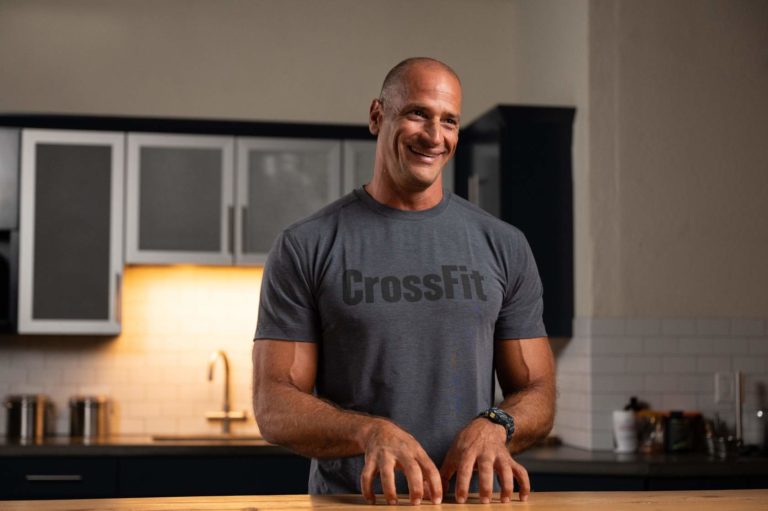 Stephane Rochet is a Senior Content Writer for CrossFit. He has worked as a Flowmaster on the CrossFit Seminar Staff and has over 15 years of experience as a collegiate/tactical strength and conditioning coach. He is a Certified CrossFit Trainer (CF-L3) and trains athletes in his garage.