There has been a trend in recent years for sports teams and companies to take field trips to local military bases and put their athletes or employees through a day of military-inspired physical training as a team-building activity. Unfortunately, once the day is over, it’s back to business as usual, and the lessons learned through shared suffering are not captured, preserved, or used to improve the team or company’s effectiveness.
The CrossFit Open offers many lessons and clues you can use to take your fitness to the next level if you apply these lessons to your training. However, if you just go back to what you’ve been doing without using the lessons learned, you’re wasting a tremendous opportunity for growth, just like the teams and businesses that fail to capitalize on their boot camp experience.
With just one week left in the Open, this is a good time to figure out how to use this event to propel you to even better fitness in the coming years.
Analysis: Once the Open is over, it’s time to take an active, objective look at your results. Primarily, you want to figure out where you struggled. You want to address these areas of weakness in your fitness moving forward because your greatest gains in overall fitness will come by eliminating your biggest weaknesses.
Movements: As you review the three workouts, one of the first things that will stand out are specific movements you struggled with. For example, you might have encountered movements you’re not technically skilled at yet, so you struggled with the required rep scheme and/or loading parameters. Or there might have been movements, like pull-ups, handstand push-ups, or muscle-ups, that you were unable to complete at all. Yet another example is movements you generally feel comfortable with that you struggled with due to fatigue when combined with something like a burpee, a bike, another fast-paced element, or even a heavy movement. Once you’ve identified your problem movements, write them down.
Time Domain: Another problem area to look for is struggling with a particular time domain. You might notice that short “sprints” that require all-out effort give you the most trouble. On the opposite end of the spectrum, the longer, higher-volume workouts might have been your nemesis. Whatever the case, add the workout format that gave you the most trouble to your list.
Leaderboard Ranking: Finally, use the leaderboard, an incredible resource, to round out your analysis. How do you compare to other athletes in your age group worldwide? If you’ve done the Open before, how does your leaderboard ranking compare to previous years? Did it go up or down? How did you rank in each workout? Was there a workout where you fell sharply in the rankings? What lessons can you take from this data? Any observations you glean from the leaderboard get added to the list.
Now What? Now, you need to figure out how to use all this information. This is actually quite simple. As you review your list, decide what stands out as the No. 1 thing you want to address and improve. Do you need to get better at wall-ball shots or pull-ups? Do you need to get double-unders or a muscle-up? Or do you need to learn how to lift heavy with a high heart rate? The hardest part is to pick ONE thing to work on. Patience is key. You’ll have time in the coming year to address several weaknesses, but it’s generally best to work on them one at a time in conjunction with your regular CrossFit programming.
Making a Plan: Once you’ve selected your top priority for improvement, craft a plan so that dedicated work in this area is scheduled. There are several solid ways to do this:
- Include 5-10 minutes of practice on your weakness in your warm-ups and cool-downs every day.
- Schedule 10-15 minutes of focused practice outside of your workout time, three to four times a week.
- Find opportunities within workouts to work on the skills you need to improve. This will happen naturally just by following regular CrossFit programming. You can also modify workouts to include practice pieces. For example, if you’re trying to develop a muscle-up, instead of always defaulting to pull-ups and dips, you can perform the appropriate step in your muscle-up progression as a substitute for muscle-ups in the workout. If this decreases intensity in the short term, that’s fine. In this case, over the long term, as you gain skills toward a muscle-up, you’ll be improving your overall capacity, which, in the end, is the main goal.
You can use any and all of these methods at the same time. The key is consistent, focused, and relentless practice on the skill you want to improve. Don’t stop until you achieve your goal. Think of how much you will improve your fitness if you conquer one fitness goal every year or even every two years. In five years, you’ll be a totally different person!
Marching Orders: Here’s the plan for the next week:
- Hit Workout 26.3 all out!
- Review your Open record.
- Pick the weakness you want to conquer.
- Make a plan for working on this skill.
- Get started!
About the Author
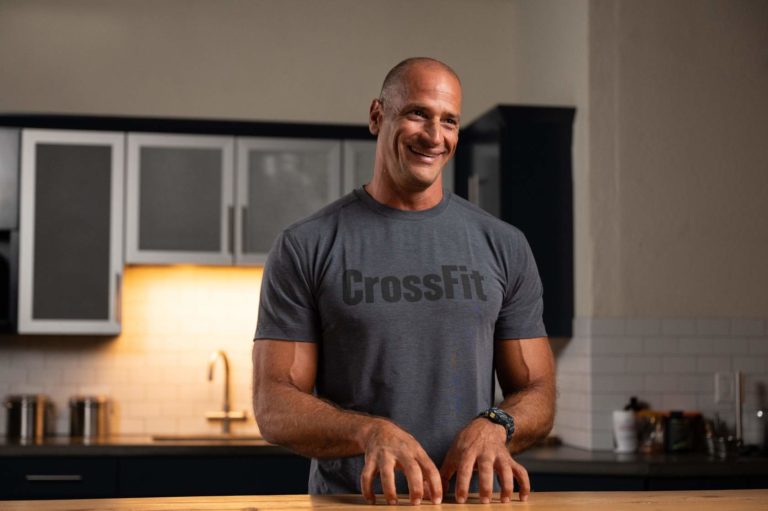 Stephane Rochet is a Senior Content Writer for CrossFit. He has worked as a Flowmaster on the CrossFit Seminar Staff and has over 15 years of experience as a collegiate/tactical strength and conditioning coach. He is a Certified CrossFit Trainer (CF-L3) and enjoys training athletes in his garage gym.