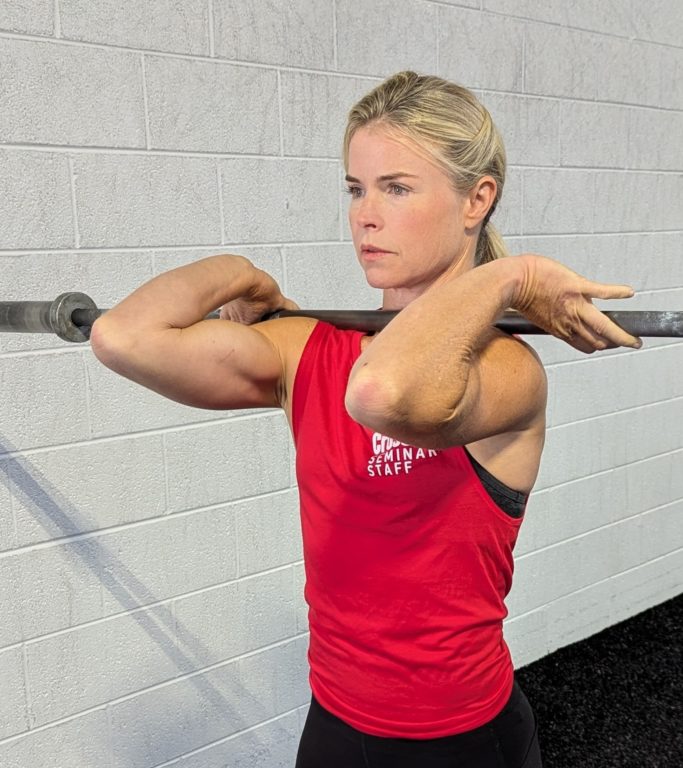
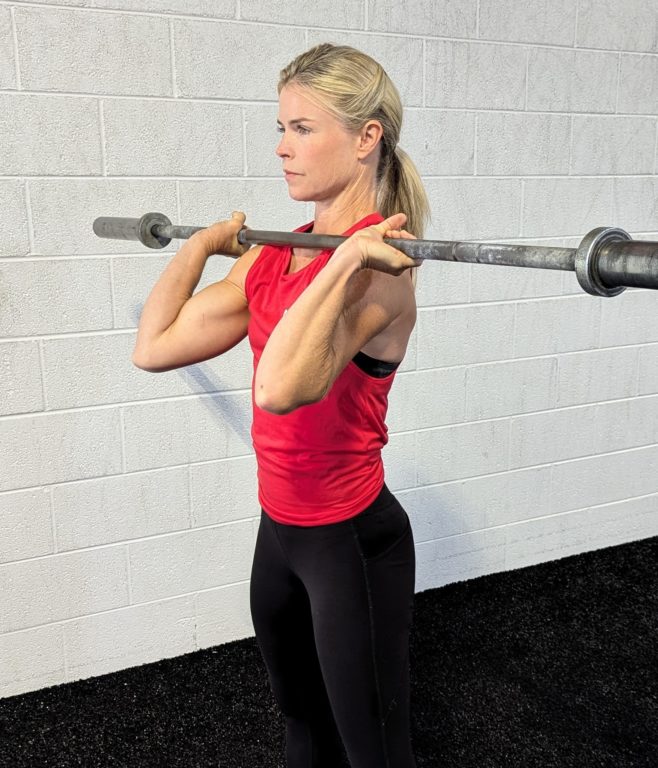
Squat mechanics
At the Level 1 Certificate Course, we talk at length about the primary points of performance (POP) that build the foundation of squat mechanics. We strive for execution points that include:
- Maintaining a neutral spine
- Pushing the hips back AND down to initiate the descent of the movement
- Ensuring the knees track the toes
- Maintaining pressure in the feet that may be slightly biased toward heels
- Striving for a depth below parallel
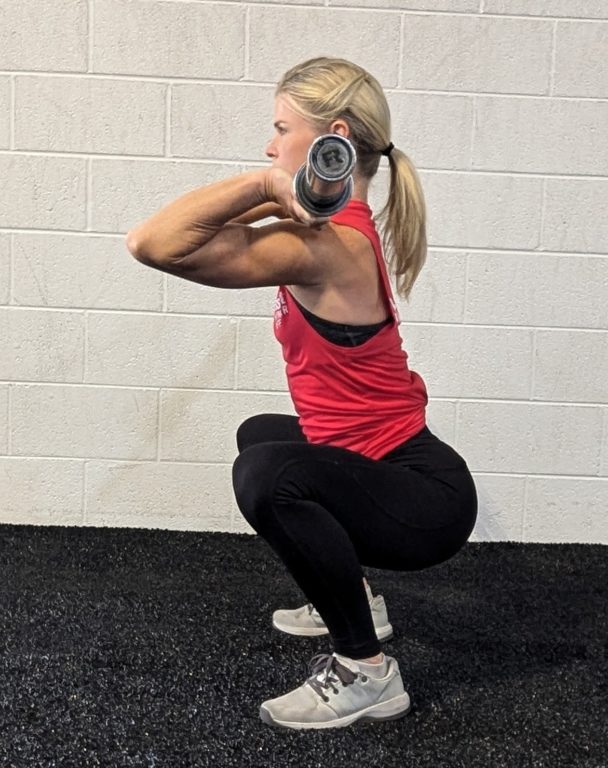
Mature front squat
If any piece of this puzzle is missing, the coach will aim to refine it to ensure the best execution under load. The coach’s guidance is crucial in identifying and correcting any deviations from the ideal squat mechanics, so the athlete can perform the movement with maximum efficiency and safety.
Maintaining as much of a vertical torso as possible is a nuanced element vital to front-squat performance. A mature squatting position (vertical torso) will allow the bar path to travel in a straight line over the midfoot (frontal plane), giving you the most mechanical advantage possible for the lift. An athlete with an immature squat (excessive forward torso lean) will find it challenging to execute the movement, causing more stress on the wrists and back due to the bar path traveling forward.
Primary reasons for an immature squat include but are not limited to:
- General muscle weakness (particularly the core and posterior chain)
- Lack of motor control (improper mechanics)
- Inflexibility (ankles and hips)
As an athlete, it can be tempting to go for the quick wins and straight to corrective exercise gimmicks, but consistently practicing the movement at slow tempos and intentional pauses under the watchful eye of a coach is critical to building strength, motor control, and flexibility.
Here’s a great drill for helping your athletes improve their front squat.
In your warm-up, two to three times a week, add 2-3 sets of 5 quality reps of:
- A 3-second eccentric phase
- A 3-second pause in the bottom
- A 3-second lifting phase
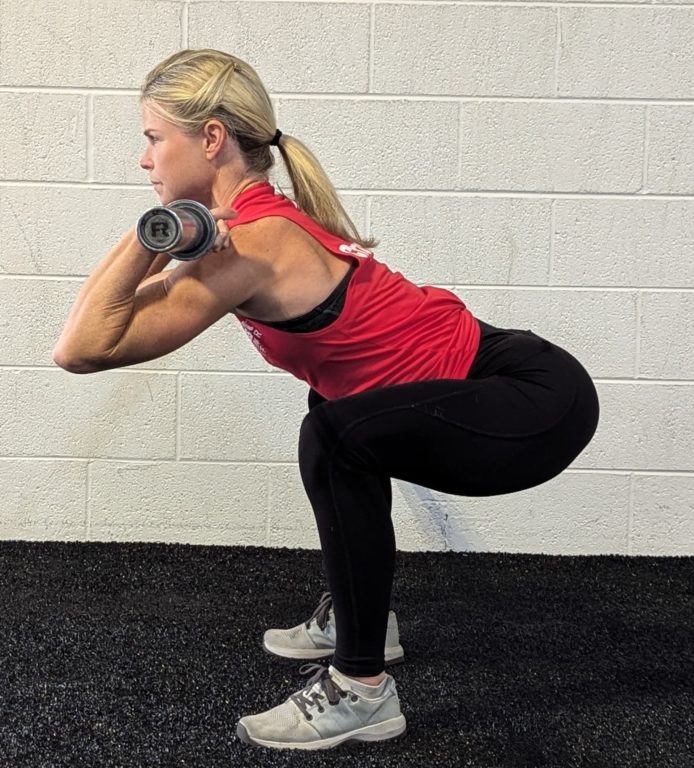
Immature front squat
Performing the movement with quality and control is the No. 1 drill for improvement.
You can also offer cues and coaching drills to refine the immature squat. One cue that is very helpful but often missed is this: At the initiation of the movement, move the hips and knees simultaneously so the hips move back and down, NOT back then down.
You can also cue the athlete to squeeze their glutes toward their ankles when they’re in the bottom position. To decrease the difficulty of this practice, you can have athletes hold onto a pole or support beam.
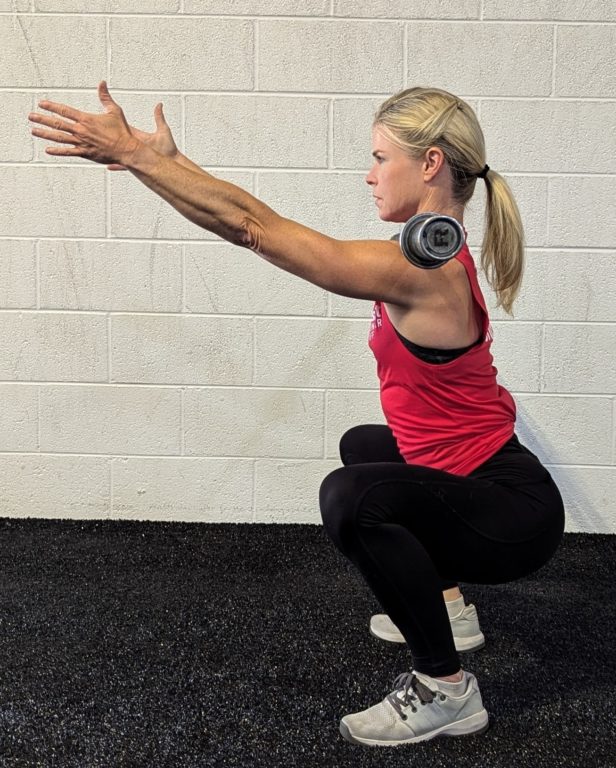
Another drill to help athletes engage their trunk and posterior chain more effectively could be to have them squat with a counterbalance.
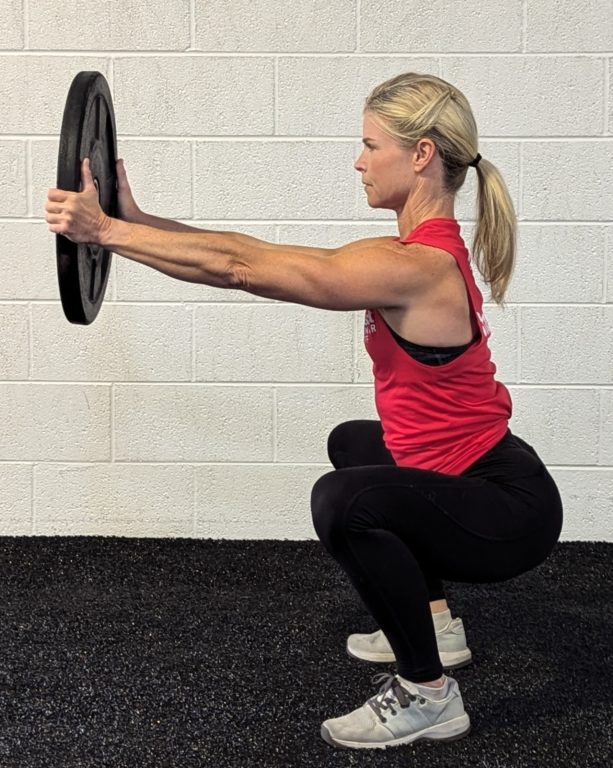
Front squat counterbalance drill
In this drill, the athlete holds a 5- to 10-lb plate, extends their arms away from their body, and performs a controlled squat. The weight of the plate acts as a counterbalance, encouraging the athlete to engage their trunk and posterior chain to maintain stability. Instruct them to pause at the bottom under tension to feel the position. Then, have them recreate that position without the counterbalance. You can also take the plate away from them while they’re holding the bottom position and ask them not to move. Be aware, they might lose their balance on the initial attempt. If you don’t think the athlete will be stable enough not to fall over when you take the plate away, skip this option.
As mentioned, flexibility is best developed by performing the full movement at a controlled tempo while working toward the best positions possible. However, if you notice the athlete has difficulty pushing their knees forward while keeping the heels in contact with the floor, or they squat dramatically better when their heels are elevated, they are likely tight in the ankle/lower leg area. There are various ways to work around this, such as adjusting their stance, but you could also have them do an ankle stretch during the warm-up for short-term release.