Communication Takes Place on the Athlete’s Terms
Every coach knows the frustration: you deliver what you think is the perfect cue or feedback, only to watch your athlete shut down, get defensive, or seem completely confused. The problem isn’t usually what you’re saying — it’s how you’re saying it. As CrossFit coaches, we obsess over mechanics, programming, and scaling, but we often overlook the most powerful tool in our coaching arsenal: adaptive communication.
The reality is simple but transformative: communication doesn’t take place on your terms as the coach; it takes place on the athlete’s terms. And understanding this principle can be the difference between an athlete who thrives and one who quits.
The Four Communication Styles in Your Box
Walk into any CrossFit class, and you’ll find four distinct communication styles, whether you recognize them or not: Dominance, Influence, Steadiness, and Compliance. These styles reveal how people prefer to give and receive information. There’s the athlete who wants results NOW (Dominance), the one who lights up the room with energy (Influence), the steady presence who supports the whole community (Steadiness), and the detail-oriented perfectionist asking about every angle of their snatch (Compliance).
Here’s what matters: each style needs something completely different from you as a coach.
The Dominance athlete is looking for results. They’re the ones tracking their PRs and watching the leaderboard like a hawk. They walk with purpose, lean forward when you’re coaching, and often have big, emphatic gestures. Under pressure, they become impatient. Their overextension is demanding immediate outcomes without trusting the process.
The Influence athlete is looking for the experience. They’re extroverted and people-focused; they talk with their hands and often lose count of reps. They want to feel connected to you and the community, and thrive on enthusiasm and personal recognition. Under stress, they can become disorganized and scattered, losing focus on the technical details that matter.
The Steadiness athlete is introverted and seeks security and stability. You’ll notice their “poker face” — they’re harder to read emotionally. Under pressure, they can become possessive of their routines and resistant to change. They’re the ones who need the most reassurance when you’re introducing a new movement.
The Compliance athlete is looking for information and facts. They ask detailed questions, want to understand the biomechanics, and often stand with arms folded, one hand on their chin, analyzing everything. Under stress, they become overly critical of themselves and potentially of your coaching.
Words That Don’t Work
Research on behavioral communication has identified specific words and phrases that trigger negative responses across styles. As coaches, we need to be aware of these landmines:
Don’t say to Dominance athletes: “Follow directions,” “In my opinion,” or ask them to “Wait until everyone is ready before we start.” They perceive these as roadblocks to their goals.
Don’t say to Influence athletes: “That’s the rule,” “Stop talking,” or “You’re doing it wrong.” These words drain their enthusiasm and make training feel rigid and boring.
Don’t say to Steadiness athletes: “Substantial change,” “Suck it up,” or “Skip this part of the warm-up.” These create anxiety for athletes who value stability and steady progress.
Don’t say to Compliance athletes: “Just trust me,” “Don’t overthink it,” or “educated guess.” They need facts, data, and proven methods, not speculation.
Adapting Your Coaching Communication
The goal isn’t to guess an athlete’s style perfectly every time. It’s to develop what’s called “style flexibility” — the ability to adapt your communication based on what you observe. Here’s how this looks in practice:
When coaching the Dominance athlete during a heavy lifting session, be direct: “Three attempts at a new 1-rep-max deadlift. Let’s get after it.” Give them autonomy, focus on outcomes, and keep it efficient.
For the Influence athlete in the same scenario, create a connection: “This is going to be fun! I love watching you attack heavy lifts. Remember how strong you felt last week? Let’s build on that energy.” Celebrate their attempts publicly.
With the Steadiness athlete, provide reassurance: “We’re going to take our time warming up. There’s no rush — we’re building confidence with each lift. You’ve got the strength; we’re just proving it to yourself today.” Give them time to process and adjust.
When working with the Compliance athlete, lead with information: “We’ve built to this systematically over six weeks. Your pull position has improved 15 degrees based on our video analysis. Here’s exactly what I want you to focus on for each attempt, and why these cues will optimize your leverage.” Give them the data they crave.
The Platinum Rule in Action
You’ve heard of the Golden Rule: treat others as you want to be treated. In coaching, we need the Platinum Rule: treat others how THEY want to be treated.
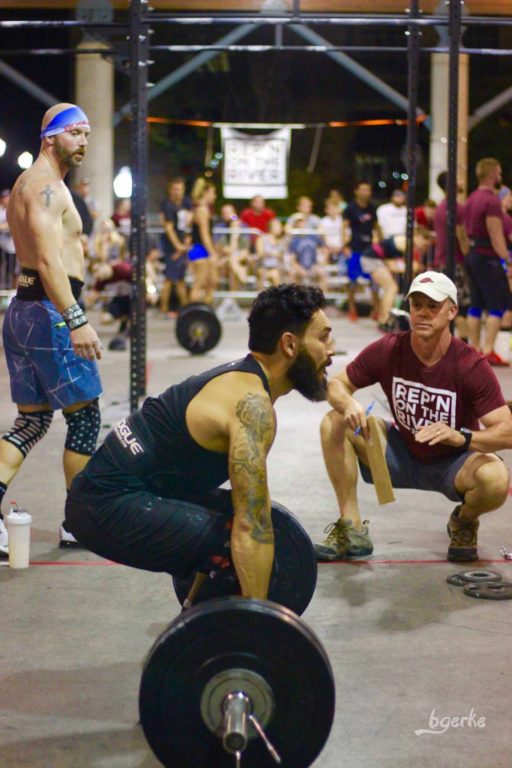
This becomes crucial under pressure. During a tough workout or a competition, each style shows different stress responses. Your Dominance athletes become more demanding and impatient. Your Influence athletes get scattered. Your Steadiness athletes withdraw and resist. Your Compliance athletes become hypercritical.
Your job as a coach is to recognize these patterns and adjust. The athlete shutting down during Fran might need completely different coaching than the one attacking it with reckless abandon — not because one is tougher than the other, but because they process stress and respond to communication differently.
Practice Makes Permanent
Start observing your athletes through this lens. Watch how they walk into the gym, how they respond when you introduce a new movement, and what questions they ask. Listen to their language. Notice their body language and pace.
Then practice adapting. When you catch yourself about to say, “Just trust the process” to an athlete who clearly needs data and details, pause. Restructure. Give them what they need to hear, in the way they need to hear it.
The most successful coaches aren’t the ones with the most certifications or the athletes with the most Games appearances. They’re the ones who can connect with every athlete in their gym, regardless of communication style. They’ve mastered the art of meeting people where they are.
Because at the end of the day, your perfect cue means nothing if your athlete can’t receive it. Communication doesn’t take place on your terms — it takes place on theirs.