We assume our athletes know when and how to spot. They don’t. One misjudgment on a bench press can crush a throat. A poorly spotted back squat can wreck a spine. These injuries are rare but preventable. This article covers when spotting is necessary — and when it’s not — plus how to teach your athletes to do it right.
Spotting is the process of:
- Observing a lifter.
- Guiding them (e.g., lift-off from the rack on a bench press).
- Assisting them during an exercise to ensure safety.
- Helping prevent injury when attempting heavier weights or pushing their limits.
- Ensuring the lifting area is safe and clear of errant objects.
This article focuses on spotting for weightlifting, but the same principles apply to gymnastics movements, such as spotting a freestanding handstand, where athletes need support to build correct mechanics safely.
Communication
Effective spotting revolves around clear communication between the spotter and the athlete, proper spotting technique, and ensuring both the lifter and the spotter know their roles for the lift.
Coaches should designate specific commands that their athletes should follow and practice during their build-up sets. This may include communicating the number of reps the lifter is trying to attempt and the reps that may start causing trouble, how to take the bar out of the rack and return it to the rack, and when to aid the athlete through a failed attempt.
For example, a bench press lift-off may include the spotter’s command, “1, 2, 3, lift-off,” then, after ensuring the athlete has stabilized the bar, the following command may be “go.” At the competition set, the commands may be “done, return,” as the spotter assists. The coach should communicate this desired process during their initial instruction and assess for correct application during the warm-up sets.
The coach can also teach athletes the commands and/or signs that indicate to the spotter when they need to assist the athlete after a failed lift. For example, the athletes can use the commands “take it” or “help” to let the spotter know to grab the bar or perform the appropriate spotting technique determined at the beginning of the class. Coaches may also inform their athletes of signs to look for regarding bar speed to determine whether assistance is needed. For example, if the bar stops moving upward, spotters should intervene and assist the athlete.
Coaches must also communicate the correct spotting technique and have new spotters practice the technique during light build-up sets. Some general guidelines are to inform athletes of the correct body position, which is typically an athletic stance with bent legs and hand/arm grip and placement depending on the lift being performed. Athletes should be in a position to aid with the lift at any time. Coaches should also inform athletes of the amount of force to apply. Generally, it is advised that spotters apply enough force to move the bar upward quickly rather than only a small amount to keep it moving slowly; novice weightlifters can easily misjudge this.
Finally, coaches need to communicate the lifter’s role in this process. We have already discussed the commands to use, but it is also essential to remind athletes to continue lifting the weight even when the spotter is assisting them. It is easy for lifters to relax and assume the spotter will take control of the lift, but this is a potentially dangerous assumption.
General Spotting Techniques
The two primary weightlifting movements involving a spotter are the back squat and the bench press.
Spotting the Back Squat
One spotter or two spotters can assist with the back squat. When one spotter is available, it’s recommended they use the “under-the-armpit” method to assist the athlete through a failed rep. This method tends to be a safer way to spot the athlete than to assist the barbell directly. When using this method, the spotter must stay near the athlete and in the “ready” position throughout the set.
If using two spotters, position them on either side of the athlete, with their hands under the barbell sleeves. They need to communicate to each other the command to be used (“take it”), which designates it’s time to assist the lift. This will allow spotters to assist the athlete simultaneously.
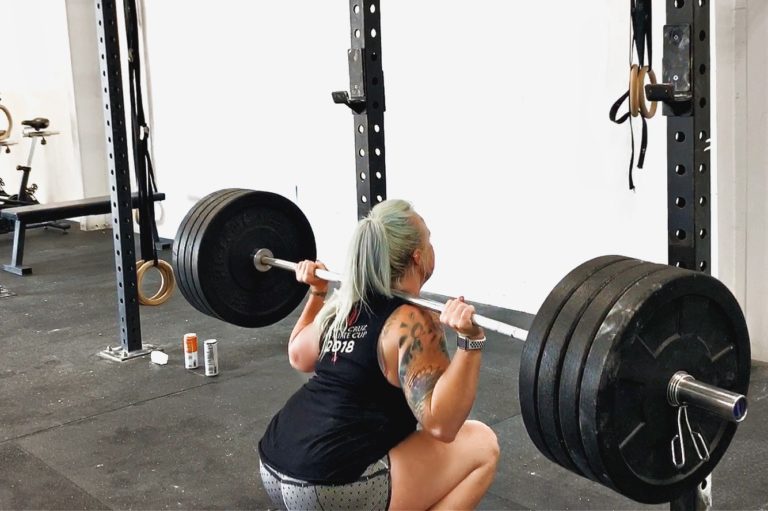
Of note, there is a safe way to “bail” a back squat, and this technique can be taught and practiced. If an athlete prefers this method, they must communicate this to their lifting partners to avoid confusion and prevent an individual from attempting to spot while an athlete attempts to “bail” the weight.
Spotting the Bench Press
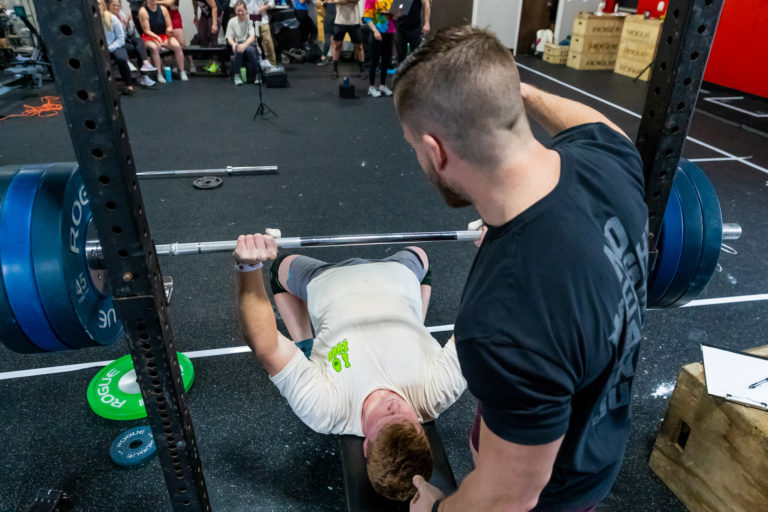
Spotting the bench press starts with lift-off, where the spotter uses a mixed grip placed near the center of the bar to help the athlete safely unrack and stabilize the bar over the torso. This same grip is utilized to assist the athlete with the lift if failure occurs and to safely re-rack the barbell.
CrossFit Quarterfinals 2022, CrossFit Krypton
Movements that generally do not need spotters are overhead lifts (e.g., shoulder press, overhead squat), movements where the load is racked on the front of the body (e.g., front squat, thruster), Olympic lifts, and lifts initiated from the floor (e.g., cleans, snatches, deadlifts). This is due to the ease of safely bailing the load if failure were to occur. Even though this seems like common sense, it may be advantageous to remind your athletes not to spot these lifts, as well-intentioned individuals may inadvertently attempt to do so. Coaches can educate athletes on when it is advisable not to try to save a lift and have athletes practice the technique of bailing a barbell during the warm-up sets.
The clear takeaway should be that coaching our athletes on appropriate spotting techniques should not be neglected, and the failure to do so may lead to safety issues. The communication can be quick and practiced, and it revolves around clearly outlining the communication and properly executing the spotting technique. If individuals are uncomfortable with this responsibility, they must communicate this to their coaches. Nobody should be forced to be a dedicated spotter if they don’t want to be.