Every affiliate, every gym, every business starts the same way.
That spark. That fire. That belief that what we’re building will change the world.
It could be the best coffee on the planet. It could be a restaurant with five-star hospitality. Or maybe it’s helping people avoid Type 2 diabetes and get their first muscle-up.
That early fire is powerful. It’s what drives every great idea forward.
But fast-forward a few years … some gyms are thriving, and others have faded out.
What’s the difference?
It’s not luck. It’s not marketing. It’s culture.
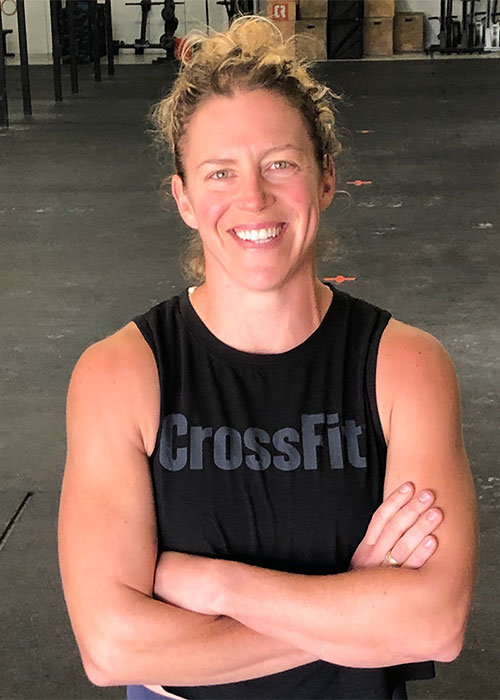
I’m Nicole Christensen, and today I want to talk about why gyms burn hot and fade — and what it takes to build something that lasts. What I’ll share today isn’t the way; it’s a way, and it’s what’s working for us at CrossFit Roots.
Creating something that lasts in the affiliate and small business world isn’t glamorous. It’s not sexy; it’s often slow, mundane, and even boring.
So let’s dive into the unglamorous work — the consistent, disciplined work that will keep your affiliate strong for decades.
Building Your Culture
Real culture isn’t a vibe or a slogan. You can’t whip up culture by designing a new logo or launching a marketing campaign.
Culture is built through a commitment to standards, values, and equality. No one is special. Everyone plays by the same rules, earns their place, and contributes to the whole to earn access to your community.
And that is where the magic happens.
But, before we go too far down the road, let’s start with this: Culture is not the same as community.
Community is the output of your culture, but it’s not the input. And honestly, community gets misunderstood and misrepresented all the time.
People say things like, “Oh, our community is amazing. People really care about one another; they would change your tire if you got a flat.”
Or, “Our coaches are great; they know every one of our members’ kids’ names.”
Or, that elusive advice: to be a good coach, “You just have to care.”
That’s nice. But these are things that, in my book, are called being a good human.
And for the record, I don’t know all my members’ kids’ names. And I’d be lying if I said that was a critical data point for me to know as a coach. What I do know is my members’ 1-rep max deadlifts and their Grace times. I care a lot about that, and knowing that helps them go home and be better parents and people, and live better lives.
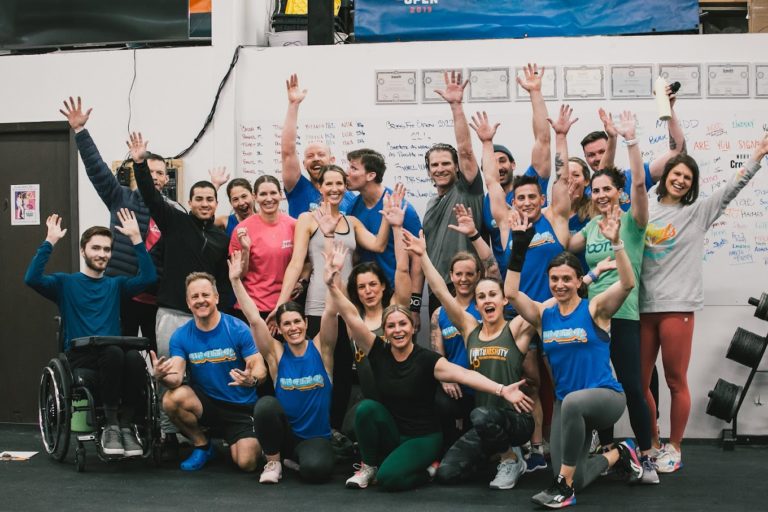
But back to the smiles, the high-fives, the small talk, the tire changes — that’s basic human connection. It’s what initially welcomes us through the door on the first day of school, to a coffee shop, or a church.
But it’s not what keeps people coming back year after year.
What keeps people coming back and what makes your gym feel special is its culture.
In CrossFit, culture refers to the shared systems, standards, and mindset that foster mutual support, accountability, and a relentless drive for improvement through our methodology.
You know this to be true. You know what this is because you have each felt it and lived it. That said, creating it for others can feel elusive, hard to obtain, and undefined. That’s why I’d like to share what we’ve done and what we’re doing at Roots, with the hope that you can take what works for you and build the kind of culture you want.
What does culture look like?
Culture is what happens when your coaches, athletes, and staff all buy in. When everyone understands and lives the same standards, etiquette, and dos and don’ts that define your gym.
Culture is learned. It’s acquired. And it’s dynamic — if you don’t defend, protect, and reinforce it, it will change, whether you like it or not.
Think about great teams through time: The Yankees. The Bulls. The Lakers.
Those dynasties weren’t built on hype or personality. They were built on systems and standards that outlasted any one player or coach over many seasons.
And that’s what we’re after.
So, how do you create that? How do you build a culture that defines your gym and keeps it thriving long-term?
There are five steps.
Step One: Define Your Standards
Write them down. It matters.
You can’t teach or live what you haven’t defined.
Define your standards for movement, for people, and for behavior.
Think: Methodology → Etiquette → Dos and Don’ts.
Sit down with a pen and paper and think through what matters most to you.
Is it that people squat below parallel? (I hope so!) That they don’t drop dumbbells from overhead? That coaches don’t coach in classes they’re taking?
You can’t just think these things. You can’t just say them when they’re top of mind. You have to write them down.
That’s the first act of leadership.
Your standards will evolve, but they’ll always anchor you. You’ll prune them, add to them, and refine them. You don’t have to copy our rules — your standards and values will likely look different — you just have to call out what matters to you.
For example, at Roots, we don’t care if people work out without their shirts on; we even encourage it. I know other affiliate owners who don’t allow it. Whether you do or don’t is not the issue. The issue is whether you have written that down and communicated it so everyone in your gym is aware of the situation. That’s part of your culture.
Let’s look at the three areas that need to be defined.
The Methodology
This one’s easy because the beauty of CrossFit is that the methodology has already been defined and documented for us in the Level 1 Training Guide.
Learn it. Memorize it. Understand it deeply.
It delivers precise, consistent results — elite fitness and health in a world that’s failing on both fronts.
As Dennis Marshall said, “I’ve never seen it not work.”
I agree.
But for it to work, you have to be able to define it, speak it to others, and see the interconnectedness of concepts in your athletes’ development — the movement standards, the primary points of performance, the four models, relative intensity, scaling, progressive scaling, range of motion, general physical preparedness, the theoretical hierarchy of the development of an athlete, nutrition — all of it.
Etiquette
Consider this: Many of your members consider your affiliate their home away from home, but not everyone has the same idea of home, so you need to define how things run in your house.
Examples:
Be on time. Don’t break down equipment until everyone has finished the workout. No phones in class.
Each rule ties back to improving the athlete experience for themselves and others.
The Dos and Don’ts
At Roots, we have a list of dos and don’ts that came about seven years after we opened.
The list is a collection of all the things we choose NOT to do at the shop because by NOT doing them, they reinforce the methodology, etiquette, or are specific to developing hardworking athletes for the long term.
These were the unspoken rules that we, the coaches, “just knew” because we had grown up with them. However, we realized that coaches new to our team had to be brought up to speed.
The goal of this list is to capture the rules that reflect your standards and protect your long-term culture.
Wonder what they are? Spend a day at Roots, and I hope they will be very clear.
But here are a few so you get the idea:
- Number 3: Coaches don’t coach while taking class.
- Number 4: We don’t sub “like” movements. If bar muscle-ups are programmed but you prefer ring muscle-ups or want to work on them instead, sorry.
- Number 5: We don’t do step-ups if you can jump to any height.
- Number 7: Muscle-ups and pull-ups start with the feet off the ground. If your first muscle-up is with your feet on the ground, it’s not your first muscle-up.
- Number 15: No time caps or cutoffs (except the Open).
- Number 16: No biking because you “don’t feel like” running.
- Number 17: We don’t change the programming due to the weather. Snow, heat, rain — great. This is what variance looks like.
- Number 18: Coaches can sip coffee during transitions and by the whiteboard — but not walk the floor and coach with it in hand.
Step Two: Teach Your Culture
Once you’ve defined your standards, the next step is to teach them.
Every single person who walks through your door — coaches, staff, and athletes — needs to understand what your gym stands for and how things work.
You have to onboard people into your culture systematically. This isn’t a one-time thing. It’s repeated, reinforced, and embedded into everything you do.
For coaches: they need training, shadowing, feedback loops, and mentorship. They need to understand not just what your standards are, but why they matter.
For athletes, culture is taught from day one. It’s in your intro programs, your onboarding process, and the way coaches interact with them every single day.
Teaching culture means giving people context. When you explain the “why” behind your standards, people buy in. When they buy in, they become ambassadors of your culture, reinforcing it themselves and holding each other accountable.
Step Three: Communicate Consistently
This is where many affiliates typically fall short.
They define their standards. They might even teach them initially. But then … silence.
Culture needs constant, clear, and unapologetic communication.
You must be willing to have the difficult conversations. You have to be willing to correct people in the moment — with care, but with conviction.
An athlete squats high? You correct them, every single time, because standards matter.
An athlete shows up late? You have the conversation about respecting the class and the other athletes, and let them know that coming late or leaving early isn’t an option.
An athlete brings 30 donuts for someone’s birthday? You remind them you don’t do sugary treats because this is the one place athletes shouldn’t have to say no to that stuff, and it’s important to you that you are a place where people don’t feel tempted to make the unhealthy choice.
Are these conversations uncomfortable? Yes, but they’re necessary if you want a culture that reflects your values, vision, and goals. They also get easier with practice. And, it’s not just you who needs the practice; it’s your coaches too. You have to be there to coach them through writing those emails, working through interactions that didn’t go as planned, and giving them the confidence to see themselves as leaders in this role.
Now, you might think, “Isn’t that a bit harsh?”
Fair question. But ask yourself this: Have you ever seen someone reach elite fitness while squatting half reps, showing up late, leaving early, and bringing cupcakes to the gym for every birthday?
Of course not.
This isn’t about being the etiquette police. You’re not enforcing arbitrary rules — you’re building the foundation for a life-altering transformation. Every standard you set, every boundary you reinforce, is removing an obstacle between your people and the best version of themselves.
Step Four: Protect Your People
Once you’ve earned buy-in, you have to guard it fiercely.
Protect Your Coaches
Have their backs. Period.
They’ll stumble while learning to enforce standards — that’s a sign of growth. When an athlete complains about a coach, listen. But stand with your coach as you work through it together. That’s how they learn to lead.
Protect Your Athletes
Protection means shielding them from anything that threatens your culture or the methodology, whether it comes from inside or outside your walls.
Years ago, a long-time member started selling Optavia. She worked the playbook: Facebook posts, friend requests to current members, birthday messages, coffee meet-ups — the whole MLM drill.
Optavia is everything CrossFit is not: starvation calories, fake nutrition coaching, processed junk, and unsustainability. Anti-methodology.
I called her and said, “I know you’re with Optavia, but you can’t solicit here. It conflicts with what we teach.”
We lost a member, but we kept our culture.
Here’s what most people miss: defining your culture means it’s not for everyone. The same standards that attract the right people will repel the wrong ones. That’s not a bug; it’s a feature.
You also protect your people from the Instagram experts and podcast gurus who criticize our methodology without understanding it. When someone says single-leg training is “safer than squats and deads,” or GPP is “too hard on the ego,” your job isn’t to panic and change your programming; it’s to filter that noise through the lens of CrossFit, your etiquette, and your standards, and then educate your members with confidence.
That’s protecting your people.
Step Five: Be Consistent
Here’s the long, slow road.
You’ve built your system, now you have to live it.
To thrive in the long term, you must be consistent. Not once. Not sometimes. Not when you’re in a good mood and motivated. Every single day.
You’ll repeat the same things hundreds of times because you’re reinforcing them to hundreds of people every single day.
That means you’ll have to repeat something two to three times per day, every day, for 17 years — so bring your cheery attitude, otherwise you’ll come across as one of those curmudgeonly, grumpy affiliate owners.
You’ll explain the same “why” over and over again, but to the athlete you’re talking to that day, it will be the first time they’ve heard it. Or the first time they were ready to hear it.
You’ll have the same conversations until they become second nature, and in that instance, it does become easier.
If you go to bed thinking, “I should have said something” or “I didn’t like that interaction,” send the email, say it the next time you see that athlete, and follow up.
Your consistency is your credibility.
Your athletes see it. Your coaches feel it. And it trickles down from you to them, to your entire community.
The L Word: Leadership
Ultimately, leadership is the key takeaway here.
Culture is what keeps your gym feeling special even when key members come and go.
A gym built solely on community will always be fragile and dependent on specific individuals or personalities.
But a gym built on culture? That’s built to last.
It’s true, people will feel your community first. But it’s your culture that keeps it alive as athletes mature, grow, and deepen their understanding of training, nutrition, and the methodology.
The question is, are you committed to it?
Will you drive your culture forward even when it’s hard? When members question your efforts? Will you take responsibility when things break down? When people judge you? When it’s really, really uncomfortable? When your confidence takes a hit?
That’s where your legacy is built.
Because at its core, CrossFit and coaching are about transformation.
And transformation only happens inside a culture that demands hard things.
We encourage our kids to play sports because we want them to learn discipline and the value of hard work. Your members are no different. They need a culture that pushes them beyond their comfort zone — one that believes in them enough to hold the line.
Conclusion
Do the right thing, for the right reasons, for the right people. That’s a mantra Coach Glassman reminded us of over and over again in the early days.
How do I know this philosophy works? Because I’ve lived it.
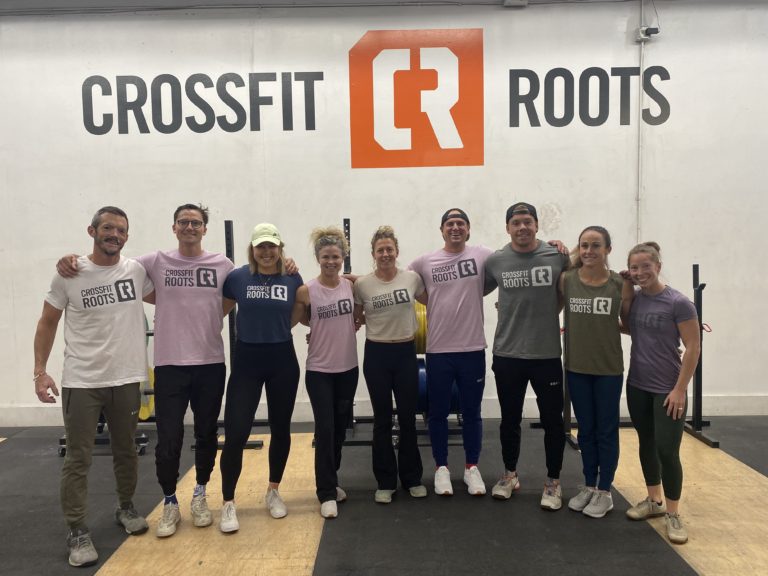
My husband, Eric, and I founded CrossFit Roots in our one-car garage in 2009. We’re now in year 17.
We have five full-time coaches, seven part-time, 300+ members, and 70 people in closed programs and private training. Even better, 98 of those members have been with us for 10 years or more.
We offer health care and a Simple IRA to our team. We cap classes at 12 athletes. We had 219 athletes sign up and do the Open last year. And in 2024, we generated over $1 million in revenue.
That didn’t come from luck. That came from culture, from consistency, and from never compromising on what matters most.
Now, I’d love to tell you I sat down 17 years ago and mapped this all out in some grand plan. I didn’t. I was 26.
The truth is, each of these pieces came one step at a time, as the next right thing to do.
But over time, that built a culture, a team, and a community of athletes that I’m incredibly proud of and don’t want to lose.
I’m thankful every day for the CrossFit methodology and what it’s given Roots.
I’m thankful for my team of coaches and their loyalty, who push me to be better, help me hold the standard, and challenge my thinking. They are the beating heart of CrossFit Roots.
And I’m thankful for our athletes; the people who show up, do the work, and make this all real.
A strong culture is what keeps a gym from burning hot and fading… and turns it into something that lasts.