Question: What separates good coaches from great coaches?
SINGLE-DAY TICKETS TO THE 2026 CROSSFIT GAMES NOW AVAILABLE | BUY TICKETS NOW
November 20, 2024
Question: What separates good coaches from great coaches?
This is a great question. And the follow-up may be even better: Do great coaches possess an elusive quality you either have or don’t, or can anyone develop into a great coach?
At the CrossFit Level 2 Certificate Course, we discuss the six criteria of effective coaching: teaching, seeing, correcting, group management, presence and attitude, and demonstration. The goal is to develop all areas. When you watch a great coach, you’ll see they excel in all six domains. If you want to go from good to great, include reflection as part of your coach development path. Reflection is a powerful tool that can inspire and motivate you to improve in any one or all six domains.
There are numerous ways to improve, but a starting point can be to observe great coaches and analyze their classes and interactions. When observing one of their classes, observe their presence and attitude. Next time, watch how they teach or see and correct. Take notes. Consider what they do differently than you and how you might implement what you learned into your next class. Then do it and reflect on how it went. Did it improve your class? Did your members respond favorably? Did they get better results? Next time, add something new.
Above that, what separates good from great coaches is their ability to apply threshold training in a group environment. Taking a class of 15 and ensuring every individual in that class can apply threshold training relative to their physical and psychological tolerances will help you go from a good coach to a great coach. The process of increasing load/speed, decreasing load/speed, etc., seems simple on paper but is an art when applied correctly. For instance, you might have a group of individuals with varying fitness levels. A great coach can design a workout that challenges each person at their own threshold, whether it’s through adjusting the weight, the number of repetitions, or the intensity of the exercise.
Before running a session, ensure you understand the workout stimulus thoroughly and plan various options to scale the workout for each individual who shows up.
Self-Evaluation
I recommend using self-evaluation tools like the ones in this Coach Evaluation Packet to enhance your development. Then give yourself one area to focus on prior to each class. If it’s improving your presence and attitude and making more contact points with each individual, focus on that throughout the class. Afterward, do some self-reflection and see if you achieved your goal so that your progress is measurable. It’s not just hoping that you get better. In some areas, you actually have a target to hit, and then you can see that progress throughout your career as a coach. This self-evaluation process is a powerful tool that puts you in the driver’s seat of your own development, empowering you to make meaningful progress in your coaching journey.
Have a question for a coach? Please submit that here.
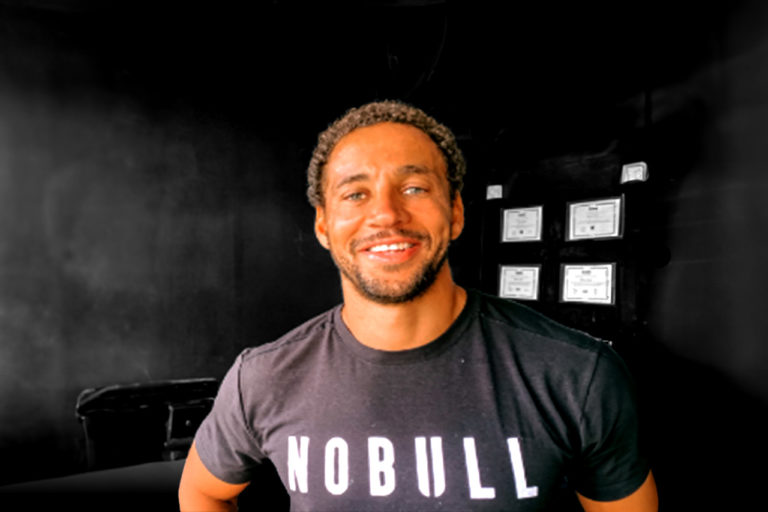 McCoy “Topsy” Turner, a loved member of the CrossFit community and former Seminar Staff trainer, died by suicide on March 8, 2025, after suffering from complex post-traumatic stress. Turner served for 17 years in the Royal Navy, specializing as an exercise rehabilitation instructor. He was part of Operation Herrick when he served in Afghanistan before relocating to Bali and continuing his work in CrossFit education. Turner worked more than 250 Level 1 and Level 2 Seminars. Turner was known for his warmth and kindness, and touched countless lives who attended CrossFit courses. He is survived by his sons Brodie and Tommy.