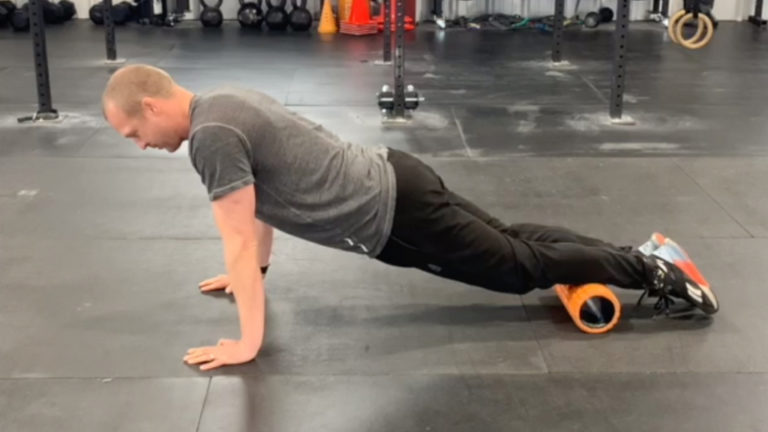
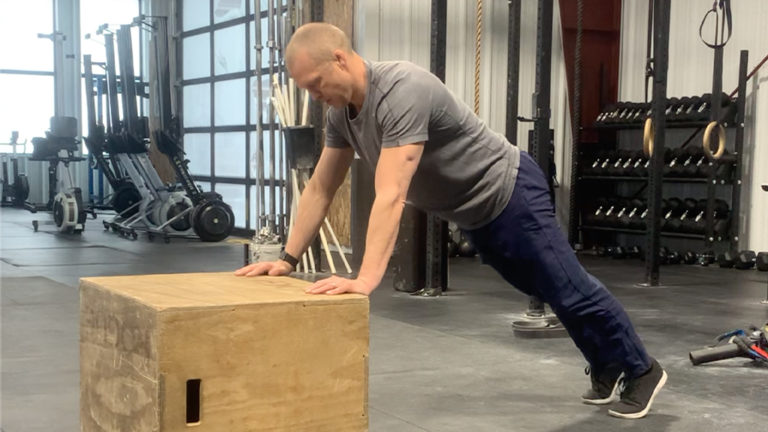
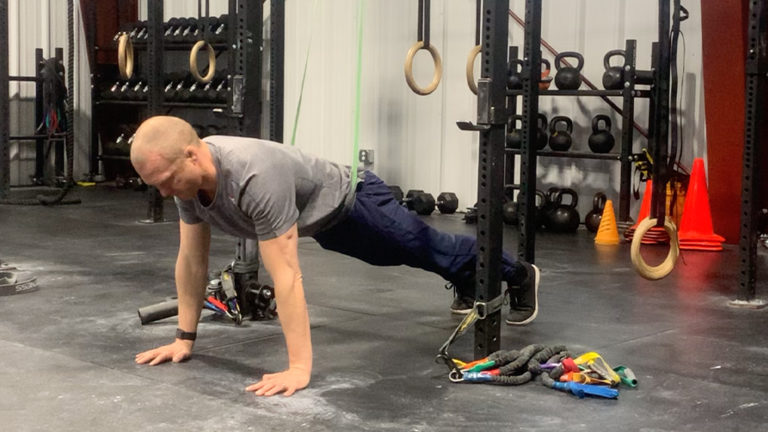
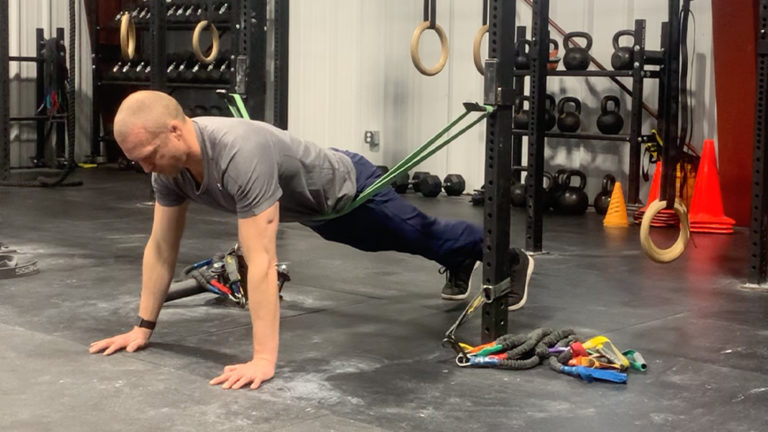
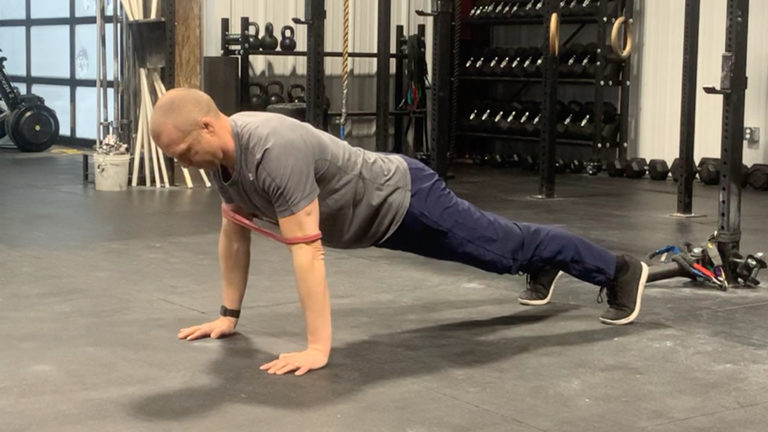
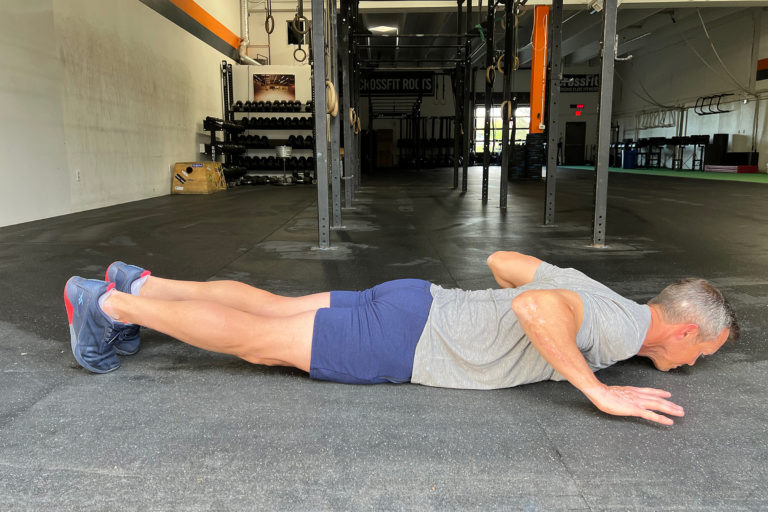
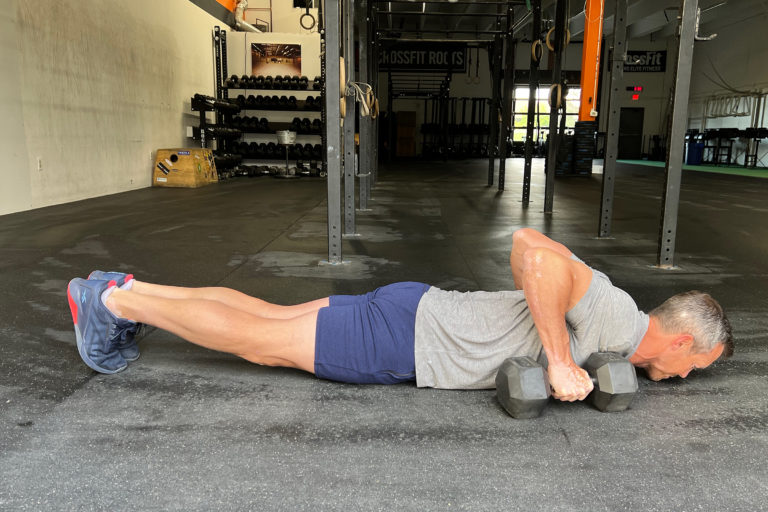
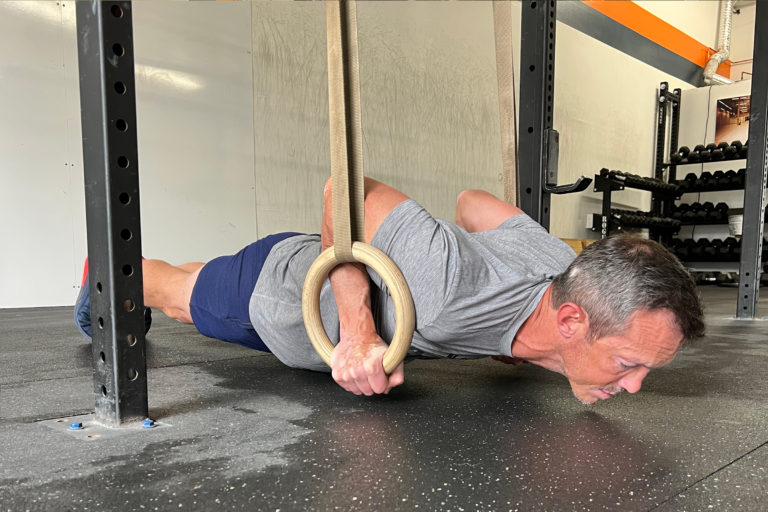
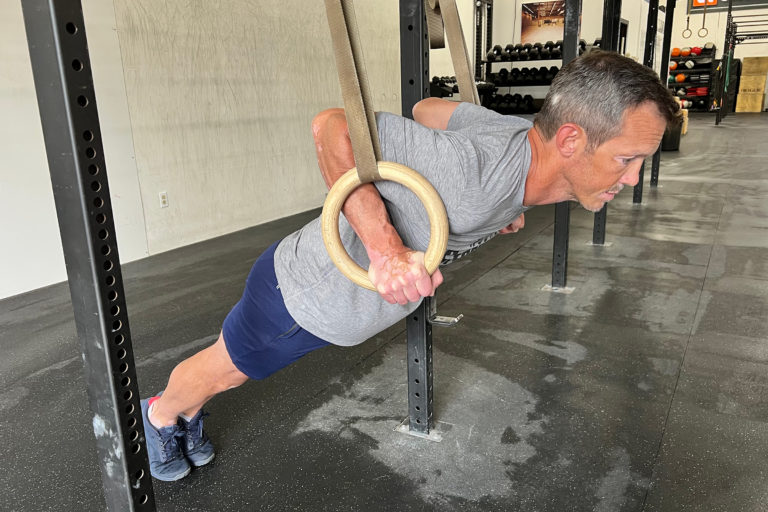
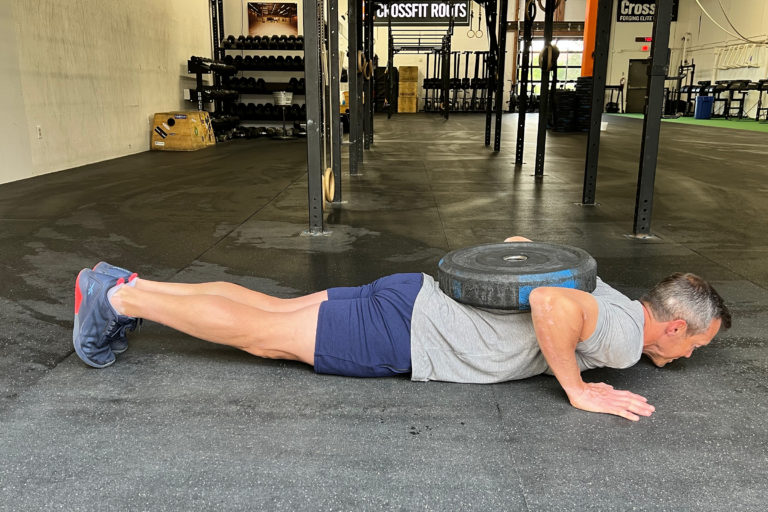
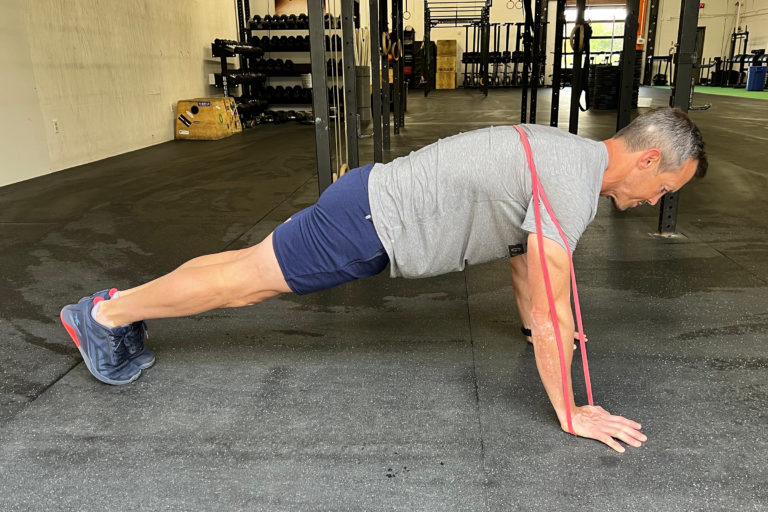
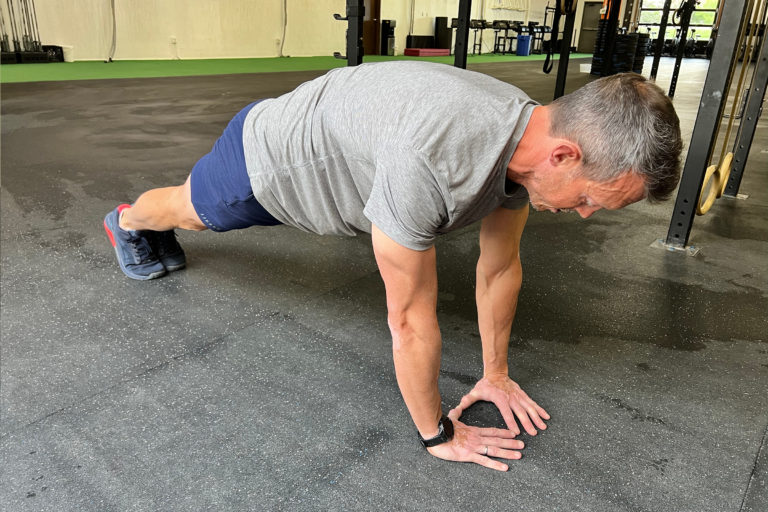
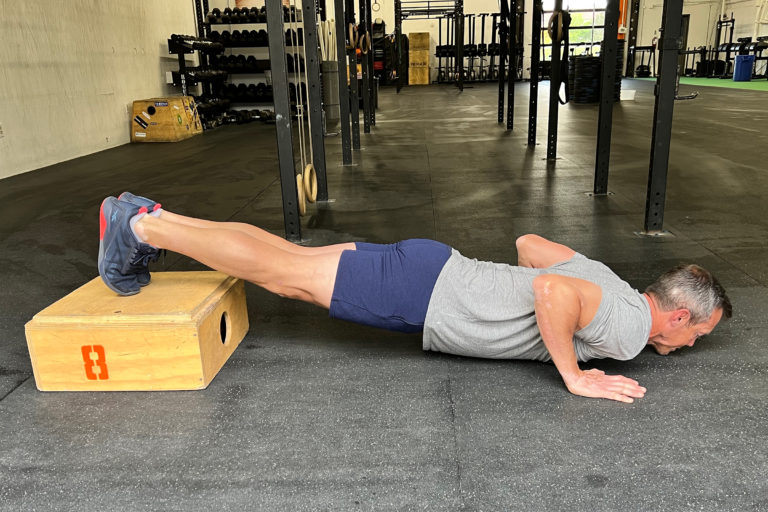
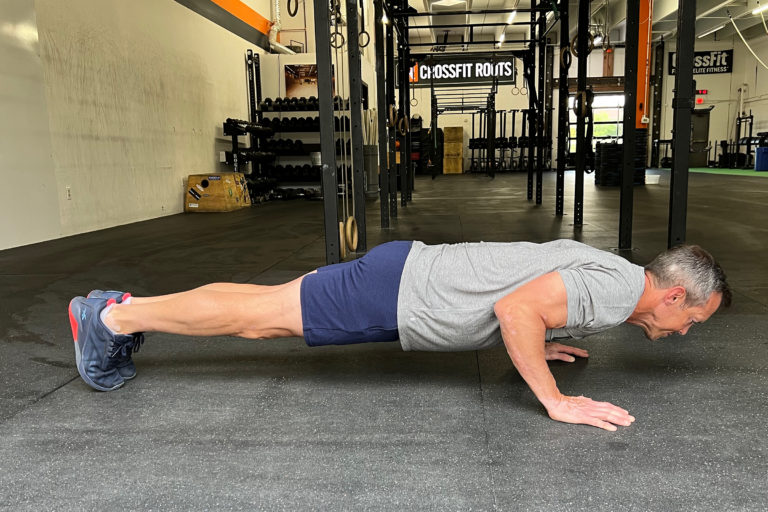
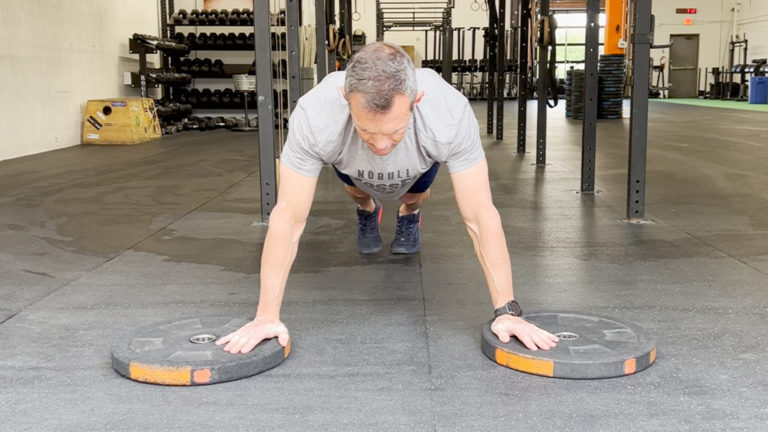
The push-up is considered by many to be the cornerstone of basic body-weight strength training. Even though this movement is well known and simple to perform, it is also difficult to complete with correct mechanics and full range of motion. Many individuals will walk into your gym with the notion that they can’t do push-ups or that push-ups are too difficult for them. Others may view this movement as being “too simple” or “too easy” but are enlightened when a coach teaches them that their push-up is actually just half of what is required. Regardless of an individual’s level of fitness, this movement can provide value and can be modified to provide a challenge for any level of athlete. It is necessary for the coach to have a variety of options that athletes can use to assist with the development of this exercise as well as to achieve the desired stimulus of a given workout and to avoid boredom. Consider the following variations when scaling this movement:
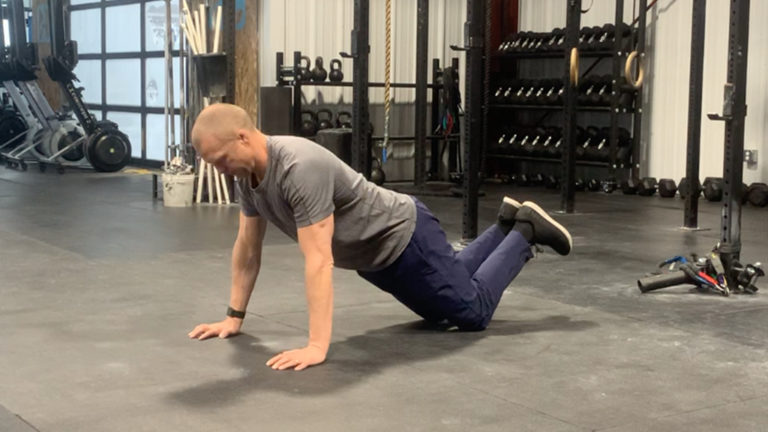
Kneeling Push-ups
For most coaches and athletes, this tends to be the first scaling option as it is easy to implement and many athletes will have success. The major pitfall with this exercise is that it tends to be overused and athletes may not progress as quickly as they could if they were exposed to different or increasingly challenging options. Another pitfall is that the knees act as the pivot point, preventing the athlete from practicing stabilizing their entire body as is required by the full movement.