The 2026 CrossFit Open, presented by Air National Guard, is quickly approaching, and for many athletes, so is the nervous excitement that comes with it. The Open is a great opportunity to have fun with your community, but it can also create uncertainty and insecurity. You might become extra critical of your performance and get down on yourself when you can’t do a programmed movement or see others with far better scores on the leaderboard. The good news? You can overcome these pain points and give yourself the tools to ensure you not only have a better Open experience this year, but for many years to come.
Below are four types of movements that are likely to show up in the Open and tips on how to work through them, plus one strategy that will serve you no matter what time of year it is.
Muscle-ups
Muscle-ups (ring and bar) and gymnastics skills in general are challenging for many athletes. This could be due to a lack of year-round preparation on your part, or because the movements are rarely or never programmed at your affiliate.
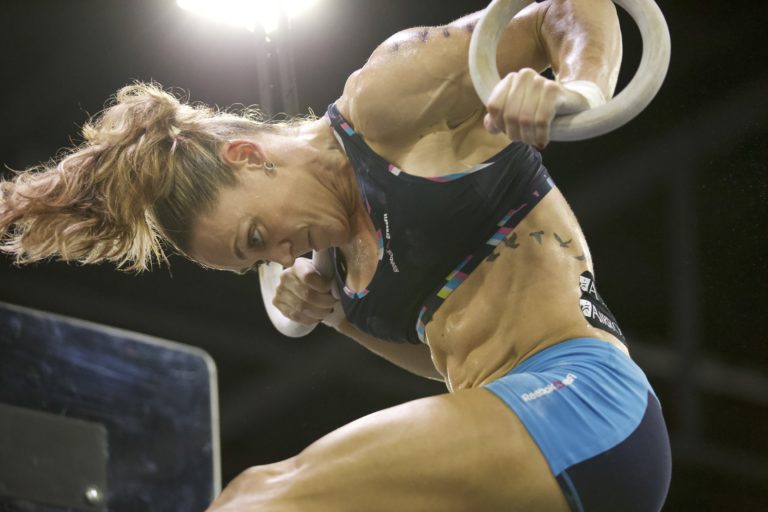
For now, we’ll touch base on a common fault: the chicken wing. The dreaded chicken wing happens when you don’t get high enough to travel your shoulders equally over the rings. Because you’re close to being high enough, you can flail one side of your body over one ring, catch yourself on top of the rings, and then hitch the other arm over in what becomes a two-part movement. At worst, this can lead to an injury, and at best, you’ll be inefficient in the movement leading to failed reps. Assuming you have adequate strength, two things tend to be the primary causes:
- You separate your feet on the kip.
- You don’t get enough height on the back swing.
When you separate your feet, it will likely cause you to rotate your torso resulting in a chicken wing, with one arm landing on top of the bar and the other arm getting stuck below the bar. To fix this, practice keeping your feet closer together and/or practice kip swings and muscle-ups while squeezing a sponge (or any object) between your feet.
Lacking height on the backswing may force you to compensate with your upper body to get over the rings (or bar), leading to a failed rep. If this is an issue, practice various ring swings or hips-to-rings drills to help develop the kip.
See this video or this video for additional tips
Both drills can be practiced during a warm-up. If you choose to repeat an Open workout, these drills are great to practice in the few days between your first and second attempts.
Bonus Tip: If you’re an advanced athlete, after the transition of the pulling portion of the ring muscle-up, perform a backswing of the legs to kip the dip. This technique maximizes efficiency and can shave valuable seconds off your time, as there is no need to pause on the transition from the pull-up to the dip phase of the movement. See video.
Barbell Cycling
Barbell cycling refers to the ability to efficiently move barbells at light to moderate loads for multiple reps. In the tips below, we’ll focus on barbell cycling for snatches and cleans. When it comes to barbell cycling, all too often athletes put themselves into poor set-up positions, which leads to errant movement patterns.
So, as a start, focus on and read your bar path. The bar should not travel in front of your shoe laces, and there should be no pauses on the descent of the movement, although a slight brush of the hips is encouraged on the lowering phase of the movement. When you become fatigued or sloppy, the barbell will travel forward of your shoe laces, pulling you forward on the next ascent and disrupting the intended bar path. The simple effort of controlling the barbell so this does not occur will help you improve your cycling ability. Additionally, at light loads you can practice a foot placement that does not require you to adjust your feet at all, which may save valuable seconds.
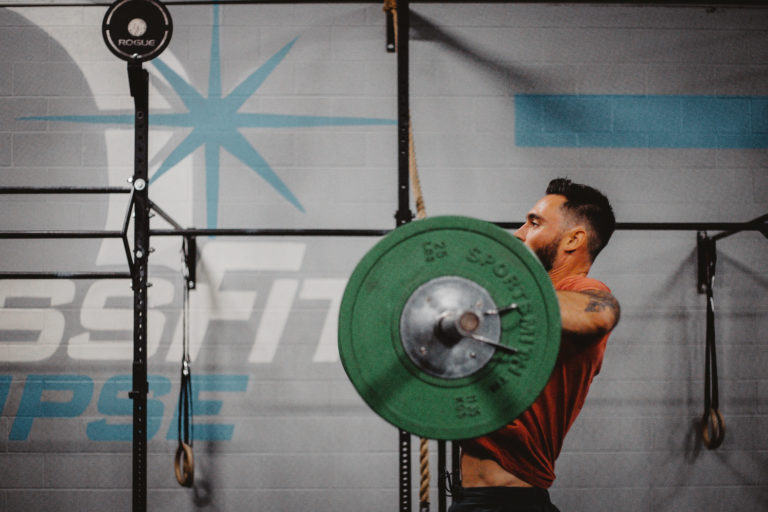
See this video and this video for more on barbell cycling and brushing the hips during the lowering phase.
Bonus Tip: Performing quick singles can be a viable strategy for workouts that demand a high volume of reps and help you sustain a consistent pace throughout. This technique removes the eccentric phase of the movement, which will reduce fatigue on your grip and lower back. Just be sure you’re quick to get back on the bar and don’t waste too much time between reps!
Linking Toes-to-Bars
Toes-to-bars are a common movement in the Open. They are also deceiving in difficulty level, especially when linking reps. For many athletes, the cause of their inability to link toes-to-bars is a breakdown in the length of travel in the kip. As you fatigue, the backswing of the kip decreases, placing more onus on your legs to lift farther. To begin to understand the different patterns, get an adequate press down on the kip such that half of your body is on either side of the bar on the ascent. On the descent, focus on quickly pulling your legs down and back into the arch position of the kip.
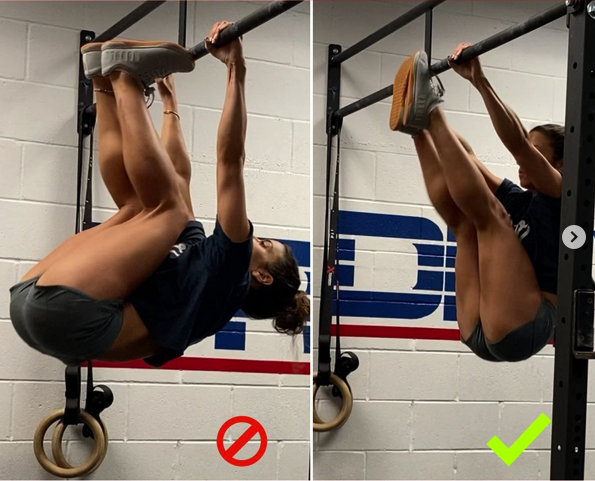
A simple drill to encourage this pattern is to perform a complex consisting of 2 kip swings + 1 toes-to-bar + 2 kip swings. This video from the CrossFit Training Instagram page illustrates what to assess for linking toes-to-bars.
Bonus Tip: You might be wondering if you should keep your legs straight or bent. Both styles have pros and cons. The tuck-to-extend method may be more beneficial for low-rep rounds, as the cycle time is quicker, while the straight-leg variation will likely allow you to optimize your kipping mechanics and may be more sustainable in the long run. A simple test to see which style may be most beneficial is to perform a pike stretch on the floor. If you can get your nose near your knees (with legs straight) and touch your hands to your toes with ease, the straight-leg variation might be a viable option. If you cannot get your hands to your toes with ease, you may benefit from performing a bent-leg or tuck-to-extend variation of the movement.
Chest-to-Bar Pull-ups
The chest-to-bar pull-up is a staple in the CrossFit Open and is significantly more difficult than the traditional pull-up due to the range of motion it demands. For a quick description on the differences between these two styles of pull-ups, watch this video.
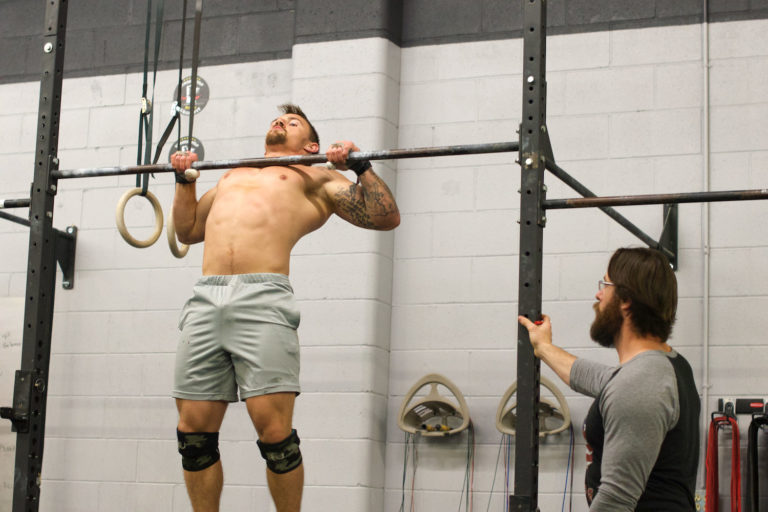
Here are a few quick tips if you have the prerequisite strength to pull your chest to the bar but struggle with the precision of the movement:
- Perform range-of-motion drills for shoulder extension prior to the workout.
- Widen your grip to reduce range of motion and make it easier for your chest to reach the bar.
- Gaze above the bar as you slightly extend your chest to the bar.
It is important to note that chest-to-bar pull-ups are typically performed at high volumes during Open workouts, so it may be beneficial to break up the reps early or even perform singles. A general guideline for a high-volume workout is to limit your reps per set to no more than ⅓ of your max effort. For example, if you can perform a maximum of 15 consecutive chest-to-bar pull-ups, you may benefit from performing no more than 5 reps at a time with controlled rest periods throughout the workout.
Bonus Tip: If you’re striving to perform butterfly chest-to-bar pull-ups, use an aggressive back swing and a brush of the bar that occurs at the apex or descent of the movement.
Workout Mindset
Inevitably, a workout will be announced that is not in your wheelhouse. The workout may contain movements you hate (see: aren’t good at yet) or movements that force you into the pain cave for a long period of time.
Once the workout is announced, you may stress out for the next few days. You may lose sleep, talk yourself out of doing it, or self-handicap to save face.
While your concerns may be valid, you need to assess which factors you can influence and which you cannot. For example, you have no control over the workout that is announced, but you can control your bedtime routine, nutrition, hydration, meal timing, strategy for the workout, time of day you do the workout, general warm-up routine, specific warm-up routine, the workout set-up, and whether or not you choose to repeat the workout.
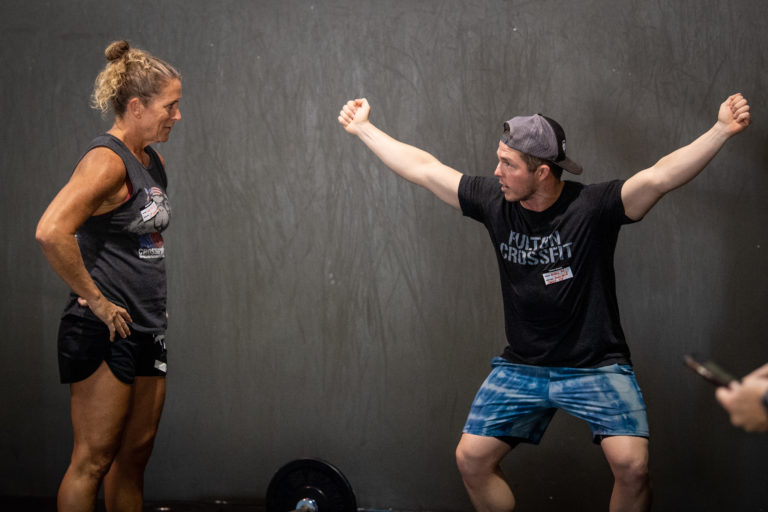
Using the above factors as guidance, spend some time writing down how you will minimize stress and make better decisions about what you can control. Remember, just because it’s the Open, it doesn’t mean your habits, workout strategies, and routines go out the window. Your time doing CrossFit and practicing movement patterns and skills over the past year should make for less guesswork. Recall and rely on these practiced habits, and avoid falling victim to the moment and trying new things that are totally out of the ordinary.
Bonus Tip: Give yourself process-oriented goals to achieve throughout the workout. For example, your goal may be to attempt 3-5 consecutive chest-to-bar pull-ups every 30 seconds. Be sure to set a fallback goal if you’re not achieving 3-5 reps. This guidance and goal-setting can help you chip away at the workout without worrying about what lies ahead.
Keep these tips handy, as you’ll inevitably run into one of these issues during the Open. Beyond working to maximize your performance, be sure to keep it fun and make the Open a positive experience for yourself, regardless of your ability level or experience.
Register for the Open
Are you in for the Open? Register here today and get ready to throw down with the world. See you on the Leaderboard!
 Eric O’Connor is a Content Developer and Seminar Staff Flowmaster for CrossFit’s Education Department and the co-creator of the former CrossFit Competitor’s Course. He has led over 400 seminars and has more than a decade of experience coaching at a CrossFit affiliate. He is a