A Life Lost to Drugs
Wells moved from his home in California to Colorado Springs, Colorado, when he was 12 years old.
“Immediately I realized I didn’t fit in,” Wells said. “So I started drifting towards the kids that were sneaking out, drinking, and doing stuff, which led me to methamphetamines at 14. Once I tried that, everything changed.”
He became a “full-time drug addict,” and to support the expense of his addiction, Wells began stealing from garages and cars and selling drugs. In his 20s, he was in and out of juvenile prisons, county jails, and halfway houses.
Although these were non-violent crimes, according to Colorado’s habitual offender law, the court can sentence a person who has committed three or more felonies within 10 years to four times the maximum of the presumptive range for the felony for which he or she is being sentenced.
In August 2008, when Wells was 28 years old, he was taken back into custody for burglary. This crime would have sentenced him to 15 years, but because of the habitual offender law, he was sentenced to 60 years in the Limon Correctional Facility, a mixed-custody Colorado state prison for men. That sentence was eventually dropped to 48 years.
“You can’t share your emotions in jail,” Wells said. “So I just ate my emotions.”
Wells swapped his drug addiction for a food addiction.
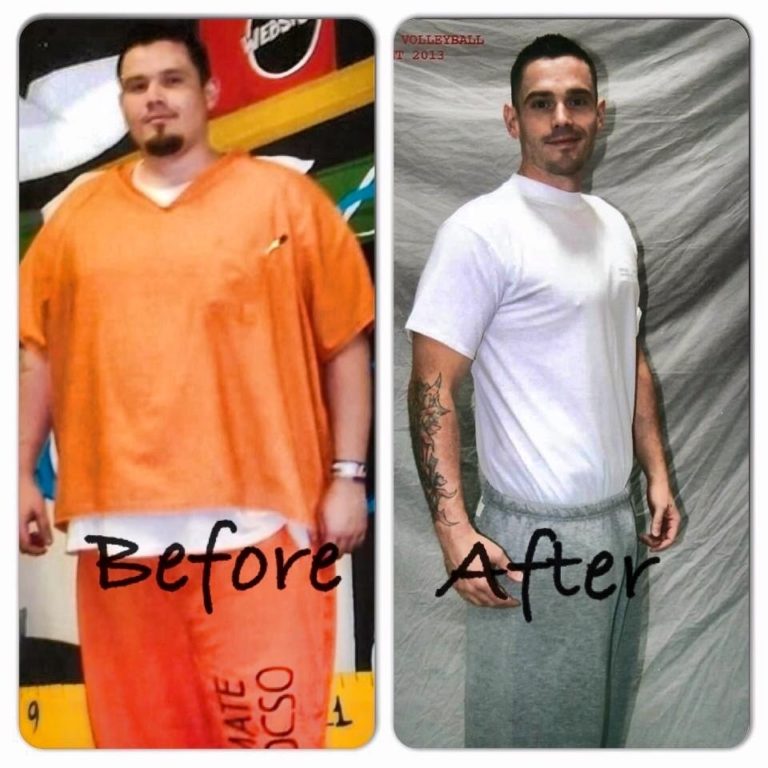
With only access to a small mirror in his cell, Wells hadn’t even noticed how bad his health had declined. It wasn’t until July of 2010, when his photo was taken in front of a mural he had painted, that he realized the severity of the situation.
“I was looking at myself in this picture, and I couldn’t even recognize myself,” Wells said. “I went into my cell that night, and I had this epiphany. It all ends today.”
First thing the next morning, Wells went outside to the prison yard, ready to make his lifestyle change. As he sat down and attempted a sit-up, he quickly realized he couldn’t even lift his back off the ground. His prison mates began to laugh.
“I was almost in tears. I thought, ‘Never again. I’m not going to get laughed at because I can’t do a freaking sit-up … .’ I made the determination that I was never not going to work out, I was never going to use drugs again, I was never going to drink again, and I was never going to abuse food,” Wells said.
In the last 16 years, he still hasn’t touched alcohol or drugs, and hasn’t gone a week without working out.
CrossFit: A Lifeline
As soon as Wells made a promise to himself to get back into shape, he asked his mom to send him fitness magazines so he could start learning what to do, the covers promising “6-minute abs” or “6 weeks to 20-inch guns.”
He tried it all.
Although Wells did lose 100 pounds in eight months, he still felt extremely weak. One day, during recreation time, Wells walked over to a squat rack and started to secure the bar on his back when he noticed a man he worked with in the laundry room doing burpees, box jump-overs, and clean and jerks before falling on the floor with exhaustion.
“I’m like, ‘Dude! I want to work out with this guy,’” Wells said.
Wells said when he was in prison, the community was very divided. There was an unwritten rule that you had to befriend only those who looked like you. Wells thought Damian would never let him work out with him, so he continued with his squats as usual.
But the next day, Wells noticed Damian doing thrusters and was fascinated by the movement. At that moment, Wells didn’t care about the stigmas inside the prison. He approached him and asked, “Do you mind if I work out with you? What are you doing?”
“I’m doing 50 thrusters for time,” Damian said.
He began to demonstrate how to do a thruster using a bar with metal 25-lb plates before handing the bar over to his new workout partner. It took Wells 30 seconds to complete one thruster.
“Well, what do you think?” Damian asked.
Wells responded, “I’ve got 49 to go. You better start that clock.”
Starting Redemption Road CrossFit
Since that day in 2011, Damian and Wells continued to program their own CrossFit workouts together during recreation time. When they ran out of ideas, Wells asked his mom to start sending in printed screenshots of CrossFit benchmark workouts from CrossFit.com.
Before their workouts, the duo would watch “Fitness Truth,” a 30-minute show on PBS that took viewers through a CrossFit class, from the whiteboard brief to movement instruction and a live demo of the workout, and then immediately go outside to do the workout they had just learned.
As Damian and Wells continued to throw down CrossFit workouts, other inmates took notice and joined in. Erik and Glen were the next to join. Soon, four became eight.
“Before we knew it, we had so many people jumping in wanting to do it,” Wells said.
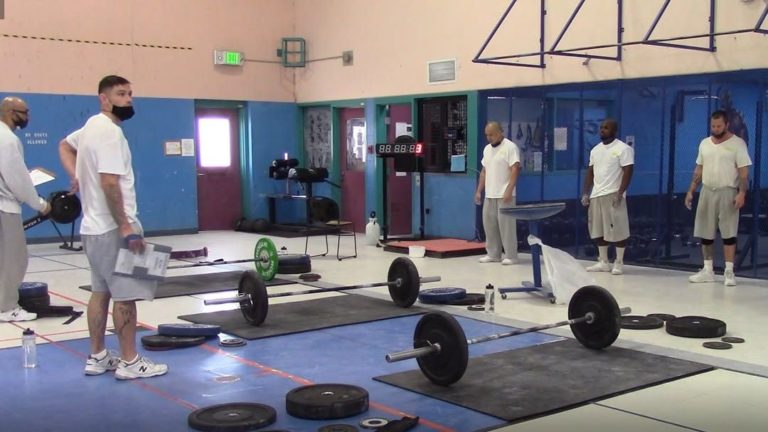
As the group grew larger, they started to take up too much space in the recreation room, so Damian and another CrossFit participant, Brandin, pitched the idea of making CrossFit an official program to the administration. To their surprise, it was approved.
Ten men started to coach 30 others through CrossFit classes each day. To ensure these men were safely and effectively coaching the methodology, Brandin wanted CrossFit HQ to provide a seminar to teach them.
In April 2018, CrossFit Seminar Staff entered the Limon Correction Facility and held the first CrossFit Level 1 Certificate Course inside the walls of a prison. By August, an official CrossFit affiliate was born at Limon: Redemption Road CrossFit.
A Second Chance at Life
In December 2019, Redemption Road CrossFit hosted its first competition — the Redemption Road Invitational — where 30 members from the Colorado CrossFit community were paired with an inmate based on their scores from the 2019 CrossFit Open.
Wells was chosen to pair with Chapin, an athlete from CrossFit Lefthand, a defense attorney, and a Professor of Law at the University of Colorado Boulder. They competed in three workouts and, by the end of the day, stood atop the podium as the fittest pair.
“It was the most exciting thing to ever happen to me. It was the only thing I have ever won in my entire life,” Wells said. “And she had been so nice to me all day. I told her my life story. There were a lot of tears.”
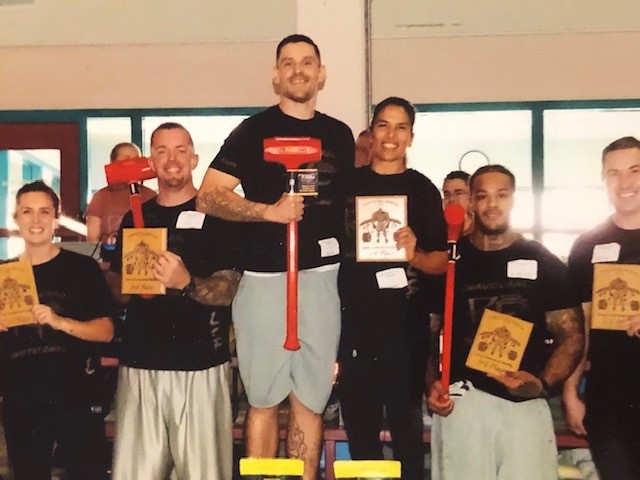
Nick Wells and Violeta Chapin
A week later, Wells received a Christmas card from Chapin.
“You’ve been on my mind since the comp. I hope you’re doing well. We’ll be in touch soon,” it said.
First thing in the new year, Chapin called the Limon Correctional Facility and told Wells she wanted to get him out of prison through a clemency petition with the help of her law students at the university. This would be her first time doing this, but she was willing to fight for his freedom.
For the next two years, Wells spoke with the three law students Chapin assigned to his case every day after work, drafting his 110-page petition for clemency.
News about Wells’ petition for clemency started to circulate. When Ben Dziwulski from WODprep found out, he emailed his entire list of email subscribers, encouraging the community to support. That is how I received the tip for my story.
Between the WODprep email and my Morning Chalk Up article, more than a hundred people started writing to Colorado Gov. Jared Polis, urging him to grant Wells’ release.
In July of 2021, former CrossFit CEO Eric Roza visited the Limon Correctional Facility to check out Redemption Road CrossFit for himself. This sparked interest in the Colorado directors of prison, with all but one coming out to meet Roza and to have a roundtable discussion with the members of the program. Several of those directors were assigned to Wells’ clemency board.
They could see firsthand how impactful Redemption Road CrossFit was to the Limon Correctional Facility and the efforts Wells put in to make it happen.
Right after Christmas on Dec. 30, 2021, Wells was pulled out of the morning headcount by a case manager, told to be in his “greens,” and ready for a Zoom meeting with the governor’s office. Right at 1 p.m., Wells was sitting in front of a computer. His CrossFit friends had their ears pressed to the door, listening intently to the news.
“All these people popped up on the screen that I didn’t know. This one lady was crying, and I was like, ‘Man, this is real,’” Wells said.
Polis’ lawyer, Jenna Goldstein, began to speak.
“I just want to tell you how proud of you I am,” she said. “Everything you did while you were in prison is exactly what people are supposed to do, and it was a really easy decision for us to let you go.”
Although he wasn’t granted a full commute due to his criminal history, he would become parole-eligible the next day. When Wells entered prison, he never thought he would step outside the walls of the prison until old age. Now, he was looking at freedom as soon as the next day.
As the governor’s office slowly began to log off the call, Wells looked over to his case manager in disbelief.
“Am I free to go?” he said.
“Yes. Let’s get your parole plan ready,” the case manager responded.
Once the parole process was complete, Wells walked out of the prison on May 10, 2022.
In a letter from the governor granting Wells’ clemency, Polis wrote: “Within the Department of Corrections, you have exhibited exemplary behavior and remained sober for 12 years. You have proven to have ‘exceptional conduct and work ethic.’ Recently, you focused your efforts with CrossFit Redemption Road, and empowered yourself and others to prioritize health and exercise. You have become a Level 2 certified CrossFit coach. You have had an exemplary disciplinary record – you have not had a single COPD violation in the last 10 years. You have also demonstrated a commitment to working with prison guards, including one who became a mentor to you. Lastly, and significantly, you have a strong support network of family and friends who are prepared to assist you when you return home.”