“The novice’s curse is manifested as excessive adornment, silly creativity, weak fundamentals, and, ultimately, a marked lack of virtuosity and delayed mastery. If you’ve ever had the opportunity to be taught by the very best in any field, you’ve likely been surprised at how simple, how fundamental, how basic the instruction was. The novice’s curse afflicts learner and teacher alike. Physical training is no different. What will inevitably doom a physical training program and dilute a coach’s efficacy is a lack of commitment to fundamentals. We see this increasingly in both programming and supervising execution. Rarely now do we see prescribed the short, intense couplets or triplets that epitomize CrossFit programming. Rarely do trainers really nitpick the mechanics of fundamental movements.” – Fundamentals, Virtuosity, and Mastery: An Open Letter to CrossFit Trainers, CrossFit Journal, August 2005
There’s a saying in sports to “let the game come to you.” The basic premise behind this advice is to encourage athletes not to force outcomes they can’t control. Instead, athletes should focus on specific actions and effort — the process — rather than on the scoreboard or other results. This requires the athlete to remain present in the moment, working on the task at hand, while letting everything else unfold naturally.
This is a great mindset for you as you start your CrossFit experience.
Don’t Force It
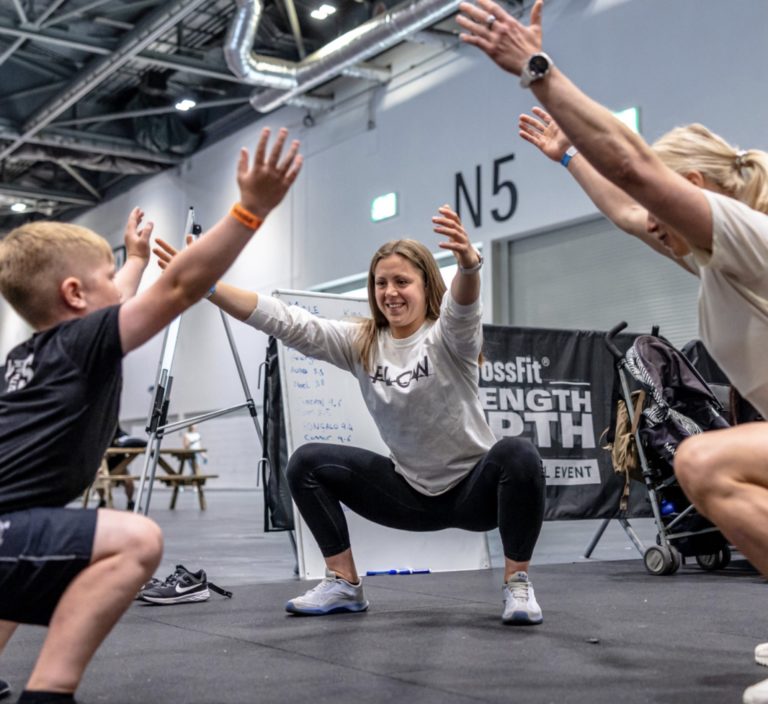
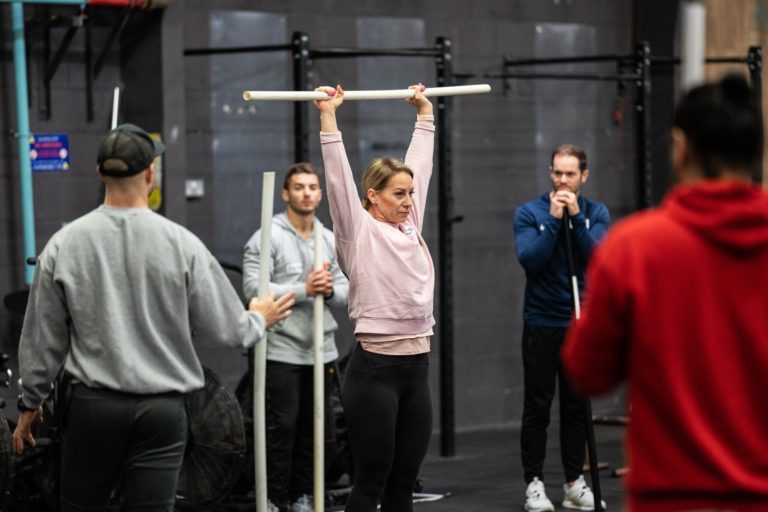
The first month of CrossFit is a perfect time to ingrain proper movement mechanics without any concern about loads, speed, or volume. Generally, the high-repetition work required to gain competency in squatting, pressing, and hinging movements, as well as entry-level calisthenics such as push-ups and pull-ups, will provide a solid stimulus during these first days. Anyone who has completed their CrossFit Level 1 Certificate Course can attest to how sore one can get from high-repetition practice with no weight or simply a PVC pipe.
As you work through full ranges of motion while preserving midline stability in every functional movement, you work muscles, tendons, and ligaments in ways you are likely unaccustomed to, laying a foundation for future, more intense activity.
Developing excellent mechanics and consistency is the only goal here. Trying to force a heavier load or a faster pace when you’re not ready for it will disrupt the skill-acquisition phase and introduce mechanical faults, or “bad habits,” you will likely have to undo in the future. In this phase, increases in load should happen naturally and easily without any predetermined schedule.
Focus on the Process
Each day in the gym, focus on executing the warm-up, skill work, workout, and cool-down as well as possible. Master the fundamentals before chasing intensity.
The first month is also about building the infrastructure that supports consistent training. Find a class schedule you can maintain long-term — the group you train with regularly becomes your support system and training family.
Sort out the practical details: proper footwear, comfortable training clothes, and most importantly, a nutrition plan that fuels your workouts. Eating whole, unprocessed foods sounds simple, but it requires planning — building a shopping list, navigating the grocery store, stocking your kitchen with the right tools, and carving out time for meal prep. Getting this dialed in during the first month sets you up for sustainable progress.
Master the Basics First
Constantly chasing the newest fad or influencer’s latest workout variation leads to weak fundamentals and delayed progress. To build the foundation that allows you to execute constantly varied functional movements at high intensity — consistently, safely, and effectively — you need considerable time working on the basics.
Your first month of training is just the beginning. During these 30 days, focus your attention, rep by rep, on properly scaled skill and strength sessions that build correct mechanics in foundational movements. Work through classic CrossFit couplets and triplets that introduce the structure of effective programming. Your overarching priority is implementing your trainer’s movement coaching.
Don’t question what’s next. Don’t wonder when you’ll learn X exercise, lift Y weight, or tackle Z workout. Focus on the requirement at hand, not on what’s coming. In a few months, you can look back and see how far you’ve come.
The ability to train with intensity and complexity is a skill that must be earned. This is the process through which you earn that right.
Build Now, Reap Later
A slow, steady approach in your first month — with unwavering commitment to mechanics in core functional movements — sets you up for better long-term progress. This is how you achieve optimal results through CrossFit over the coming years.
Athletes who invest time up front on the basics far surpass their contemporaries who rush to advanced moves and intensity without building a suitable base. Those peers will plateau and may even get injured, while you continue progressing.
Your first 30 days are that valuable in shaping your entire fitness trajectory.
About the Author
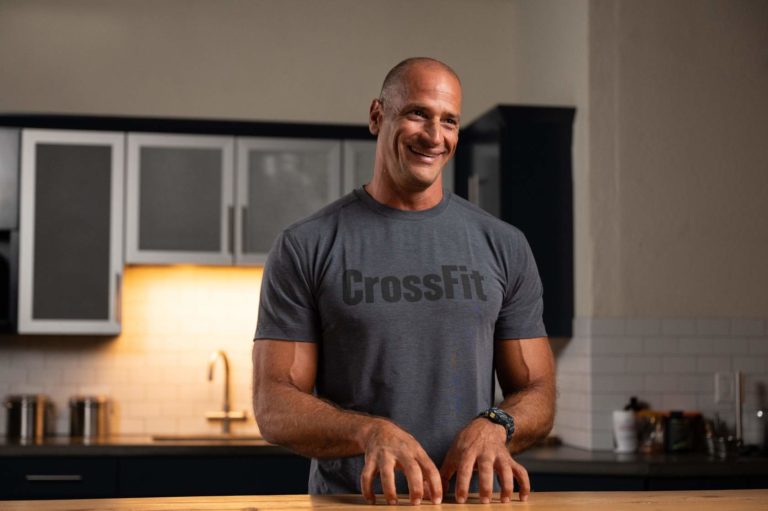 Stephane Rochet is a Senior Content Writer for CrossFit. He has worked as a Flowmaster on the CrossFit Seminar Staff and has over 15 years of experience as a collegiate/tactical strength and conditioning coach. He is a Certified CrossFit Trainer (CF-L3) and enjoys training athletes in his garage gym.