In all types of sports — from MMA to basketball, football, soccer, and hockey, to biathlon, climbing, gymnastics, and tennis — coaches often remark that the champions we revere have a “great engine” or that they are remarkably conditioned.
Many fans take this to mean the athlete has a great VO2 max, cardiorespiratory endurance, or power endurance. While these traits may play a role in an athlete’s conditioning, truly elite conditioning stems from the ability to maintain excellent technique under fatigue. This is what sets great athletes apart in how conditioned they appear, and it is a key factor in how they overcome their opponents.
To perform with excellent technique while fatigued requires a high level of capacity in all 10 general physical skills, honed sport or activity-specific technique from diligent, dedicated practice at real-world speed, and the mental discipline to stay focused in the moment and accomplish the task while ignoring the screaming signals from the brain to stop and rest.
Outside the sports world, success in many professions also requires skillfully performing one’s craft while fatigued. For soldiers, firefighters, and police officers, this ability can determine the difference between life and death. Developing the capacity to perform complex techniques while fatigued requires us to push ourselves in practice to a level of fatigue that matches competition level, and work on developing and refining our technique in this state. We must do this with the specific skills our sport or profession demands, but we can also use our strength and conditioning program to support these efforts. As the old saying goes, “We don’t rise to the level of our expectations; we fall to the level of our training.”
“We don’t rise to the level of our expectations; we fall to the level of our training.”
CrossFit has long been considered a “tip of the spear” strength and conditioning program, meaning that it provides the capacity required for elite performance in sports or in rigorous physical professions like soldiering. MMA fighters have remarked that CrossFit workouts feel like a fight, and soldiers have said our workouts mimic the physical aspects of combat.
Indeed, one of the key components that differentiates CrossFit from other fitness programs is that we demand athletes push their relative intensity in workouts — to push into uncomfortable zones of effort — while maintaining excellent technique. We call this threshold training. Threshold training provides the blueprint not only for developing, to a high degree, the 10 general physical skills we need for fitness, but also for building our ability to perform complex tasks at game speed, over and over, without succumbing to fatigue.
Put simply, we can take the mental and physical lessons we learn from threshold training in our CrossFit class into jiu-jitsu practice, football practice, or military or law enforcement scenario training. The capacity that allows us to perform proper squats, cleans, snatches, push-ups, or deadlifts at a high relative intensity with great technique, even when fatigued, is the same capacity required in sports, on the street, or on the battlefield.
Obviously, the stakes may be different in the real world, but this makes it all the more important that we train for the worst in the friendly confines of the gym. If we don’t train in a way that forces us to execute great technique while fatigued, we are likely to fail miserably when life or nature inevitably thrusts a challenge our way that requires this capability. This is why it is so important to strive every day to give our best effort to maintain excellent technique in our workouts, even as fatigue mounts, rather than letting fatigue win, getting sloppy, and just trying to get through the workout.
The difference in results from these two approaches is the difference between good fitness and elite fitness. If we’re going to suffer in our training the way we do, we might as well become elite.
About the Author
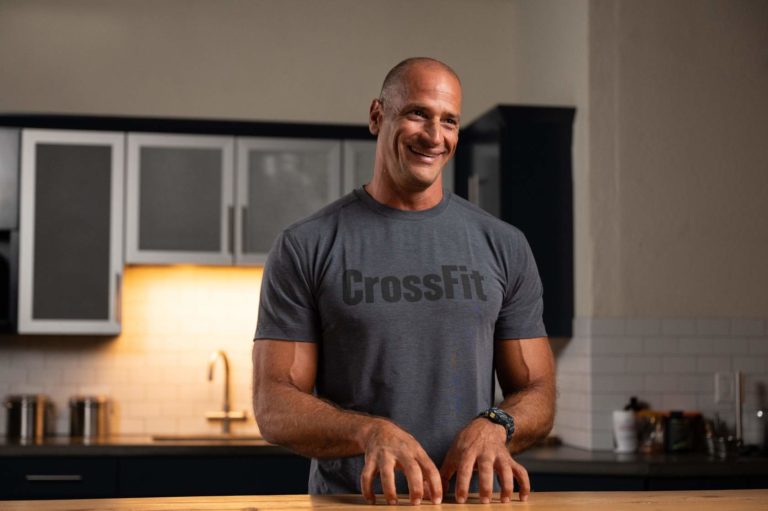 Stephane Rochet is a Senior Content Writer for CrossFit. He has worked as a Flowmaster on the CrossFit Seminar Staff and has over 15 years of experience as a collegiate/tactical strength and conditioning coach. He is a Certified CrossFit Trainer (CF-L3) and enjoys training athletes in his garage gym.