The Sport-Specific Training Myth: Why CrossFit’s Approach Actually Works Better
Picture this: A parent walks into your gym with their teenage athlete. “My son plays baseball,” they say. “What kind of sport-specific training do you do for baseball players?”
It’s a question that comes up constantly. Parents expect to see their volleyball players doing weighted jumps, their baseball players doing rotational work with resistance bands, and their tennis players practicing serves with weighted rackets.
But here’s what most people don’t understand about sport-specific training: the gym isn’t where sport-specific training happens. The sport itself is the sport-specific training.
What Actually Happens in the Weight Room
For years, working with university athletes across multiple sports — football, volleyball, basketball, baseball — the strength and conditioning work I did with them remained fundamentally the same. You could erase “football” from the whiteboard, write “volleyball,” and bring in the next team. Why? Because strength and conditioning programs train the 10 general physical skills, regardless of sport:
- Cardiovascular/respiratory endurance
- Stamina
- Strength
- Flexibility
- Power
- Speed
- Coordination
- Agility
- Accuracy
- Balance
Every sport requires these skills in different proportions. But the foundational work — the functional movements, the strength development, the conditioning — remains consistent across sports.
CrossFit is fundamentally a GPP (general physical preparedness) strength and conditioning program. When you’re doing CrossFit, you’re systematically developing these 10 physical skills through varied functional movements. That preparation transfers to every athletic endeavor.
What Sport-Specific Training Actually Means
Real sport-specific training is simple: It’s practicing the sport itself with the actual implement used in that sport.
For volleyball players, sport-specific training involves jumping on the court, reading the game, timing blocks, and spikes. For baseball players, it’s swinging a bat, throwing a ball, and fielding ground balls. For tennis players, it’s hitting serves and practicing footwork on the court.
These are the movements that build the specific patterns, timing, reactions, and skills required for that sport. You can’t replicate this complexity in a gym.
The weight room provides the ingredients — strength, power, endurance, and coordination. The sport itself is where those ingredients get combined into sport-specific performance.
The Complexity You Can’t Replicate
Watch a soccer player’s feet during a game. Watch a basketball player cut and change direction. Watch how a football player reacts to an opponent’s movement. The complexity of these movements — the reaction to outside stimulus, the chaotic randomness, the split-second decision-making — cannot be mimicked with cones and agility ladders.
Those agility drills people think are “sport-specific training?” They’re not making athletes faster or more agile in their sport. They’re just conditioning. They’re building stamina, preparing tendons and ligaments for the demands of stopping and starting, maybe providing some cardiovascular work, but they’re not replacing the actual agility work that happens when you play the sport. That’s where the real development occurs.
The Seasonal Balance
For competitive athletes, the balance between GPP work and sport-specific practice changes throughout the year:
Off-Season: High GPP work in the gym. Practice demands are lighter, so there’s more capacity for strength and conditioning. This is when you build the foundation.
Pre-Season/Early Season: Moderate GPP work. As practice demands increase, gym work adjusts to complement rather than compete with sport training.
Late Season/Playoffs: Minimal GPP work, more restorative and maintenance-focused. The sport demands are maximal, so gym work supports recovery and maintains what you’ve built.
But you never completely abandon the gym work even during competition season. Why? Because GPP and sport practice enhance each other. The strength you’re maintaining in the gym continues to support your performance on the field or court.
The Counterintuitive Truth: Train What You Don’t Do
Here’s where it gets interesting: in many cases, you should train the opposite of what your sport demands.
Think about it:
- Rowers pull thousands of times. Do they need more pulling work in the gym? Probably not. They need pressing to balance out all that pulling.
- Volleyball players jump constantly. Do they need plyometric box jumps in training? Not really. They’re getting plenty of jumping on the court.
- Baseball and tennis players do repetitive rotational movements. Should they do tons of rotational exercises in the gym? No, they should do work that counteracts the overuse of rotation.
This is where the sport-specific mentality gets coaches into trouble. They think, “My athletes need to rotate, so I’ll have them do lots of rotational exercises.” But those athletes are already doing thousands of rotations. What they need are movements that offset the repetitive patterns of their sport.
The famous story: in our gyms, we used to see tall benches that rowers would use where they lie down and pull a barbell from the floor. Why are we emphasizing pulling more when that’s all they do? A truly balanced program would focus more on pressing and posterior chain work to counteract the forward-pulling pattern.
The Injury Prevention Angle
This principle of training what you don’t do becomes even more important for injury prevention.
Years ago, skiers were plagued with knee injuries. Why? Because their training was too sport-specific. They did tons of quad-dominant squatting that mimicked the skiing position. They were overtraining the same pattern repeatedly.
Now, smarter skiing programs emphasize hamstring and posterior chain work, the opposite of the skiing pattern. This balanced approach has dramatically reduced injury rates.
When you only train the movements your sport uses, you create imbalances that lead to overuse injuries. When you train comprehensively and build strength and capacity across all movement patterns, you protect against those imbalances.
What CrossFit Provides
This is why CrossFit works so well as strength and conditioning for athletes in any sport. It’s not trying to be sport-specific. It’s building comprehensive physical capacity across:
- Multiple time domains (short, medium, long efforts).
- Various loading schemes (light, moderate, heavy).
- All fundamental movement patterns (squatting, pulling, pushing, hinging, pressing, carrying).
- Different energy systems (aerobic, anaerobic, phosphagen).
- The full spectrum of physical skills.
An athlete who does CrossFit develops:
- Strength that makes every sport movement more powerful.
- Conditioning that delays fatigue and speeds recovery.
- Coordination that improves movement efficiency.
- Power that enhances explosive actions.
- Flexibility and range of motion that support athletic positions.
- Balance that underpins all movement.
Then, when they practice their actual sport, all this capacity gets channeled into sport-specific performance. The CrossFit work provides the raw materials; the sport practice shapes those materials into skilled performance.
The Right Perspective on Agility Work
There is a place for agility drills, but not for the reason people think.
If an athlete has taken two or three months off from their sport and is returning to play, agility work like running around cones, stopping and starting, and changing direction serves a valuable purpose: conditioning the tendons and ligaments for the demands of the sport.
It’s not making them faster or more agile. It’s preparing their connective tissue for the pounding and change of direction they’ll experience when they return to full practice and competition. It’s injury prevention through progressive loading, not performance enhancement through sport-specific skill work.
What to Tell the Parent
So when that parent asks, “What sport-specific training do you offer for my baseball-playing son?” here’s the answer: “We provide comprehensive strength and conditioning that develops the 10 general physical skills every athlete needs: strength, power, speed, endurance, stamina, flexibility, coordination, agility, accuracy, and balance. This is what prepares athletes for peak performance in their sport.
“The sport-specific training — the actual baseball movements, the skills, the timing, the decision-making — that happens on the field. We provide the foundation that makes that sport practice more effective. We build the engine; baseball practice teaches your son how to drive it.
“And importantly, we train movement patterns that balance out what baseball demands, which helps prevent overuse injuries and creates a more well-rounded athlete.”
The gym builds the athlete. The sport builds the competitor. Both matter, but they’re separate. And when you understand that distinction, you stop wasting time trying to make your gym work look like your sport and start focusing on what actually matters: building the broadest, most comprehensive fitness possible.
That’s what transfers to sport performance. That’s what reduces injuries. That’s what creates better athletes. And that’s exactly what CrossFit does.
About the Author
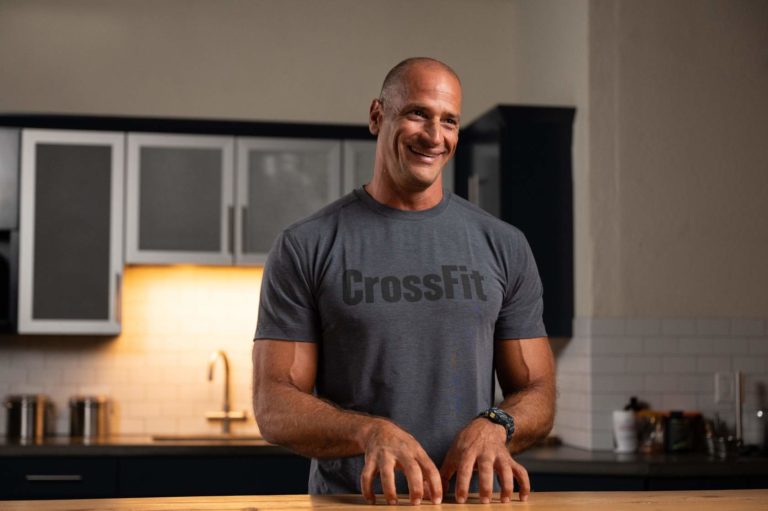 Stephane Rochet is a Senior Content Writer for CrossFit. He has worked as a Flowmaster on the CrossFit Seminar Staff and has over 15 years of experience as a collegiate/tactical strength and conditioning coach. He is a Certified CrossFit Trainer (CF-L3) and trains athletes in his garage.