CrossFit has never denied that we will beg, borrow, or steal from any source that offers elements that improve fitness. From the weightlifting, powerlifting, gymnastics, endurance, bodybuilding, and sports strength and conditioning communities, we’ve freely taken any movements and methods that advance our pursuit of elite fitness. We keep hard things in our program, not because they pose a challenge, but because they improve our work capacity.
For instance, as CrossFit grew on the internet in the early 2000s, the bench press, flyes, and pec deck had somehow supplanted overhead pressing movements, with the goal of aesthetically driven upper-body development rather than fitness. Instead of following this trend, CrossFit revived the press, the push press, and the push jerk, making them integral parts of the program. There’s nothing wrong with the bench press. It’s a great exercise. However, if you can press, you can bench, while the reverse is not necessarily true. Meanwhile, the overhead lifts are phenomenal tools for developing core strength and athleticism.
The Press
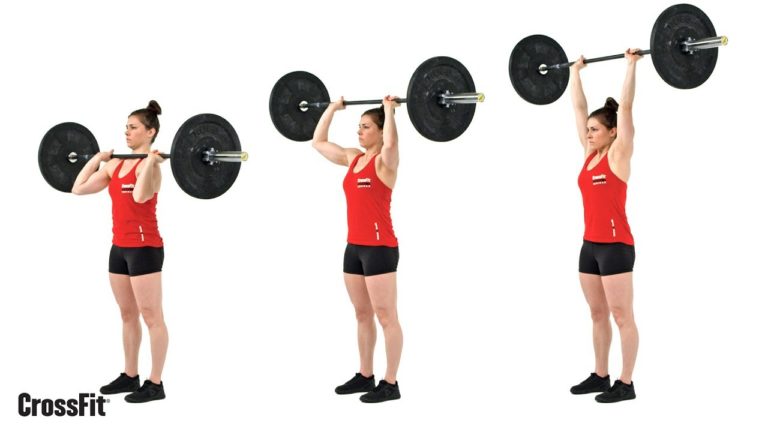
The press is a pure upper-body strength movement. It strengthens all the muscles you’d expect — shoulders, upper back, triceps, and chest. But the real value of the press is that it teaches the athlete to brace under a heavy load and develop a tremendously strong core.
In the setup of the press, the athlete maximally flexes the quads, squeezes the glutes, and braces the abs. A deep breath is pulled into the belly to provide additional support before the athlete drives the bar overhead — every muscle in between gets worked. Any weak link or lack of tension can cause a failed lift. The strong muscles of the core, including abdominals, spinal erectors, hip flexors, glutes, and quads, must stabilize the spine and upper body. At the same time, the forces being generated by the arms and shoulders pressing into the bar are transmitted between the bar and the floor. When the weight is overhead, the forces being applied to the core increase exponentially. As the weight on the bar increases, the demands on the core also increase dramatically. To achieve a bodyweight press (or a two-thirds bodyweight press for women) is a worthy goal that requires and develops tremendous upper-body and core strength, as well as muscle mass.
The press is an excellent option for heavy days and should remain a staple movement in every strength and conditioning program. If an athlete has shoulder pain or mobility issues pressing overhead, they should address these by training the shoulder press before moving on to the more dynamic push press and push jerk. Starting light and using slow reps is a great way to increase mobility and eliminate pain.
THE PUSH PRESS
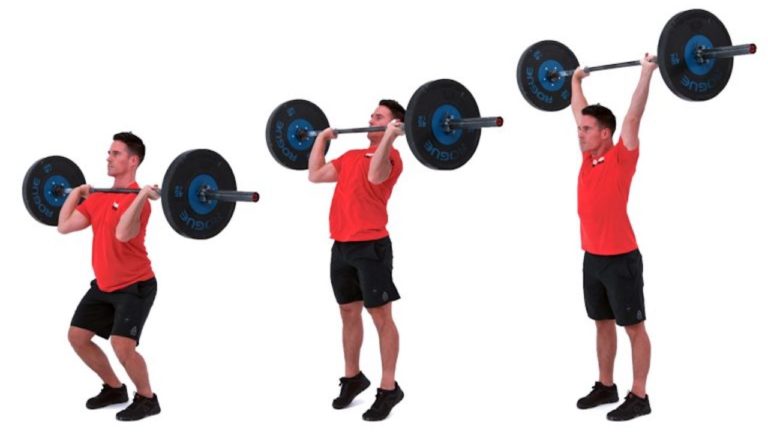
The push press can also be categorized as an upper-body strength movement, strengthening the very same muscle groups as the press. The addition of the hip and leg drive allows an athlete with good technique to press approximately 30% more weight overhead than in the press, but the arms, shoulders, and upper back still do a great deal of pressing work to lock the bar out. The push press is a great tool for increasing overhead pressing strength.
The incorporation of the legs and hips in the push press provides several important training benefits. First, the rapid extension teaches athletes how to generate power. As they rapidly extend the legs and hips in the drive portion of the push press, athletes impart forces into the ground quickly. Similarly, the drive of the arms to press an already moving bar to lockout also teaches the athlete how to apply force into an implement explosively.
Next, the push press teaches core-to-extremity mechanics. The movement starts with bracing the core to maintain an upright torso in the dip, then transitions to a powerful hip-and-leg drive, which hands off to the arms driving the barbell overhead. By reinforcing proper core-to-extremity principles, the push press can improve performance in sports movements such as punching, jumping, and throwing.
Finally, the fast cycle rate and relatively high number of reps that can be performed in the push press with substantial weight make it an excellent exercise for building stamina in the shoulder girdle.
Push presses are an extremely versatile lift. They can stand alone as the main movement on a heavy day or fit well into many met-con scenarios, using a wide variety of loading and rep ranges.
THE PUSH JERK
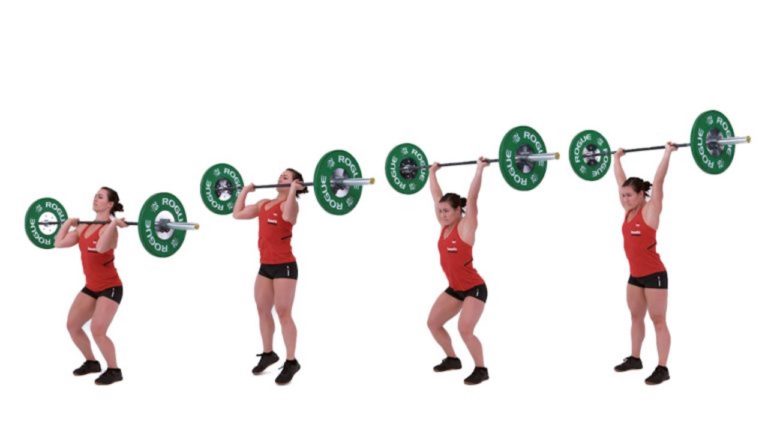
The push jerk is a full-body power movement and is one of the most efficient ways to drive heavy loads from the shoulders to overhead. The push jerk uses the same hip and leg drive as the push press, but incorporates a knee rebend as the athlete drives their body under the bar with their arms rather than pressing it overhead. With proper technique, an athlete can push jerk about 30% more than they can push press. While push jerks do not develop pressing strength like the press or push press, receiving heavy loads overhead builds great supporting strength in the arms, shoulders, upper back, and core.
The push jerk provides very similar training benefits to the push press. With heavier loads lifted overhead, the push jerk has the potential to produce even more power than the push press. Like the push press, the push jerk is also an excellent tool for training core-to-extremity mechanics and can develop great stamina in the arms and shoulder girdle. Given its full-body nature and fast cycle rate, the push jerk can be an effective tool for developing cardiorespiratory endurance when performed with higher repetitions.
Push jerks are very versatile and can be used as the main movement on a heavy day or incorporated into many met-con scenarios across a wide range of loading and rep ranges.
Progression
As taught at the CrossFit Level 1 Certificate Course, these lifts form a natural progression. Developing and refining the mechanics in the press set the foundation for the push press. Mastery of the dip-and-drive in the push press provides the skills needed to tackle the push jerk. All three lifts are essential components of any complete strength and conditioning program. While many programs have abandoned these lifts, CrossFit has done the opposite. We regularly program these lifts and use them to significant effect to build the elite levels of fitness we’re known for.
About the Author
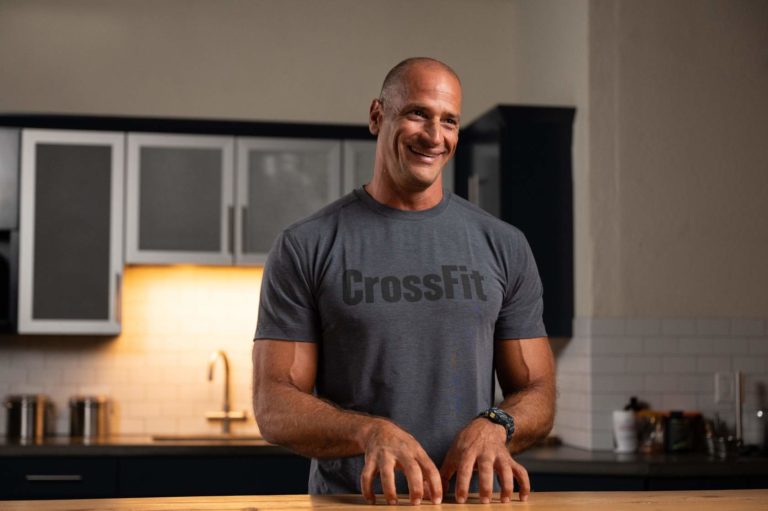 Stephane Rochet is a Senior Content Writer for CrossFit. He has worked as a Flowmaster on the CrossFit Seminar Staff and has over 15 years of experience as a collegiate/tactical strength and conditioning coach. He is a Certified CrossFit Trainer (CF-L3) and enjoys training athletes in his garage gym.