Athletes need to learn to temper their efforts regularly to allow for long-term progression in the fitness game. This is a learned skill requiring a finely honed sense of self. Any numskull can go to the gym every day and smash themselves without regard to their declining performance, multiplying aches, pains, and injuries, and negatively impact their quality of life. Go hard or go home, man! Within a few years, or even months, this is the person who tells the world, “I tried CrossFit, but I got hurt doing it.” In reality, they weren’t doing CrossFit.
CrossFit has been roundly criticized for being a thoughtless program of purely random workouts that annihilate our athletes day in and day out, leading to inevitable burnout or injury. Don’t get me wrong, we do pride ourselves on the intelligent and judicious use of appropriate intensity regularly, because this is where the results are. We definitely stand out and distance ourselves from the popular globo gym model, where athletes spend two hours on a few machines, interspersed with long periods of phone time before calling it a day.
That said, we cherish intensity because we’re chasing results — fitness or work capacity — above all else. But anything that detracts from our fitness and health, even intensity, needs to be assessed, reevaluated, and modified to keep us moving in the right direction. Tragically, this is what gets missed, misunderstood, and dragged through the media.
CrossFit, however, is not reckless. It’s not random or mindlessly full-throttle; it’s goal-oriented and numbers-driven.
So how does an athlete know when to back off? There are a few things to consider when making this decision:
- Does the workout seem too easy compared to other workouts that week? This is to give the athlete a well-deserved break before ramping up the intensity again. Properly programmed breaks allow for greater intensity in subsequent workouts and for higher, more frequent bouts of intensity over the long term, promoting continuous progress. This is a day to back off.
- Does the workout contain movements that are complex for the athlete’s level of skill or that the athlete is still learning? If this is the case, the athlete should decrease intensity and prioritize proper mechanics. If, on the other hand, the workout contains movements the athlete has mastered (and the athlete is feeling good), this is an excellent opportunity to push the intensity.
- The athlete must also assess how they are feeling in general. If a series of high-intensity workouts has left them sore and fatigued to the point where the thought of attacking another intense challenge is disheartening, then it’s likely time to back off and focus on movement quality. Notice we rarely say “take the day off.” On days when the body is tired and lacking the verve to throw down, there’s great value in just moving through the workout at a “smooth” pace. Backing off for just one workout and moving deliberately can dramatically improve recovery and make the athlete eager to push once more. In general, we have found that athletes need to be held back more often than they are prompted to increase their intensity. On these days when the athlete feels worn out, a sage trainer will remind them to “live to fight another day” or “don’t let today ruin tomorrow.” This teaches the athlete that intelligent modulation of intensity at the right time can propel them to greater effort and results, rather than doom them to a downward, frustrating spiral of fatigue, poor performance, and injury if intensity is expected no matter what.
- Pain is a signal for temporarily reducing intensity as the athlete assesses the source of the pain. “Little niggles,” aches, and pains are a regular part of working hard. But they can’t be ignored for too long. Constantly pushing through these signals is a recipe for injury. Nothing squashes intensity like an injury. As little pains appear, they need to be attended to with extra mobility work, strengthening, and rehab modalities, as well as the occasional back-off day to let these areas heal. This is another example of long-term thinking where a decrease in intensity today allows for more and higher intensity down the road.
- Technique breakdowns, whether due to fatigue, inexperience with the movement, muscle or joint stiffness, or avoidance of pain, are signals that intensity needs to be reduced. On such days, the athlete can transition to practice mode and work slowly and intentionally through positions, identifying areas of weakness to improve.
- If an athlete is concurrently training for sport, intensity must be adjusted to support successful sport training. On the days when the sports training regimen is lighter, athletes should feel free to push the intensity in the strength and conditioning workout. On days when sports training is tough, athletes should moderate their efforts. Athletes should be able to engage in strength and conditioning workouts all season and into the post-season by just “going through the motions” while still “doing” the workout. This is a remarkable way to keep athletes feeling strong, fresh, and injury-free during the most critical phases of competition. This concept not only applies to competitive athletes but to all of us who participate in rigorous activity outside the gym. Whether it is regular jiu-jitsu practice, long hikes, bike rides, or recreational softball, soccer, basketball, or volleyball, CrossFit training is designed to accommodate any additional sport training or recreational activity by modulating the intensity of effort.
Knowing when to push or back off is part art, part science, and is a critical part of developing fitness over the long term. We all need to develop this skill. Reckless intensity is just bad practice and not CrossFit. We are known for our intense workouts. However, those who practice CrossFit as intended also recognize how intelligently we administer these potent doses for the best results. It’s our secret sauce that no one else seems to be able to replicate.
About the Author
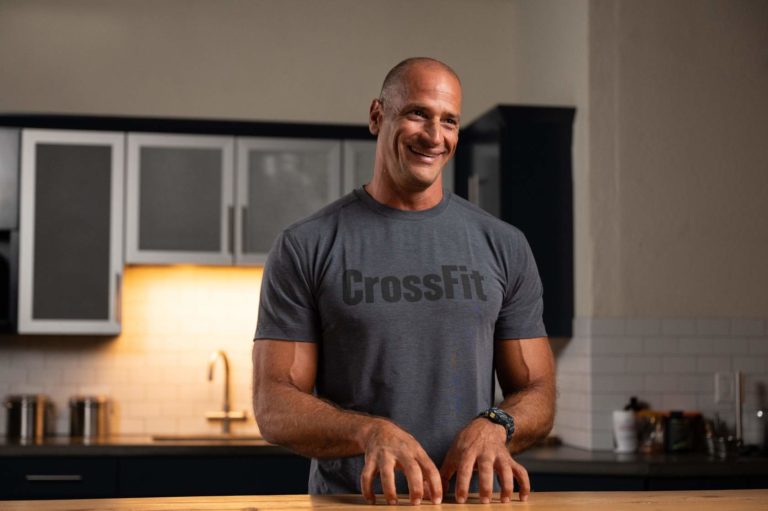 Stephane Rochet is a Senior Content Writer for CrossFit. He has worked as a Flowmaster on the CrossFit Seminar Staff and has over 15 years of experience as a collegiate/tactical strength and conditioning coach. He is a Certified CrossFit Trainer (CF-L3) and enjoys training athletes in his garage gym.