There’s a disturbing trend in fitness content right now: endless lists telling you which exercises to eliminate based on your age.
If you’d rather watch/listen to this conversation, you can do that here.
“The only five exercises you need after 40.” “Don’t do these movements after 50.” “If you’re a female over 40, avoid these exercises.”
The message is clear: as you age, you need to start whittling down your movement vocabulary. First, you drop this exercise, then that one, gradually restricting your physical capabilities until, by logical conclusion, you’re doing absolutely nothing at all, and then you die.
That seems to be the plan. And it’s terrible advice.
The Real Message: Introducing Danger
Let’s be honest about what these lists are actually saying. It’s not that these movements suddenly stop being effective the day you turn 50. Your biology and physiology don’t magically change between 49 and 50.
What they’re really saying is: these movements are dangerous for you now.
You could get hurt. We don’t want any risk as we get older because injuries when you’re older can be devastating. Better to just stop doing challenging movements entirely.
I’ll agree with one thing: injuries when you’re older do suck. They take longer to recover from. But injuries suck at any age. We’re always trying to avoid injury, regardless of how old we are.
The question is: should we avoid injury by eliminating movements, or by being smarter about how we approach them?
The Problem Isn’t the Movements
The movements aren’t dangerous. Full stop.
What you might need as you age is to be more mindful about:
- Technique – controlling movement quality with precision
- Load management – smart decisions about weight and volume
- Frequency – how many days per week you work out
- Movement balance – how you program different patterns throughout the week
- Daily readiness – checking in with yourself about what you’re actually prepared to do today
These principles don’t change as you age. If anything, you’ve been applying them to your entire training life. The movements themselves don’t need to change, but how you execute them might require more attention.
You might have to check in with yourself more frequently. Your readiness might fluctuate more day-to-day than it did when you were younger. What you were prepared to do yesterday might not be what you can handle today.
But that’s about mindfulness and adjustment, not elimination.
The Category vs. The Movement
There’s an important distinction here: we’re talking about eliminating entire movement categories, not adjusting individual exercises.
Movement patterns like:
- Overhead movements
- Squatting patterns
- Deadlifting/hinging patterns
- Pressing movements
If there’s a specific individual movement within a category that’s problematic for you, whether that’s due to an injury, a limitation, or something else, fine. Adjust that specific movement.
But don’t throw out the entire category. If one overhead movement doesn’t work for you, find another overhead movement that does. The pattern itself is essential.
Building Your Hedge
Here’s what many people don’t understand about maintaining complex movements as you age: they’re not just about physical capability in the moment. They’re insurance for your future.
Think about it this way: if you can still do a handstand push-up at 60 or 65, you’re probably functioning pretty well overall. That single movement requires shoulder strength, core stability, balance, spatial awareness, and confidence. It’s a marker that tells you, “I’m doing OK right now.”
And “doing OK right now” means you’re a long way from the real danger — falling, breaking a bone, ending up in a chair unable to recover.
The person who can overhead squat with a PVC pipe at 90 years old is living a completely different quality of life than the person who eliminated overhead squatting at 45.
That’s a 45-year difference. Think about what that compounds to.
The Compounding Effect of Elimination
If you start scrapping movements at 40, 45, and 50, and you live to 70, 80, or 90, we’re talking about potentially 40 years without performing those movement patterns.
How different is your quality of life compared to someone who kept doing them?
CrossFit’s mission is to increase your work capacity to the highest level possible, for as long as possible. That means building a hedge or maintaining the ability to perform foundational movements regardless of weight, reps, or speed.
Notice that we haven’t discussed numbers. We’re not saying you need to back squat 300 lb at 70 years old. We’re saying you need to maintain the movement pattern even if it’s with a PVC pipe, even if it’s bodyweight only, and even if it takes you all day.
The pattern is what matters for longevity.
The Longevity Component
There’s a real longevity component to being able to perform challenging, complex movements. These are exactly the movements people are telling you to eliminate from your program.
Can you:
- Pick something off the ground correctly?
- Get something overhead?
- Squat to depth?
- Perform an inverted movement?
- Maintain balance in challenging positions?
These aren’t gym exercises; these are life movements. The ability to perform them is a signal of overall function, and the inability to perform them is a warning sign.
When you eliminate these patterns from your training, you’re not just losing the specific movement; you’re losing everything that movement represents in terms of overall capability.
Don’t Be So Quick to Substitute
Here’s where a lot of well-meaning advice goes wrong. Someone might say, “Don’t deadlift after 50; do Romanian deadlifts instead.”
RDLs are great. Genuinely useful. But here’s the better approach: do both.
Don’t be so quick to scrap front squats and back squats for rear-foot elevated split squats. Split squats are excellent. Include them. But keep the foundational movements too.
The trend is to eliminate the foundational movement in favor of a “safer” variation. But the foundational movement is what maintains the full pattern. The variation is supplementary.
You don’t have to choose one or the other. Do them all. Just be smart about load, volume, and frequency.
What to Keep
CrossFit has a foundational movement series that gives you a clue about what to maintain:
The Squatting Series
- Air squat
- Front squat
- Overhead squat
- Back squat
The Deadlift Series
- Deadlift
- Sumo deadlift
- Medicine-ball clean
The Pressing Series
- Press
- Push press
- Push jerk
- Split jerk
These foundational versions should stay in your training. Yes, add variations. Yes, adjust the load. Yes, be mindful of volume and frequency.
But don’t eliminate them.
How to Approach Movement as You Age
Instead of asking, “What should I eliminate?” ask, “How can I keep doing this movement?”
The answer might involve:
- Reducing load
- Adjusting volume
- Modifying frequency
- Improving technique
- Building supplementary strength
- Adding more mobility work
- Programming smarter progressions
But the answer shouldn’t be to stop doing it entirely.
The moment you stop practicing a movement pattern, you begin losing it. Learned non-use can have devastating consequences for activities of daily living. Additionally, once you’ve lost it for long enough, getting it back becomes exponentially harder, potentially impossible.
The Real Risk
Here’s what the “don’t do these exercises” crowd gets wrong: they think they’re reducing risk by eliminating movements.
But they’re actually creating a different, more insidious risk — the risk of accelerated decline.
Every movement pattern you eliminate narrows your physical capability. Every category you remove from your training makes you less prepared for the demands of life. Every foundational movement you scrap moves you closer to the chair.
The real risk isn’t that you might get hurt doing a deadlift at 60. The real risk is that you’ll be 75 and unable to pick your grandchild up off the floor because you haven’t practiced that movement pattern in 15 years.
CrossFit Health Is for Your Lifetime
This isn’t about chasing performance in your 70s or 80s. It’s not about setting PRs at 90.
It’s about maintaining capability, preserving independence, and building enough of a hedge that when age inevitably reduces your capacity, you’re starting from such a high level that you can afford the decline and still function well.
The person who maintains foundational movement patterns, even at reduced loads, builds a completely different trajectory than the person who systematically eliminates them decade by decade.
The Bottom Line
Don’t be so quick to eliminate movements as you age.
Yes, be smarter, be more mindful, adjust load and volume, listen to your body, and modify when necessary. But keep the patterns, maintain the foundations, and build the hedge.
If you can still overhead squat, front squat, deadlift, and do handstand push-ups at 65, even if it’s with minimal load, you’re probably doing OK. Better than OK, actually; you’re thriving.
So the next time you see a list telling you what exercises to eliminate at your age, ignore it.
Focus instead on how to keep doing all of them — safely, smartly, sustainably — for as long as possible.
Your 90-year-old self will thank you.
About the Author
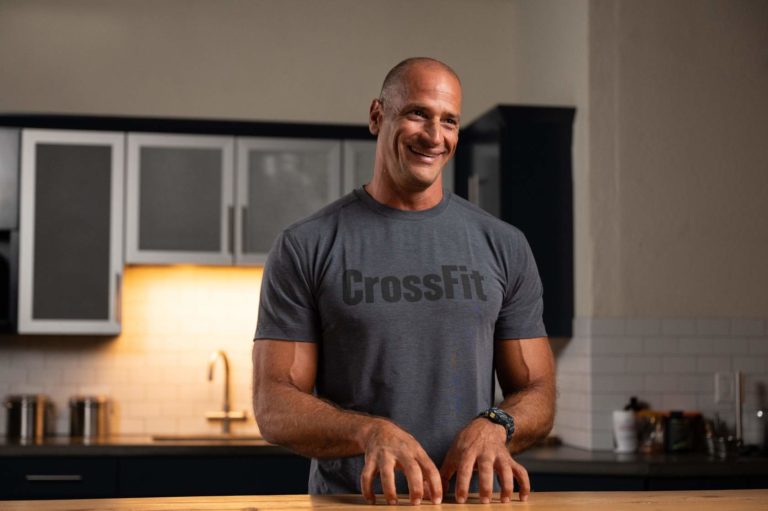 Stephane Rochet is a Senior Content Writer for CrossFit. He has worked as a Flowmaster on the CrossFit Seminar Staff and has over 15 years of experience as a collegiate/tactical strength and conditioning coach. He is a Certified CrossFit Trainer (CF-L3) and enjoys training athletes in his garage gym.