There’s a lot of nonsense on social media.
Scroll through Instagram or YouTube for five minutes and you’ll find endless fitness influencers pushing nuanced details, specialized techniques, and niche protocols. They’re getting millions of views. They’re building huge followings.
And they’re teaching you to major in minors.
If you’d rather watch/listen to this conversation, you can do that here.
What Does “Majoring in Minors” Mean?
It means spending your time, energy, and mental bandwidth on details that don’t really matter while neglecting the fundamentals that actually produce results.
It’s focusing on the 1% optimizations before you’ve handled the 80% that moves the needle.
It’s studying advanced strategies when you haven’t mastered the basics.
And it’s everywhere in the fitness world right now.
Why This Happens
Let’s be honest about why social media is full of minor details instead of fundamental principles:
Content is driven by clicks.
It’s not sexy to say “here are the basics — get really, really good at the fundamentals” and talk about them over and over. That doesn’t differentiate you from the hundreds of other coaches saying the same thing.
So how do you stand out? You find one little nugget. It becomes your niche, your specialty, your thing. That’s what you talk about. That’s your brand.
And there’s nothing inherently wrong with specialization, unless it causes people to lose sight of what actually matters.
When viewers see “that’s the thing” and “that’s the thing” and “that’s the thing,” they think they have to do all of it. They get lost. They forget the basics. They major in minors.
The Pendulum Is Swinging
Here’s the good news: it seems like some people are coming full circle.
The creators who are actually getting traction and being successful are the ones who keep going back to the basics. It resonates with people because deep down, everyone knows the fundamentals work.
You don’t need a thousand optimization hacks. You need to master the basics and execute them consistently.
Examples of Majoring in Minors
Let’s get specific about what this looks like in practice:
1. Accessory Work Over Main Work
You see the workout posted: a 10-minute AMRAP. Simple. Effective.
But then you think, “I should probably do some banded face pulls first. And what about hip flexor stretches? Oh, and I read that rotator cuff activation is important. Better do some band work there, too.”
Before you know it, you’ve spent 45 minutes on accessories and warm-up minutiae. You’re exhausted. You rush through the actual workout or skip it entirely because you’re out of time.
The accessory work became the major. The actual workout became an afterthought.
The Major: Do the workout as programmed. The Minor: Perfectly optimized accessory work.
2. Pre and Post-Workout Nutrition Theater
You’re obsessing over your pre-workout meal timing. You need the exact right carbs exactly 90 minutes before training. Post-workout, you need your protein within the anabolic window.
Meanwhile, you ate fast food three times this week and your overall diet is a mess.
The Major: Eat quality food in appropriate quantities consistently. The Minor: Nutrient timing and supplementation protocols.
3. The Macronutrient Villain Game
“I eat carnivore.” “I’m keto.” “I do the vertical diet.”
You jump on a plan that excludes entire macronutrients. You don’t know exactly why. You don’t know what you’re looking for from it. It works initially because any change can work when you’re actually paying attention to your food.
Then things plateau. Where do you go? The one macronutrient you were eating is now the villain. You need to find another diet that villainizes something else.
Or, here’s a thought, you could just eat meat and vegetables, nuts and seeds, some fruit, little starch, and no sugar. Quality food in the right quantity.
The Major: Eat whole, unprocessed foods in appropriate amounts. The Minor: Playing the macronutrient game to figure out which dietary tribe you belong to.
4. Secret Squirrel Programming
You’re paying for a coach’s program. Or you’ve chosen to follow a specific program. But you don’t actually follow it.
You think: “I’ll change this to this. I’ll add this. I’ll modify that. I’ll throw in some extra work on my weaknesses.”
Usually, what you’re adding are minors; little things you hold dear to your heart that you think are missing.
The program you’re following is no longer the program you’re paying for. You’ve created your own secret squirrel version.
The Major: Trust the program and follow it as written. The Minor: Your personal additions and modifications.
5. Everything Except Actually Moving
You’re researching the perfect program. You’re analyzing your macros. You’re planning your accessory work. You’re thinking about what supplements to take.
But you didn’t work out today. Or yesterday. You’ll get to it tomorrow.
Tomorrow becomes the next day, then the next. You get through a week without doing anything. So on Saturday, you do a four-hour workout to “catch up.”
Then the cycle repeats.
The Major: Move today. Even if it’s just 20 minutes, 10 minutes, 5 minutes. Move today. The Minor: Everything else you’re doing instead of moving.
What Are the Actual Majors?
Let’s make this crystal clear. Here’s what actually matters:
Training Majors
- Move today. Consistency beats perfection. Something beats nothing. Every single time.
- Follow a program. Pick one that makes sense and actually do it as written.
- Master fundamental movements. Squat, pull, push. Get good at these before worrying about specialized variations.
- Include variety. Different time domains, different loading schemes, different movement patterns.
- Train with intensity. When it’s time to work hard, actually work hard.
Nutrition Majors
- Eat quality food. Whole, unprocessed foods should make up the vast majority of your diet.
- Eat appropriate quantities. Not too much, not too little. This is where people actually struggle.
- Be consistent. It’s not about perfect meals; it’s about consistently making good choices over time.
That’s it. That’s the list. Master these and you’ll be ahead of 90% of people.
How To Know If You’re Majoring In Minors
Ask yourself:
- Am I doing the basics consistently before worrying about optimization?
- Is what I’m focusing on actually preventing me from doing the main work?
- Would skipping this “essential” detail actually impact my results?
- Am I using research and planning as a form of procrastination to avoid taking actual action?
If you’re spending more time on accessories than the main workout, you’re majoring in minors.
If you’re spending more time on supplement research than actually eating well, you’re majoring in minors.
If you’re modifying your program more than you’re following it, you’re majoring in minors.
If you’re planning perfect workouts instead of doing imperfect ones, you’re majoring in minors.
The North Star
There’s a concept called the North Star — that fixed point you return to when you get lost or distracted.
In fitness, the North Star is simple: master the fundamentals and execute them consistently.
When you find yourself deep in a rabbit hole about some specialized technique or niche optimization, come back to the North Star. Ask yourself: “Have I mastered the basics? Am I executing consistently?”
If the answer is no, you don’t need the advanced stuff. You need to get back to the fundamentals.
The Trap of “But I Like Learning About This Stuff”
Here’s a confession: even experienced coaches fall into this trap. You can be well-versed in strength and conditioning, have years of experience, and still get caught up analyzing minor details.
It’s interesting. It’s fun to learn about. Keto, carnivore, specialized programming, advanced techniques, it’s genuinely fascinating.
But interesting doesn’t mean necessary. And fascinating doesn’t mean you should implement it.
You can enjoy learning about optimization strategies without actually spending your training time on them. The key is knowing the difference between “this is interesting” and “this is what is going to get me results.”
When Minors Become Majors
There are times when what’s normally a minor detail becomes a major focus, but it’s specific and temporary:
- If you have an injury, rehabilitation work becomes a major.
- If you’re an elite athlete and the basics are already mastered, optimization details become relevant.
- If you’re addressing a specific, diagnosed deficiency, targeted work makes sense.
But these are exceptions. And they’re temporary. Once the issue is addressed, you return to the fundamentals.
For most people, most of the time, the basics are what matter. Everything else is just details.
About the Author
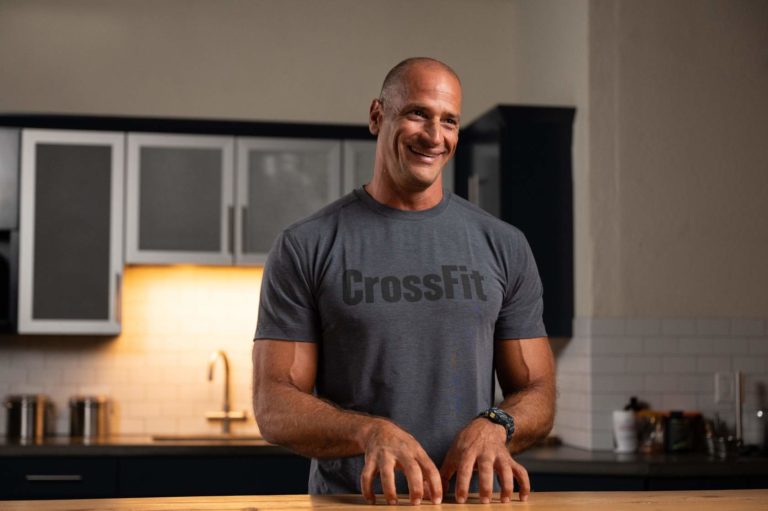 Stephane Rochet is a Senior Content Writer for CrossFit. He has worked as a Flowmaster on the CrossFit Seminar Staff and has over 15 years of experience as a collegiate/tactical strength and conditioning coach. He is a Certified CrossFit Trainer (CF-L3) and enjoys training athletes in his garage gym.