The Two Sides of Your CrossFit Experience: Programming vs. Coaching
When you walk into your CrossFit gym and look at the whiteboard, you’re seeing the result of two distinct skill sets: programming and coaching. Most people don’t think much about the difference, but understanding it can change how you evaluate your training and what you should look for in a gym.
Here’s the reality: there are people who excel at both programming and coaching; they’re the superstars of the field. But most people gravitate toward one or the other. They’re either exceptional at designing training plans or exceptional at implementing them on the floor.
And here’s the key insight: a simple, basic program excellently implemented will outperform a scientifically perfect program that’s poorly implemented every single time.
What Is a Programmer?
A programmer is typically the person behind the scenes, putting in all the detail work: sets, reps, rounds, loading schemes, rest intervals, movement combinations. They’re thinking about variance over weeks and months, energy system development, strength progressions, and how everything fits together.
Great programmers in CrossFit include the people behind CrossFit.com, competition programming, and popular affiliate programs like Mayhem. These programmers have a knack for seeing how pieces fit together, understanding what combinations will produce specific adaptations, and sometimes, like Dave Castro, having an artistic feel for that extra element that makes programming special.
Programming has a scientific process to it. It’s about understanding physiology, fatigue management, progressive overload, and training cycles. It requires analytical thinking and the ability to see patterns over time.
But here’s an important consideration: the best programming comes from people who are actually watching athletes train. The original CrossFit programming emerged from a gym. It came from Greg Glassman, Lauren Glassman, and Nicole Carroll coaching real people every day, watching how they responded to workouts, seeing what worked and what didn’t, and adjusting based on that real-time feedback.
When programming is created in a vacuum, such as someone at a computer writing 12 weeks of training without ever seeing how athletes respond, it’s missing a critical piece. How do you know what to program next if you haven’t seen the impact of what you just prescribed?
What Is a Coach?
A coach is the person who makes it all happen on the floor. In the CrossFit context, great coaching involves:
Teaching movements effectively to a diverse population, from complete beginners to experienced athletes.
Recognizing and correcting faulty mechanics, from gross faults in newer athletes to subtle inefficiencies in advanced ones.
Managing groups efficiently, fitting everything into the class time while still providing quality coaching.
Creating the right environment, motivation, presence, attitude, and energy.
Coaching is a complex human relationship between the coach and athlete. It’s not just about demonstrating technique; it’s about flow, timing, equipment arrangement, loading decisions, explanation, motivation, and reading the room.
A great coach can watch you move, identify exactly what’s wrong, figure out why it’s happening, and provide the right cue or correction to fix it. They can manage a class of 15 people with different skill levels and make sure everyone gets what they need. They can adjust on the fly when something isn’t working.
This is an art informed by science, but it’s fundamentally about human interaction and real-time decision-making.
Why Coaching Often Matters More
If you had to choose between perfect programming with mediocre coaching or simple programming with excellent coaching, the smart money is on excellent coaching.
Here’s why: What happens on the floor is what determines your results.
You can have the most scientifically optimized program in the world, but if:
- The movements aren’t taught well
- Faults aren’t corrected
- Scaling isn’t appropriate
- The flow is chaotic
- Athletes aren’t motivated
- The class runs out of time
… then that perfect program doesn’t matter. It’s not being executed properly.
On the flip side, a simple program — basic combinations, varied time domains, different loading schemes, good variance over a month — when executed with excellent coaching, produces remarkable results. Athletes learn proper technique, push themselves appropriately, stay injury-free, and make consistent progress.
What This Means for You
As an athlete, understanding this distinction helps you evaluate your training environment.
Look for coaches who can actually coach. Can they teach movements clearly? Do they correct your faults effectively? Can they scale workouts appropriately for your level? Do they manage the class well so you get quality coaching time?
Don’t be dazzled by complicated programming. If the workouts look incredibly sophisticated but the coaching is lacking, you’re probably not getting what you need. Simple, well-coached training beats complex, poorly-coached training.
Value gyms that test their programming. If your gym writes its own programming, that’s often a good sign because they’re watching you train, seeing what works, and adjusting. They’re not blindly following something written for a different population.
Recognize that both matter. You do need solid programming. Random workouts with no plan won’t optimize your progress, but programming needs to be delivered well.
The Ideal Scenario
The best situation? A gym where:
- The programmer understands coaching — they’ve been on the floor, they’ve tested workouts, they know what’s realistic to implement in a class setting.
- The coaches understand programming — they grasp the intended stimulus, they can scale effectively, and they know why certain combinations matter.
- There’s feedback between programming and coaching — coaches provide input on what’s working, programmers adjust based on real athlete responses.
- Programming is appropriate for the facility — equipment, space, and coaching capacity are all considered.
Many successful gyms have someone who programs for their own members, informed by actually watching those members train. They might follow external programming sometimes as a learning tool, then program themselves for periods to apply what they’ve learned.
Should You Care About Programming?
As an athlete, you don’t need to become a programmer. But understanding basic programming principles helps you:
- Evaluate what you’re doing: Is there variance in movements, time domains, and loading?
- Communicate with coaches: “What’s the intended stimulus?” becomes a smarter question.
- Make scaling decisions: Understanding the goal helps you scale appropriately.
- See the bigger picture: Today’s workout exists in the context of the week and month.
Some athletes enjoy experimenting with their own programming. If that’s you, great; it’s a valuable learning experience. Test things out. Track your results. But remember that even if you program for yourself, you need to implement it well. You still need to coach yourself effectively through the workouts.
Both programming and coaching matter. But if you had to choose, bet on the coach.
About the Author
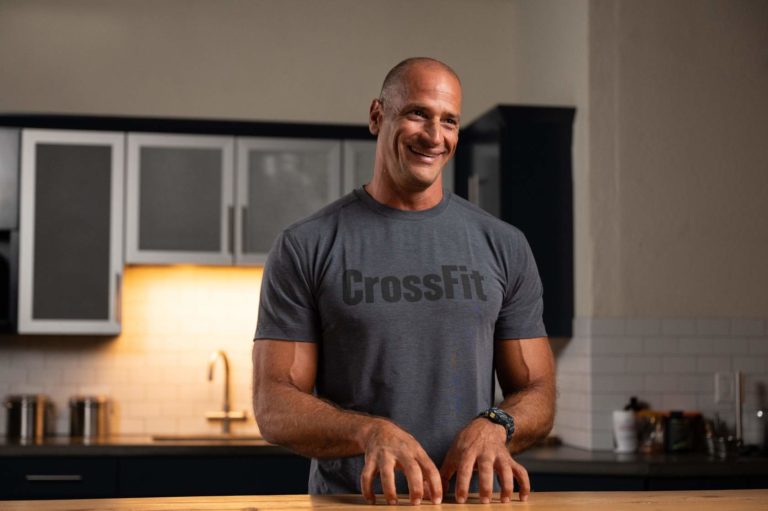 Stephane Rochet is a Senior Content Writer for CrossFit. He has worked as a Flowmaster on the CrossFit Seminar Staff and has over 15 years of experience as a collegiate/tactical strength and conditioning coach. He is a Certified CrossFit Trainer (CF-L3) and trains athletes in his garage.