I pulled the jump rope out of the closet recently. Told myself I’d do 10 minutes.
Five minutes was enough.
If you’ve ever said, “10 minutes of jump rope doesn’t sound that long,” you know exactly what I’m talking about. It sounds easy. It’s absolutely not.
And that’s exactly why we need to talk about bringing the jump rope back into regular rotation.
If you’d rather watch and listen to this conversation, you can do that here.
The Tool We Forgot About
Double-unders are everywhere in CrossFit programming. They show up in met-cons constantly, and for good reason: they’re highly technical, intense, and provide serious benefits.
But here’s what we’ve lost: the humble single-under has fallen out of favor. And that’s a mistake.
Think of it this way: double-unders are like sprinting. Highly technical sprinting. They’re explosive, they’re demanding, and they fit perfectly into the fast-paced structure of a met-con.
Single-unders? They’re more like jogging. But don’t let that fool you, because they’re an exceptional conditioning tool we should be doing more of.
Why Fighters Never Stopped Using It
There’s a reason boxers, wrestlers, and martial artists never gave up on the jump rope. It’s been a staple of the fight game forever, and not just for show.
Wrestlers would regularly do 1,000 single-unders unbroken. That’s 5 or 6 minutes of continuous jumping. Boxers spend extended periods working the rope because it develops everything they need: footwork, agility, hand-foot coordination, and serious cardiovascular conditioning.
These athletes understood something we’ve forgotten: the jump rope will get you in shape. It’s not supplementary work. It’s not just a warm-up tool. It’s a legitimate conditioning implement that checks a massive number of boxes.
What the Jump Rope Actually Does For You
Let’s break down why this simple tool is so valuable.
Tissue Development – Jump roping develops your feet, Achilles tendons, calves, knees, and hips. This isn’t just about getting better at jumping rope; it’s building the foundation for running, sprinting, and every sport that involves quick footwork.
Movement Quality – You’re working on footwork, agility, and coordination. Every variation you add — side to side, front to back, single leg, crossovers — enhances these benefits. You’re teaching your body to move with rhythm and precision.
Cardiovascular Conditioning – This is where the jump rope really shines. Think about your typical mono-structural conditioning day — maybe 20 to 45 minutes on the bike or a 5K row. Jumping rope fits perfectly into this category and delivers serious cardiovascular benefits in a compact package.
Low(er) Impact – Compared to running, jumping rope is relatively lower impact. Yes, you need to build up to it gradually — don’t just jump into 20 minutes on the first day. But once you adapt, it’s much easier on your body than pounding pavement for the same duration.
Joint Strengthening – The up-and-down movement on the balls of your feet strengthens your joints in a controlled, low-impact environment. There’s also a genuine benefit to what this repetitive vertical motion does for your organs and fluid movement in the body.
How to Actually Use It
The key is treating jump rope as more than just a warm-up filler or a way to practice double-unders. Here are practical ways to incorporate it.
Mono-Structural Conditioning Days
When you’re doing a single-modality endurance day, add jump rope to the rotation alongside rowing, biking, and running. It deserves a spot there.
Interval Work
Classic Format: Minute on, minute off. Start with 10 rounds if you’re newer, work up to 20 or even 30 rounds as you improve. During your minute off, you can do other bodyweight movements to keep things interesting.
This is an excellent strategy if you’re working toward sustaining 10+ minutes of continuous jumping.
Tabata Style
Eight rounds of 20 seconds work, 10 seconds rest. But here’s where you can get creative:
- Rounds 1-2: Basic single-unders
- Rounds 3-4: Side-to-side bunny hops
- Rounds 5-6: Front-to-back bunny hops
- Round 7: Left foot only
- Round 8: Right foot only or double-unders
You’re gradually ramping up complexity and intensity in just 4 minutes. Perfect for a warm-up that actually prepares you for hard work.
Variation Practice
Don’t just do basic bounce. Mix it up:
- Single leg (50 jumps each leg)
- Side to side
- Front to back
- Crossovers
- Alternating feet
- High knees
Each variation enhances coordination and helps prevent things from becoming monotonous.
The “Horse” Game
Remember playing horse in basketball? Do the same with a jump rope. Challenge a training partner: you demonstrate a combo (5 singles, a double-under, a crossover, whatever), and they have to match it. If they can’t, they get a letter. First to H-O-R-S-E loses.
It’s fun, it’s competitive, and it’ll push you to try things you wouldn’t usually attempt.
The Connection to Double-Unders
Here’s something important: exceptional capacity and rhythm with single-unders will lead you to much faster success with double-unders.
The basic bounce is the key to everything. If you can’t maintain a consistent, efficient single-under for extended periods, your double-unders will always be a struggle.
The rhythm, the timing, the rope control, the wrist action, the bounce height — all of this gets ingrained through high-volume single-under work. It’s not sexy, but it works.
Think of single-unders as the base layer that makes everything else possible.
Where to Use It
In Warm-Ups – A few rounds of varied jump rope work are perfect for getting your nervous system fired up and your coordination dialed in before the main workout.
As Finishers – End your training session with 5-10 minutes of continuous jumping. It’s a brutal but effective way to accumulate extra conditioning volume.
On “Off” Days – When you’re not doing a full workout but want to move, 20-30 minutes of interval jump rope work is ideal. You’re getting quality conditioning without the systemic fatigue of a full CrossFit workout.
For Kids – If you coach or train with kids, jumping rope is phenomenal for teaching movement, coordination, and work capacity. Make it playful — variations, games, challenges. Kids naturally enjoy this stuff if you present it right.
Getting Started (Or Restarted)
If it’s been a while since you’ve done serious jump rope work, start conservatively. Five minutes might be enough on your first day.
Your calves, Achilles, and the small muscles in your feet need time to adapt. Your shoulders might fatigue faster than you expect. Your coordination might feel rusty.
That’s all fine. Start with shorter intervals, take adequate rest, and build progressively. Just like any other skill or capacity, jump rope fitness takes time to develop.
But once you build it, you’ll have added a versatile, effective, space-efficient conditioning tool to your arsenal that you can use anywhere, anytime.
The Best Bang for Your Buck
As a training tool, jumping rope checks an absurd number of boxes:
- Cardiovascular endurance
- Coordination
- Footwork and agility
- Lower-leg tissue development
- Joint strengthening
- Low impact (relative to running)
- Minimal equipment required
- Can be done anywhere
- Highly scalable in intensity and duration
When you’re looking for maximum benefit from minimum equipment and space, jump rope is hard to beat.
The Bottom Line
You don’t need to replace anything you’re currently doing. You don’t need to overhaul your program. You just need to remember that the jump rope sitting in your gym bag is more than a double-under practice tool.
It’s a legitimate conditioning implement that’s been battle-tested by fighters, wrestlers, and athletes for generations. It develops your lower legs, improves your coordination, builds serious cardiovascular capacity, and does it all with minimal impact and equipment.
So pull out that jump rope. Start with five minutes if that’s all you can handle. Work some intervals. Play around with variations. Add it to your warm-ups, finishers, or conditioning days.
Just don’t let it collect dust in the closet anymore.
Your calves might hate you for it tomorrow, but your fitness will thank you in the long run.
About the Author
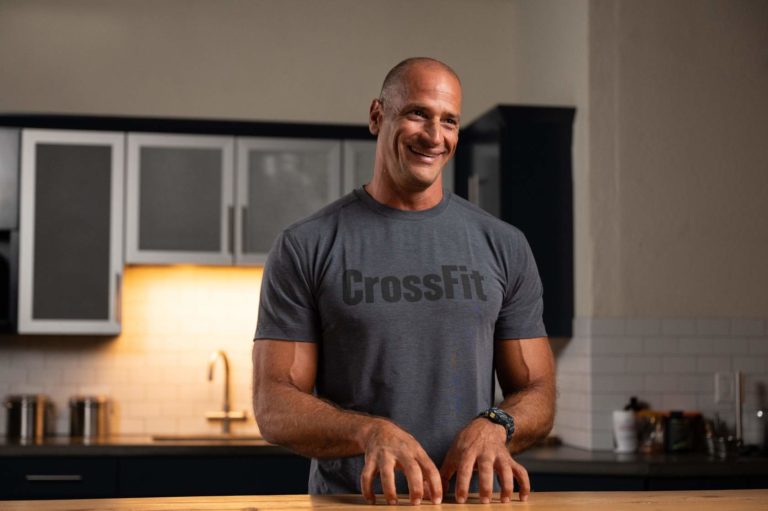 Stephane Rochet is a Senior Content Writer for CrossFit. He has worked as a Flowmaster on the CrossFit Seminar Staff and has over 15 years of experience as a collegiate/tactical strength and conditioning coach. He is a Certified CrossFit Trainer (CF-L3) and enjoys training athletes in his garage gym.
Comments on Bring Back the Jump Rope: The Simple Tool You're Probably Ignoring
2 Comments
Read my mind. Ill start them again
Artie, that’s great to hear! Let us know how it goes!