Walk into almost any globo gym, and you’ll hear some version of it: What does this exercise work? It’s one of the most common questions coaches get, and on the surface, it seems like a smart one. Someone’s trying to learn. They want to understand their training. That’s a good thing.
But the question itself reveals a mindset that’s quietly working against them.
If you’d prefer to watch/listen to this conversation, you can do that here.
The “What Muscle?” Trap
When someone asks what a deadlift works, the honest answer is: yes. Legs, back, core, grip, posterior chain — name a muscle, and there’s a case to be made. But the more important answer is this: you’re asking about form when you should be asking about function.
Form-focused thinking is everywhere right now. Social media is flooded with content promising targeted results — how to get abs, how to grow your glutes, how to build bigger shoulders. Each post comes with a specific exercise designed to isolate a specific muscle. It feels scientific. It feels efficient.
It’s mostly a distraction.
Function Produces Form — Not the Other Way Around
Here’s what CrossFit figured out a long time ago: When you train for function, the form takes care of itself. The lean, athletic physiques associated with CrossFit athletes aren’t the result of targeting the right muscles with the right exercises. They’re a side effect of doing hard, functional work consistently — constantly varied movements, executed at high intensity, supported by sound nutrition.
The goal was never to look a certain way. The goal was to build real fitness: the ability to do more work, across more domains, over time. The body composition people are chasing? That’s what happens when that kind of fitness improves.
Look at Olympic weightlifters. Look at sprinters. Look at powerlifters competing in a weight class. None of them are programming around aesthetics. They’re programming around performance, and the bodies they build are exactly what most people in a gym are trying to achieve.
Why This Matters for How You Train
There’s a practical consequence to getting this wrong. If you’re thinking in terms of muscles worked, you’ll start treating exercises as interchangeable. A deadlift and a glute bridge both involve the posterior chain, so maybe they’re the same thing?
They’re not. Not even close.
A deadlift creates a systemic response that a lying glute bridge never will. It loads the entire body, forces coordination across multiple joints, and demands that everything work together under real load. The adaptation you get from a heavy deadlift isn’t just stronger hamstrings — it’s a training effect that carries over to your overall fitness, your capacity, your body composition. A glute bridge might isolate similar muscles, but it doesn’t produce the same result. That difference gets lost the moment you start thinking in terms of “what does this target.”
A Better Question
Instead of asking what muscles an exercise works, ask what the exercise does. Does it develop a fundamental movement pattern — a squat, a hinge, a push, a pull? Does it create a significant training stimulus? Does it move you toward greater work capacity?
A back squat beats a leg extension every time — not because it works your quads harder, but because it does far more than that. If you can squat well, you can leg press. The reverse isn’t true.
Process Over Outcome
Focusing on form is focusing on the outcome. Focusing on function is focusing on the process, and the process is what actually gets you there. Every person who has achieved lasting results in fitness has a sound, repeatable process. Not a perfect muscle-targeting protocol. A process.
CrossFit’s version of that process isn’t complicated: constantly varied functional movements, performed at high intensity. It’s not flashy. It doesn’t require knowing whether your glutes or your hamstrings are the primary mover in a Romanian deadlift. It just requires doing the work.
The form will follow. It always does.
About the Author
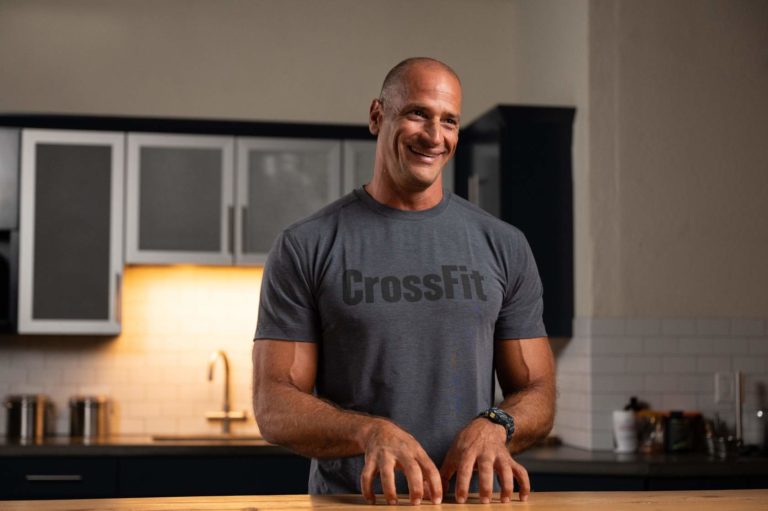 Stephane Rochet is a Senior Content Writer for CrossFit. He has worked as a Flowmaster on the CrossFit Seminar Staff and has over 15 years of experience as a collegiate/tactical strength and conditioning coach. He is a Certified CrossFit Trainer (CF-L3) and trains athletes in his garage.