Let’s talk about pacing in CrossFit workouts. Not the fancy competitive strategies that Games athletes use, but the real, everyday decisions you face when you walk into your box and see the whiteboard.
If you’d rather watch/listen to this conversation, you can do that here.
Here’s the thing: pacing matters, but we might be overthinking it.
The Basic Framework
When it comes to pacing your workouts, think about duration first. It’s really that simple.
For workouts lasting over 15 minutes — such as Cindy or longer AMRAPs — start at a steady pace you can maintain. Maybe even ramp it up in the second half if you still have gas left in the tank. The goal is consistency, not heroics, in the first round.
For workouts under 15 minutes, treat it like running a hard mile or a mile and a half. You’re going to be huffing and puffing pretty early, but you’re not maxing out where you have to stop. It’s that sweet spot of uncomfortable but sustainable.
For anything under 5 minutes? 3, 2, 1 … go! Let it rip and see what happens.
The Lost Art of Crashing and Burning
Here’s my pet peeve with all the pacing talk: we’ve lost something valuable from the early days of CrossFit.
Back in 2008 and 2009, nobody really knew about pacing. You’d show up, look at the workout, and just go for it. Sometimes you’d hang on. Sometimes you wouldn’t. And you know what? That was OK. More than OK; it was valuable.
There’s something to be learned from occasionally screwing the pacing plan and just seeing what you’ve got. Maybe you hang on. Maybe you crash. Either way, you discover something about yourself that no perfectly executed pacing strategy will teach you.
When Pacing Becomes an Excuse
Be honest with yourself: is your pacing strategy actually about optimizing performance, or is it code for, “I’m trying to make this easier”?
Are you looking for a way to get through the workout without being pushed to the limit? Because pacing can become a way to avoid pain and discomfort.
Think about a workout like Angie: 100 pull-ups, 100 push-ups, 100 sit-ups, 100 squats. Sure, you could carefully plan your rep schemes to avoid failure. Stop at sets of 5, take strategic breaks, never push too hard. You’ll get a decent score.
But every once in a while, try that big set of pull-ups. See what happens. Push until the wheels fall off.
The 400-Meter Story
Here’s a training method that embodies this philosophy perfectly: football players running five 400-meter sprints with one simple instruction — run the first one all out. Everything you’ve got. Hard as you can.
Then hang on for the rest of them.
No punishment for slowing down. No time standards to hit. Just one all-out effort, followed by insufficient recovery, leading to progressively uglier attempts. The last one is terrible, but the lessons learned are invaluable.
That’s the experience you miss when you always pace perfectly. When you have a plan every day, execute it, feel good about it, and go home satisfied, you’re missing some of the spice of CrossFit.
The Real Strategy
If I had one message about pacing, it’s this: don’t let it become a crutch.
Most of the time, yes, stop just short of failure. Break up those high-rep sets strategically. Start with a pace you can maintain.
But every once in a while, embrace the pain. Get into a workout and see how far you can push. You’ll probably discover you’re capable of more than you thought.
Remember, we don’t get many chances to retest the same workout repeatedly, as competitive athletes do. Similar workouts will arise and provide you with data points, but each training session is an opportunity not just to execute a plan, but to explore your limits.
The Bottom Line
Yes, understand basic pacing principles. Longer workouts need steadier starts. Shorter workouts tolerate more aggressive pacing. But don’t let the strategy rob you of the raw, uncomfortable experience that makes CrossFit what it is.
Sometimes the best pacing strategy is to have no strategy at all, just honest effort and the willingness to find out what happens when you really push.
Next time you see a workout on the board, maybe forget about the perfect pacing plan. Jump in, see what you’ve got, and remember why you started doing this in the first place. Because lying on the floor after a workout that absolutely destroyed you is not a failure of pacing. That’s where the real growth happens.
About the Author
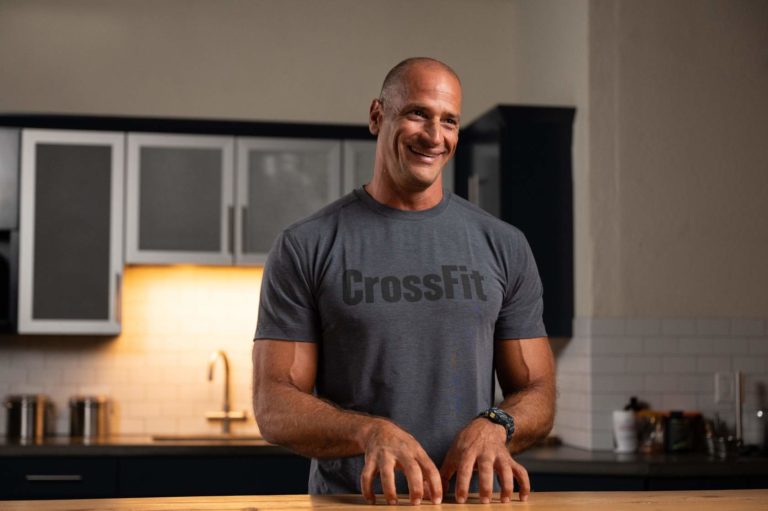 Stephane Rochet is a Senior Content Writer for CrossFit. He has worked as a Flowmaster on the CrossFit Seminar Staff and has over 15 years of experience as a collegiate/tactical strength and conditioning coach. He is a Certified CrossFit Trainer (CF-L3) and enjoys training athletes in his garage gym.