Most people who exercise have never stopped to ask the one question that should drive everything: What does “fit” actually mean? It’s not a simple question, and the fitness industry has done a poor job of answering it, usually defaulting to whatever their program happens to measure.
CrossFit’s “What Is Fitness?” article was the first attempt to answer that question rigorously. We’ve recast it here as a conversation between a seasoned coach and someone who’s been working out for years and is starting to wonder whether all that work is actually adding up to something complete. If you’ve ever felt like something was missing from your training without being able to name it, this conversation might name it for you.
“I’ve been working out for years. Running, some weights, and the occasional spin class. Are you telling me I’m not fit?”
I’m telling you that “fit” is a word almost nobody actually defines, including the magazines, the trainers, and the organizations that are supposed to know. Ask 10 people what fitness means, and you’ll get 10 different answers, usually shaped by whatever they happen to be good at. Runners think endurance is fitness. Powerlifters think strength is fitness. The problem isn’t that they’re wrong exactly; it’s that each is holding one piece of a much bigger picture.
“OK, so what’s the full picture?”
Ten physical skills: cardiovascular endurance, stamina, strength, flexibility, power, speed, coordination, agility, balance, and accuracy. Real fitness means competence across all 10, not mastery of all 10, but genuine competence. Most training programs develop three or four of them really well and quietly ignore the rest. That feels fine until the day life asks you to use one you’ve been skipping.
“That seems like a lot to ask of a workout program.”
Does it? Think about what your body actually gets asked to do, not in the gym, but in your life. You need endurance to get through a long day on your feet. You need strength to move things. You need power to react fast. You need balance to not get hurt doing any of it. Coordination to do it all efficiently. Why would your training only prepare you for some of those things?
“OK, but how do you even measure something that broad?”
CrossFit uses three different lenses, and together they give you a complete picture. The first is those 10 physical skills — are you actually developing all of them? The second is what we call the hopper test. Imagine every possible physical challenge — known and unknown — thrown into a bucket and drawn at random. How do you perform on something you’ve never specifically trained for? That’s a real test of fitness. The third lens is your energy systems. Your body has three metabolic pathways — one for short explosive efforts, one for moderate sustained work, and one for longer low-intensity efforts. Total fitness means training all three, not just the one your favorite workout happens to use.
“The energy systems thing is new to me. What do most programs get wrong?”
Most programs live almost entirely in one system, usually the aerobic one, the long, slow stuff. And aerobic fitness has real value. But if that’s all you train, you’re leaving power, speed, and anaerobic capacity on the table. Worse, too much volume in the aerobic system can actually erode the other two. A program that only trains one pathway isn’t complete fitness; it’s one dimension of fitness mistaken for the whole thing.
“OK, but isn’t a marathoner really fit? They can run 26 miles. That’s a feat.”
It is. But here’s a question: can that same person do 20 pull-ups? Sprint 400 meters at full effort? Pick something heavy off the ground? In most cases, no, and not because they’re lazy, but because their training specifically and deliberately didn’t develop those capacities. That’s a choice their program made for them. CrossFit’s position isn’t that endurance athletes aren’t impressive; it’s that endurance alone isn’t the full definition of fit. A decathlete who runs well, jumps well, throws well, and lifts well is a better picture of complete fitness than a specialist in any single discipline, including running.
“What about health? Is fitness actually the same as health, or is that just a tagline?”
It’s not a tagline; health is something you can measure. Look at any marker of health: blood pressure, body fat, bone density, cholesterol, muscle mass, resting heart rate. Every single one of them exists on a continuum from pathological to normal to exceptional. And elite, broadly fit athletes tend to sit at the exceptional end across all of them. Fitness done right isn’t something separate from health that you do in addition to taking care of yourself. It is taking care of yourself at the highest level. A program that’s making you work hard but not actually improving your health markers isn’t really doing its job.
“What does CrossFit actually train, then, to hit all of this?”
Three things that work together. Metabolic conditioning — running, rowing, biking, swimming — but not just long and slow. We vary the intensity deliberately to train all three energy systems. Gymnastics, which in our world means anything that develops body control — pull-ups, push-ups, handstands, and ring work. The kind of strength and coordination you can’t get from a machine. And weightlifting, especially the Olympic lifts, which build explosive power and the ability to move efficiently under load. Rotate those three constantly, scale them to the individual, and you get the broadest possible fitness base.
“I think my hesitation is that I’ve built a routine. It works for me. Why mess with it?”
Because routine, by definition, is the thing your body has already adapted to. The workouts that feel comfortable are the ones producing the least change. That’s not a CrossFit opinion; that’s basic physiology. So, the only question you need to answer is this: Is what you’re doing making you better across the full range of what your body can do? If the answer is no, the next step is obvious.
Still not sure? Bring this question — Am I actually fit? — to your next class and ask your coach. The answer might surprise you.
About the Author
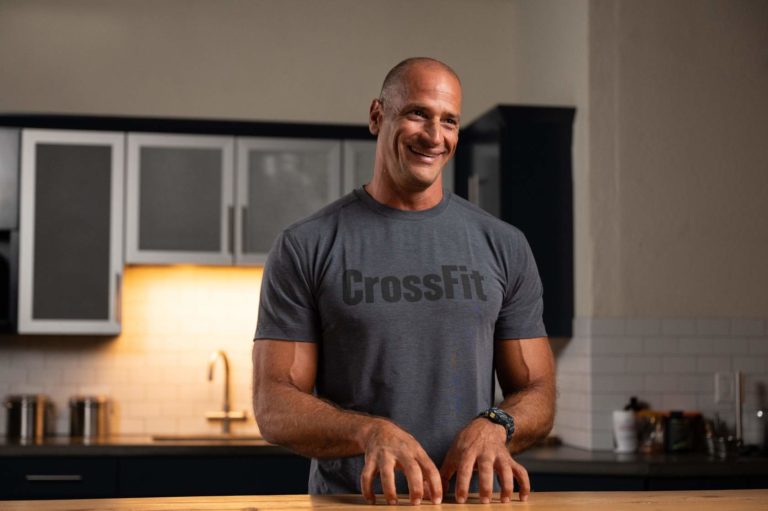 Stephane Rochet is a Senior Content Writer for CrossFit. He has worked as a Flowmaster on the CrossFit Seminar Staff and has over 15 years of experience as a collegiate/tactical strength and conditioning coach. He is a Certified CrossFit Trainer (CF-L3) and trains athletes in his garage.
Comments on “Wait, So Am I Actually Fit?”
2 Comments
This is the way…
Stephane, excellent job pulling “What is Fitness?” into a conversational realm. My only quibble…adding a little about diet to the health question. Doing CF well and consistently will get you only so far if you’re living on TV dinners and Doritos. But really—an excellent article.