Question: What do I do when an athlete won’t respond to my cues, especially when their movement could cause injury?
SINGLE-DAY TICKETS TO THE 2026 CROSSFIT GAMES NOW AVAILABLE | BUY TICKETS NOW
July 16, 2025
Question: What do I do when an athlete won’t respond to my cues, especially when their movement could cause injury?
Using a cue that doesn’t work is an experience every coach will have, regardless of their expertise and experience. This is a natural part of the development process for both the athlete and the coach, but that doesn’t mean it isn’t frustrating, especially when you believe the athlete simply doesn’t care and is just disregarding you. Regardless of the reasoning for the lack of success, there are some tools we can utilize to help our athletes respond to cues and perform movements more safely and efficiently. Consider the following tools:
When cues are not effective, I have had a tendency to think something along the lines of, “What is wrong with them?” or “Why are they not listening to me?” or maybe “They don’t care, so I’m not going to coach them.” Then, after class, I might proceed to complain to the other coaches about how the athlete is disrespectful and doesn’t listen. My guess is that almost all coaches have had this experience.
Over time, I have come to realize that when cues don’t work, the athlete is not the problem — I am. Either I haven’t been effective in my communication with this individual, or I haven’t taken the time to truly assess what’s causing their movement fault in the first place.
Now, there are a few people who genuinely don’t want to listen, but I’ve found this to be rare. Most athletes want to improve, especially if they joined your program, understanding that mechanical refinement is part of the process and your gym culture emphasizes proper movement.
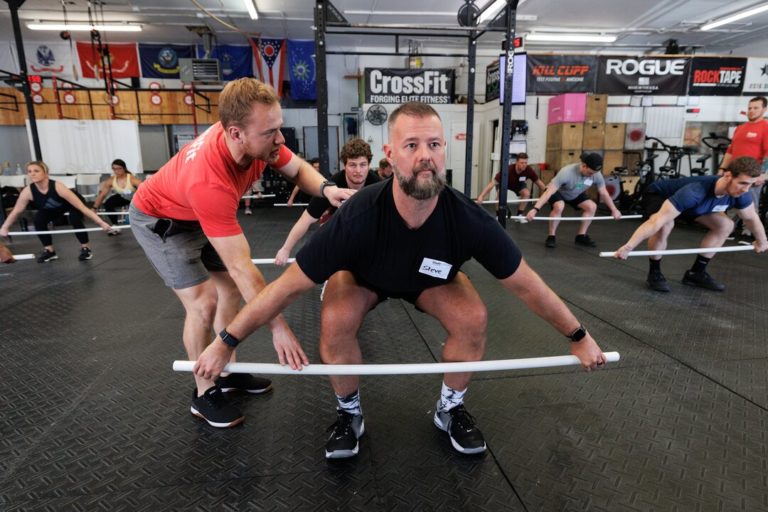
When athletes aren’t responding to cues, we can usually help them through better education, one-on-one conversations, and positive reinforcement when they do things well. From my experience, many of these athletes simply don’t understand why you’re asking them to make the change — they need to understand the reasoning behind your coaching.
A key part of the initial question is, “I’ve given the SAME CUE a few times.” Giving the same cue over and over again is a common theme among coaches and is likely something that needs to change.
For years, the only cue I had for someone whose knees were caving in on a squat was “knees out,” and if it was ineffective, I would just repeat the cue while gradually increasing the volume of my voice to a point where I was screaming, “KNEES OUT!” at the person in a frustrated tone. It’s like me traveling to a foreign country and speaking in English, then gradually progressing to yelling in English, expecting them to understand what I’m saying now. We need to speak the language of cueing that resonates with our athletes. This could be as simple as changing my verbal cue to a different set of words or recognizing that I need to use a different style of cueing, such as visual or tactile cues.
Every athlete responds to cues differently, so having the ability to alter your cues is highly valuable. I recommend having a bare minimum of one strategy for each style of cueing for each fault associated with every movement you teach. You can then expand your repertoire from there and have an arsenal of cues available to you.
Sometimes, athletes are not responsive to your cues because they may not understand your rationale for doing so, or they may not even realize that having their movement refined on a consistent basis is a natural part of being a member of your gym. Take some time to provide information to your athletes through newsletters, on your private social media groups, and at the beginning or end of class.
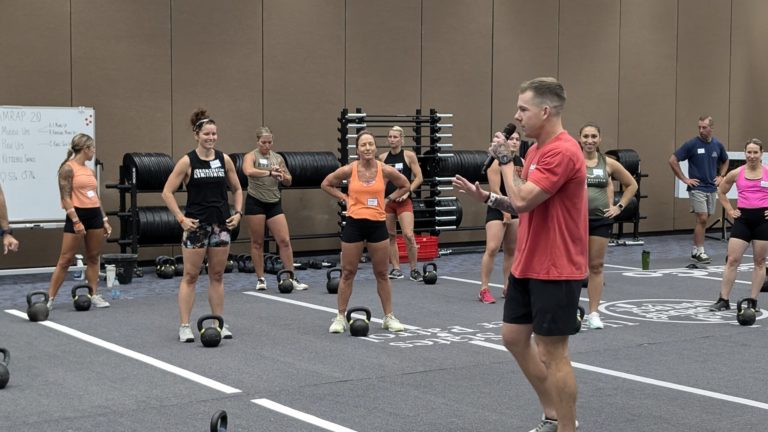
For struggling athletes, it may be worthwhile to have a friendly one-on-one conversation with them and ask if they understand the cues you were trying to convey. Then, listen to their answer and engage in a dialogue to understand their mindset. This may enable you to educate them on the rationale behind your goal when providing a cue.
If your ability to correct movement needs improvement, I recommend doing more one-on-one sessions. These sessions provide you with the opportunity to teach, observe, and correct movement without the distractions that accompany coaching a group class. These sessions provide the opportunity to focus intensely on the movement and try new strategies to correct it. When someone asks me, “What’s the best thing you did for developing your teaching, seeing, and correcting skills?” I will tell them, “Doing a lot of one-on-one introductory sessions.”
Equally important as giving cues for corrections is giving your athletes praise and positive reinforcement when they make a correction or are doing something well in general. This is helpful for a variety of reasons.
They learn what the correct movement feels like and will know how to recreate those ideal positions consistently. Those who are hesitant to receive critical feedback may be more open to corrections if you give them some praise when warranted. This can be a tough pill to swallow as a coach, but sometimes we need to “leave our ego at the door” when coaching.
If your cues are not successful and you’ve been persistent and have tried a variety of cues, you may need to ask yourself if you have identified the root cause of the fault at hand. A variety of factors can cause the same fault. Consider an athlete who leans their chest excessively forward during the dip of a push press. This fault could be caused by pushing their hips back excessively during the initiation of the dip, or the fault could be caused by the athlete going too low in the dip. Each root cause would need a different set of cues to improve the movement.
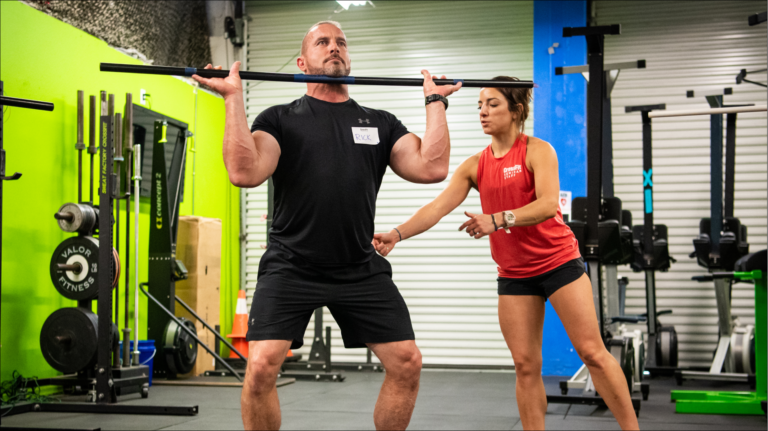
The above strategies have been highly helpful for me in assisting those who are having difficulty responding to my cues. If these strategies are not effective and you believe there is a safety issue, you may need to alter the movement to something that helps them achieve a better position. Consider raising the height of a barbell for an athlete who cannot achieve the correct setup position on a conventional deadlift.
Have a question for a coach? Please submit that here.
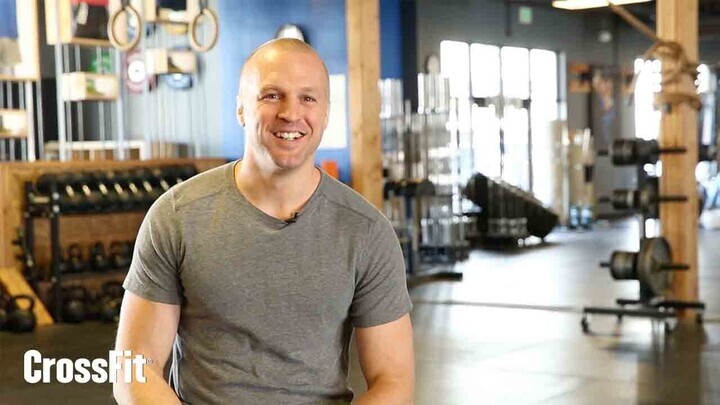 Eric O’Connor is a Content Developer and Seminar Staff Flowmaster for CrossFit’s Education Department and the co-creator of the former CrossFit Competitor’s Course. He has led over 400 seminars and has more than a decade of experience coaching at a CrossFit affiliate. He is a Certified CrossFit Coach (CF-L4), a former Division 1 collegiate wrestler, and a former CrossFit Games athlete.